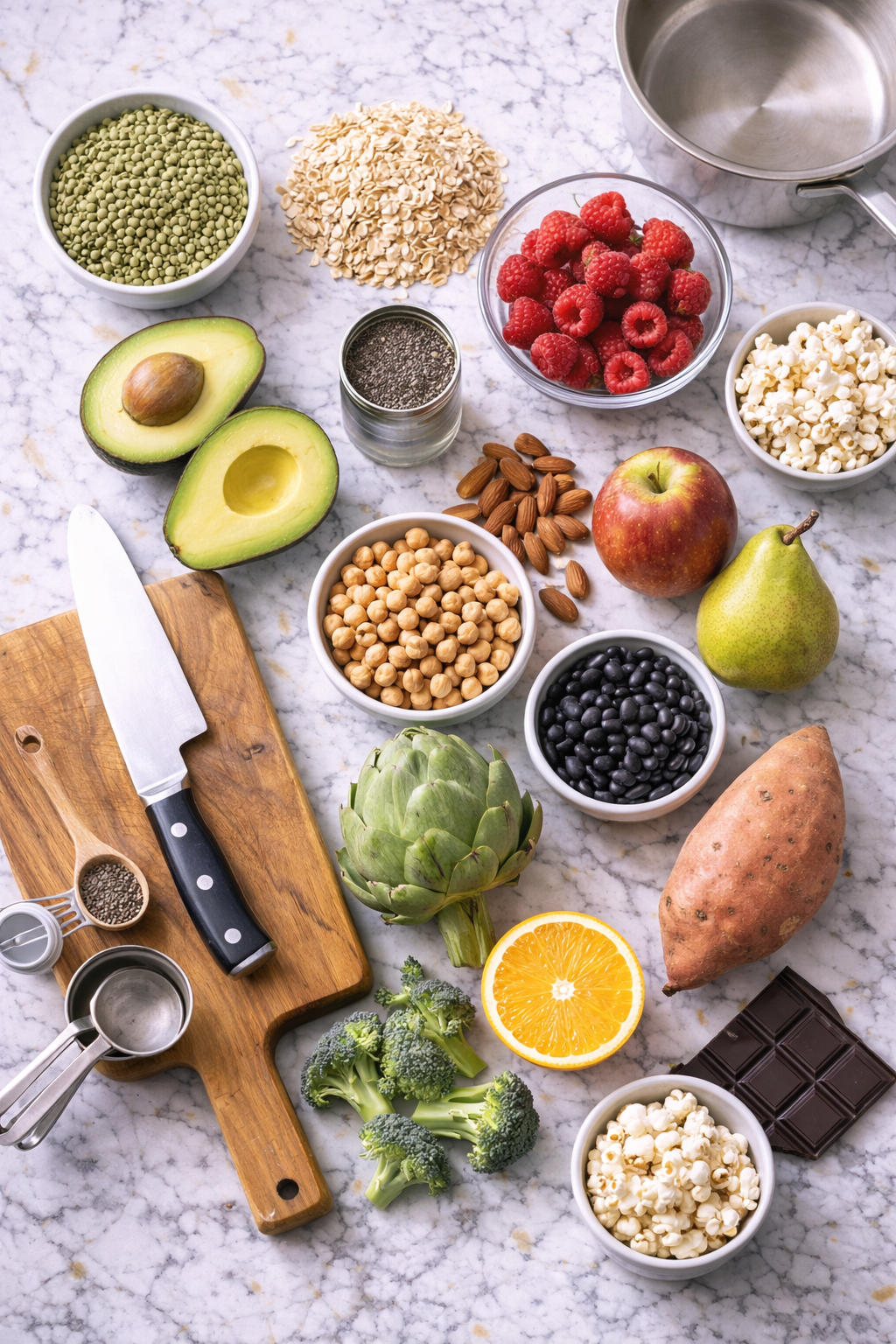
Your gut is basically a second brain. And most of us are starving it.
Here’s a stat that should stop you mid-scroll: the average American gets only about 15 grams of fiber a day. The recommended amount is 25 to 38 grams, depending on your age and gender. That’s a massive gap — and it explains a lot.
Brain fog, sluggish digestion, afternoon crashes, blood sugar swings… a lot of that traces back to what you’re not eating, not just what you are.
This isn’t a list of tasteless foods you’ll choke down and forget about. These are genuinely good, easy-to-find ingredients that happen to be loaded with fiber. And once you know which ones pull the most weight, you’ll be surprised how quickly your meals change — and how much better you feel.
Let’s get into it.
Why Fiber Is Kind of a Big Deal
Most people think of fiber as just a “digestion thing.” But it does so much more than keep you regular 😅.
- Keeps blood sugar stable — soluble fiber slows how quickly sugar enters your bloodstream
- Lowers LDL cholesterol — the bad kind, the kind you don’t want hanging around
- Feeds your gut microbiome — the trillions of bacteria that affect everything from immunity to mood
- Keeps you full longer — without overeating
- Reduces the risk of colon cancer — research is very clear on this one
There are two types worth knowing:
- Soluble fiber dissolves in water and forms a gel-like substance in your gut. Think oats, beans, apples. This is the type that lowers cholesterol and stabilizes blood sugar.
- Insoluble fiber doesn’t dissolve — it adds bulk and keeps food moving. Think whole grains, wheat bran, most vegetables.
You want both. The good news is most high-fiber foods contain a mix of the two.
What You’ll Need
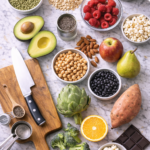
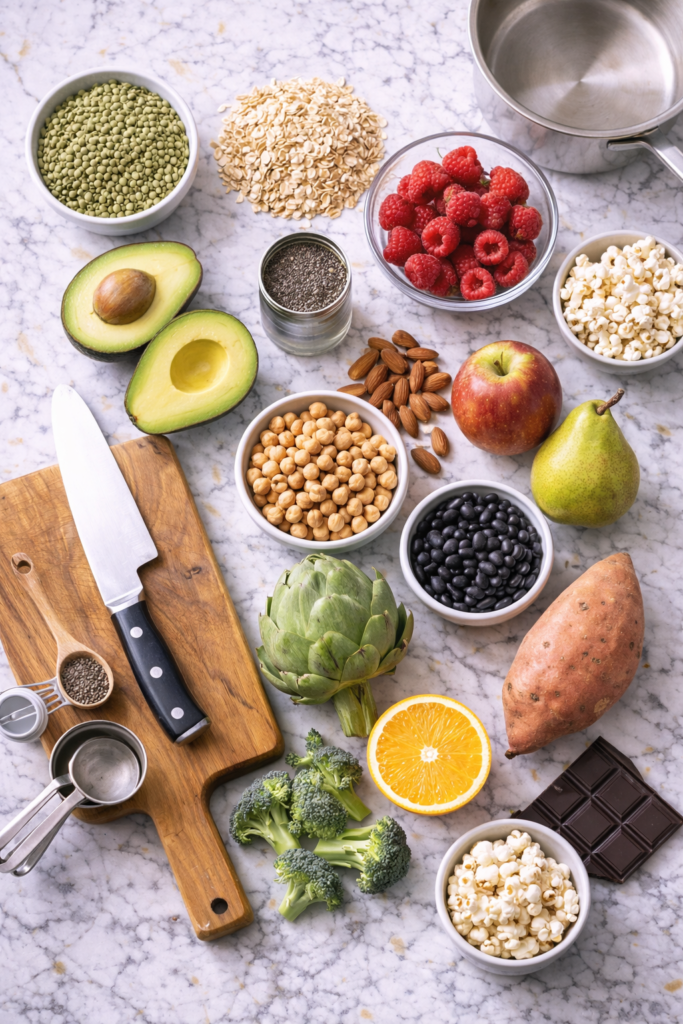
This is a reference list, not a single recipe — so think of “what you’ll need” as your new weekly grocery blueprint. Stock these consistently and hitting your fiber goals becomes almost automatic.
Legumes & Beans
- Lentils (green, red, or brown)
- Split peas
- Chickpeas (dried or canned)
- Black beans
- Kidney beans
- Navy beans
- Edamame (frozen, shelled)
Fruits
- Pears (with skin)
- Apples (with skin)
- Raspberries
- Avocados
- Mangoes
- Guava
- Bananas
Vegetables
- Artichokes
- Broccoli
- Brussels sprouts
- Carrots
- Sweet potatoes
- Acorn squash
- Collard greens / Swiss chard
Whole Grains & Cereals
- Rolled oats (whole grain)
- Oat bran
- Bulgur wheat
- Brown rice
- Barley
- High-fiber cereal (5+ grams per serving)
- Whole grain bread (seven-grain, dark rye, pumpernickel)
Nuts, Seeds & Other
- Chia seeds
- Almonds
- Sunflower seeds
- Pumpkin seeds
- Pistachios
- Dark chocolate (70% cocoa or higher)
- Air-popped popcorn
The High Fiber Food List (With Actual Numbers)
Stop guessing. Here’s what each food actually delivers, so you can plan smarter.
| Food | Serving Size | Fiber (grams) |
|---|---|---|
| Split peas (cooked) | ½ cup | 8.2 g |
| Lentils (cooked) | ½ cup | 7.8 g |
| Black beans (cooked) | ½ cup | 7.5 g |
| Chickpeas (cooked) | ½ cup | 6.2 g |
| Artichoke (medium) | 1 medium | 10 g |
| Raspberries | 1 cup | 8 g |
| Avocado | ½ fruit | 5 g |
| Pear (with skin) | 1 medium | 5.5 g |
| Apple (with skin) | 1 medium | 4.4 g |
| Broccoli (cooked) | 1 cup | 5 g |
| Brussels sprouts (cooked) | 1 cup | 4 g |
| Sweet potato (cooked) | 1 medium | 4 g |
| Oats (rolled, cooked) | 1 cup | 4 g |
| Chia seeds | 1 tbsp | 4.1 g |
| Almonds | 1 oz | 3.5 g |
| Popcorn (air-popped) | 3 cups | 4 g |
| Edamame (shelled) | ½ cup | 4 g |
| Dark chocolate (70%+) | 1 oz | ~2 g |
| Guava | 1 cup | 9 g |
| Mango | 1 fruit | 5 g |
Pro Tips
- Eat the skin. Apple skin alone contains the majority of the fruit’s fiber. Same goes for pears. Peeling them cuts your fiber significantly — so just wash them well and eat the whole thing.
- Go slow when increasing fiber. Adding too much too fast is a recipe for bloating and discomfort. Increase gradually over 2 to 3 weeks and drink plenty of water — fiber pulls water into your gut.
- Legumes are your biggest lever. No single food category delivers more fiber per serving than beans and lentils. If you’re only making one change, add a half cup of legumes to your meals daily.
- Chia seeds are a sneaky hack. One tablespoon dropped into yogurt, oatmeal, or a smoothie adds over 4 grams of fiber with essentially zero taste or effort.
- Canned beans count. Rinse them well to reduce sodium, and they’re nutritionally almost identical to dried. There’s no need to make this complicated.
Tools You’ll Use
No elaborate setup needed here. The basics will do it.
- Medium saucepan (for cooking lentils, oats, or beans from scratch)
- Can opener (for canned chickpeas, black beans, kidney beans)
- Cutting board and sharp chef’s knife (for vegetables and fruit)
- Measuring cups and spoons
- Blender or food processor (for smoothies with chia seeds or avocado)
- Baking sheet (if roasting broccoli, Brussels sprouts, or sweet potatoes)
- Airtight containers for prepping ahead
Substitutions and Variations
This list works for almost every eating style. Here’s how to adapt it.
Vegan / Plant-Based
- Every food on this list is naturally plant-based — lean into beans, lentils, seeds, and whole grains as your protein + fiber combo
- Swap dark chocolate for cacao nibs for less sugar
Gluten-Free
- Skip bulgur and rye; focus on oats (certified GF), brown rice, quinoa, and legumes instead
- Popcorn, sweet potato, and all fruits and vegetables are naturally gluten-free
Low-Sugar
- De-emphasize mango and banana; prioritize raspberries, avocado, artichokes, and leafy greens
- Lentils and split peas are filling, low glycemic, and high in fiber — a great foundation
Nut Allergy
- Skip almonds and pistachios; chia seeds, pumpkin seeds, and sunflower seeds are solid swaps
Make Ahead Tips
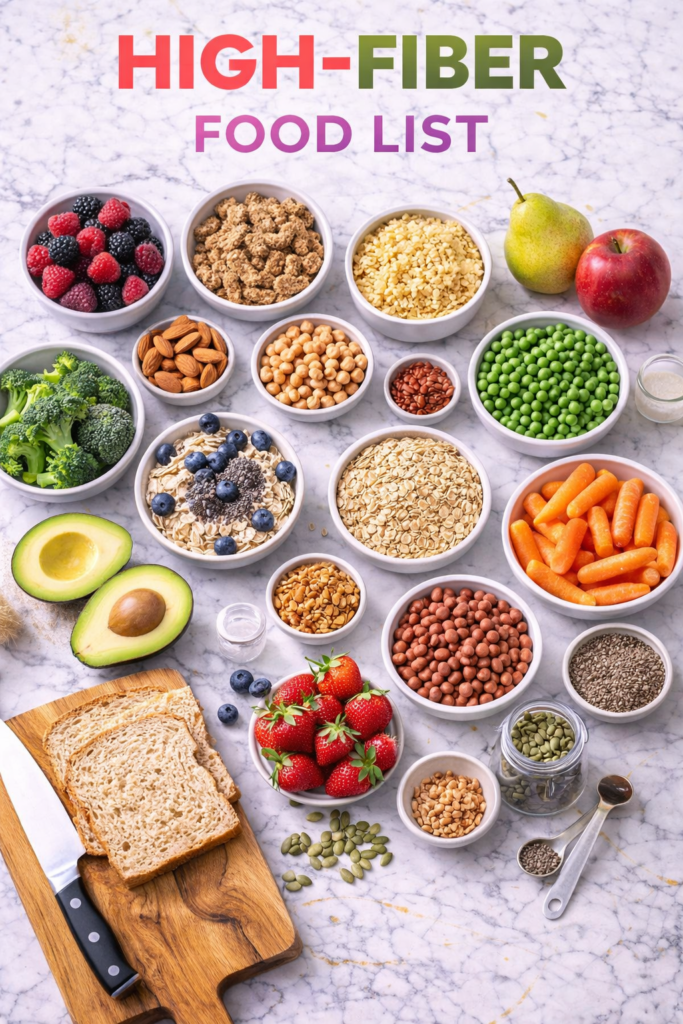
Fiber-rich eating is easiest when you prep ahead. Here’s what’s worth doing on Sunday.
- Cook a big batch of lentils. They keep in the fridge for 5 days and go into soups, salads, or grain bowls without reheating.
- Soak and cook dried beans. Freeze in portions — they thaw quickly and save a ton of money compared to canned.
- Prep overnight oats. Mix oats, chia seeds, and almond milk the night before. Done in the morning with zero effort.
- Roast a tray of vegetables. Brussels sprouts, broccoli, and sweet potato all roast together at 400°F and reheat well throughout the week.
- Keep washed fruit visible. Apples and pears sitting on the counter get eaten. Buried in the fridge, they get forgotten.
How to Actually Hit 25 to 38 Grams a Day
This is where a lot of people get stuck. The number sounds daunting but it breaks down easily once you see it meal by meal.
Sample Day (adds up to ~38 grams):
| Meal | Food | Fiber |
|---|---|---|
| Breakfast | 1 cup oatmeal + 1 tbsp chia seeds + 1 cup raspberries | ~16 g |
| Lunch | Bean and vegetable salad (½ cup chickpeas + broccoli) | ~11 g |
| Snack | 1 apple with skin + 1 oz almonds | ~8 g |
| Dinner | Sweet potato + side of lentil soup | ~12 g |
You hit nearly 47 grams without even trying that hard. That’s the power of knowing which foods actually deliver.
Meal Pairing Suggestions
Fiber doesn’t exist in isolation. Pair it strategically and you get more out of every meal.
- Lentils + leafy greens + lemon — the iron in lentils absorbs better with vitamin C
- Oats + nuts + berries — protein, healthy fat, and soluble fiber all together; keeps you full until lunch
- Black beans + brown rice — a complete protein, high fiber combo that’s incredibly cheap to make
- Avocado + whole grain toast + eggs — healthy fat + fiber slows down egg protein digestion, steady energy for hours
- Sweet potato + chickpea curry — complex carbs and legume fiber, comforting and filling without the crash
Nutritional Breakdown by Category
Legumes — The Star of the List
Gram for gram, nothing beats legumes for fiber. They’re also packed with protein, iron, folate, and potassium. A half cup of cooked lentils gives you nearly 8 grams of fiber for about 115 calories. That ratio is extraordinary.
Fruits — Naturally Satisfying and Underrated
Raspberries lead the pack at 8 grams per cup. Guava gets slept on constantly — one cup has around 9 grams. Avocado is technically a fruit, and half of one gives you 5 grams plus heart-healthy monounsaturated fat.
Vegetables — Cook Them for More Fiber Per Bite
Cooked vegetables are often higher in fiber per cup than raw because they compress. A medium artichoke alone has 10 grams of fiber. Brussels sprouts, broccoli, and carrots are all 4 to 5 grams per cooked cup.
Seeds — Small but Serious
Chia seeds are one of the most fiber-dense foods on the planet. One tablespoon has 4.1 grams. They swell in liquid and create a gel-like texture that keeps you fuller longer — that’s the soluble fiber at work.
Leftovers and Storage
Most high-fiber staples store exceptionally well, which makes them perfect for meal prepping.
- Cooked lentils and beans: 4 to 5 days in the fridge, up to 3 months in the freezer
- Cooked grains (oats, brown rice, barley): 4 to 6 days in an airtight container in the fridge
- Roasted vegetables: 4 days in the fridge; reheat in the oven at 375°F for 8 to 10 minutes to bring back the texture
- Overnight oats: up to 5 days in the fridge
- Cut fruit (apples, pears): squeeze a little lemon juice on them to prevent browning; eat within 2 days
- Avocado: store cut halves with the pit in, wrap tightly; eat within 1 to 2 days
FAQ
What happens if I eat too much fiber too fast?
Bloating, gas, and stomach cramps, mostly. It’s not dangerous, just uncomfortable. Your gut microbiome needs time to adjust. Increase your intake by about 5 grams per week and drink at least 2 liters of water daily while you do it.
Can I get enough fiber on a low-carb diet?
Yes, but you’ll need to be strategic. Most grain-based fiber sources are off the table, so lean heavily on avocados, broccoli, Brussels sprouts, chia seeds, nuts, and artichokes. Legumes are moderate in carbs — some low-carb approaches allow them in small portions.
Is fiber from supplements as good as food?
Supplements help but they don’t fully replace food-based fiber. Whole foods come with vitamins, minerals, antioxidants, and phytonutrients that supplements don’t deliver. Use a supplement to fill gaps, not as the primary source.
Do canned beans lose fiber?
Barely. The fiber content of canned beans is nearly identical to dried and cooked beans. Just rinse them before using to reduce the sodium content significantly.
What’s the single easiest way to add more fiber today?
Add a tablespoon of chia seeds to whatever you’re already eating — yogurt, oatmeal, a smoothie. You won’t taste them. You won’t notice them. But you’ll add over 4 grams of fiber in about 3 seconds.
Does cooking vegetables reduce their fiber?
Not significantly. Cooking can soften the cell walls and actually make some types of fiber more accessible for digestion. Eating cooked vegetables is perfectly fine and in some cases gives you more fiber per cup because they shrink in volume.
Is there such a thing as too much fiber?
Technically, yes — very high intake (60+ grams daily, consistently) can interfere with mineral absorption. In practice, this is rare for people eating normal whole foods. Most people have the opposite problem.
Wrapping Up
Here’s the thing about fiber — it’s one of the few nutrition changes that genuinely compounds. You start eating more of it, your gut bacteria diversify, your energy stabilizes, your cravings shift, you feel full on less food, and suddenly meals feel effortless instead of calculated.
You don’t have to overhaul everything at once. Pick two or three foods from this list that you actually enjoy and start working them in this week. Raspberries in your oatmeal. A handful of edamame as an afternoon snack. Swapping white rice for brown.
Small shifts done consistently are what actually stick.
Give it a few weeks and see how you feel — I genuinely think you’ll be surprised. Drop a comment below and let me know which foods you’re adding first, what’s already a staple in your routine, or any questions you run into along the way. 👇