Your kid’s pediatrician just mentioned their iron levels are on the low side. Or you’re reading labels on cereal boxes at 7am wondering if “10% daily value” is enough. Or you’ve got a picky eater who has basically decided that beige food is the only acceptable food group.
You’re in the right place.
Iron deficiency is one of the most common nutritional problems in children worldwide — and the frustrating part is it’s completely preventable with the right foods. The even more frustrating part? Most parents don’t actually know which foods pack the most iron, or the one trick that can nearly double how much iron your kid’s body actually absorbs.
That trick alone is worth reading this entire post. Keep going.
Why Iron Matters More Than You Think
Iron isn’t just about avoiding anemia. It’s doing a lot of heavy lifting inside your child’s body every single day.
- Brain development — Iron carries oxygen to the brain. Low iron = lower cognitive performance, even before anemia sets in.
- Energy levels — Iron-deficient kids are often the ones who seem inexplicably tired or unfocused at school.
- Immune strength — Iron plays a direct role in how well your child’s immune system fights off infections.
- Healthy red blood cells — Iron produces hemoglobin, the protein that carries oxygen through the bloodstream.
Here’s the part that tends to surprise parents: symptoms of low iron often don’t show up until deficiency has already been going on for a while. Your child can look and act perfectly fine and still be running low.
How Much Iron Do Kids Actually Need?
The numbers shift a lot depending on age, which is why it helps to know exactly where your child falls.
| Age Group | Daily Iron Needed |
|---|---|
| 7–12 months | 11 mg/day |
| 1–3 years (toddlers) | 7 mg/day |
| 4–8 years | 10 mg/day |
| 9–13 years | 8 mg/day |
| Teen boys (14–18) | 11 mg/day |
| Teen girls (14–18) | 15 mg/day |
Teen girls need more because of iron lost during menstruation. And kids following vegetarian diets? They need roughly twice as much dietary iron as meat-eaters, because plant-based iron is harder for the body to absorb.
Heme vs. Non-Heme Iron: The Difference That Changes Everything
Not all iron is created equal, and this is where a lot of parents get tripped up.
There are two kinds of dietary iron:
- Heme iron — found in animal products (meat, poultry, fish, eggs). Your body absorbs up to 15–35% of this type.
- Non-heme iron — found in plants (beans, spinach, lentils, fortified cereals). Your body absorbs only 2–10% of this type.
That gap is significant. A half cup of spinach has iron in it, yes — but your child’s body may only absorb a small fraction of it. That doesn’t mean plant-based iron is useless. It just means you have to be strategic about how you serve it.
Which brings us to the trick mentioned above.
The Absorption Trick: Pairing non-heme iron foods with a Vitamin C source can boost iron absorption dramatically — some studies show it can more than double it. So spinach with strawberries? Beans with tomatoes? Lentils with a squeeze of lemon? Not just tasty — actually smart.
What You’ll Need
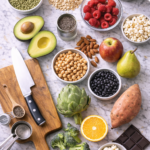
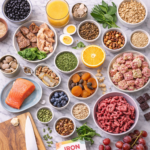
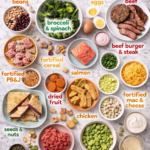
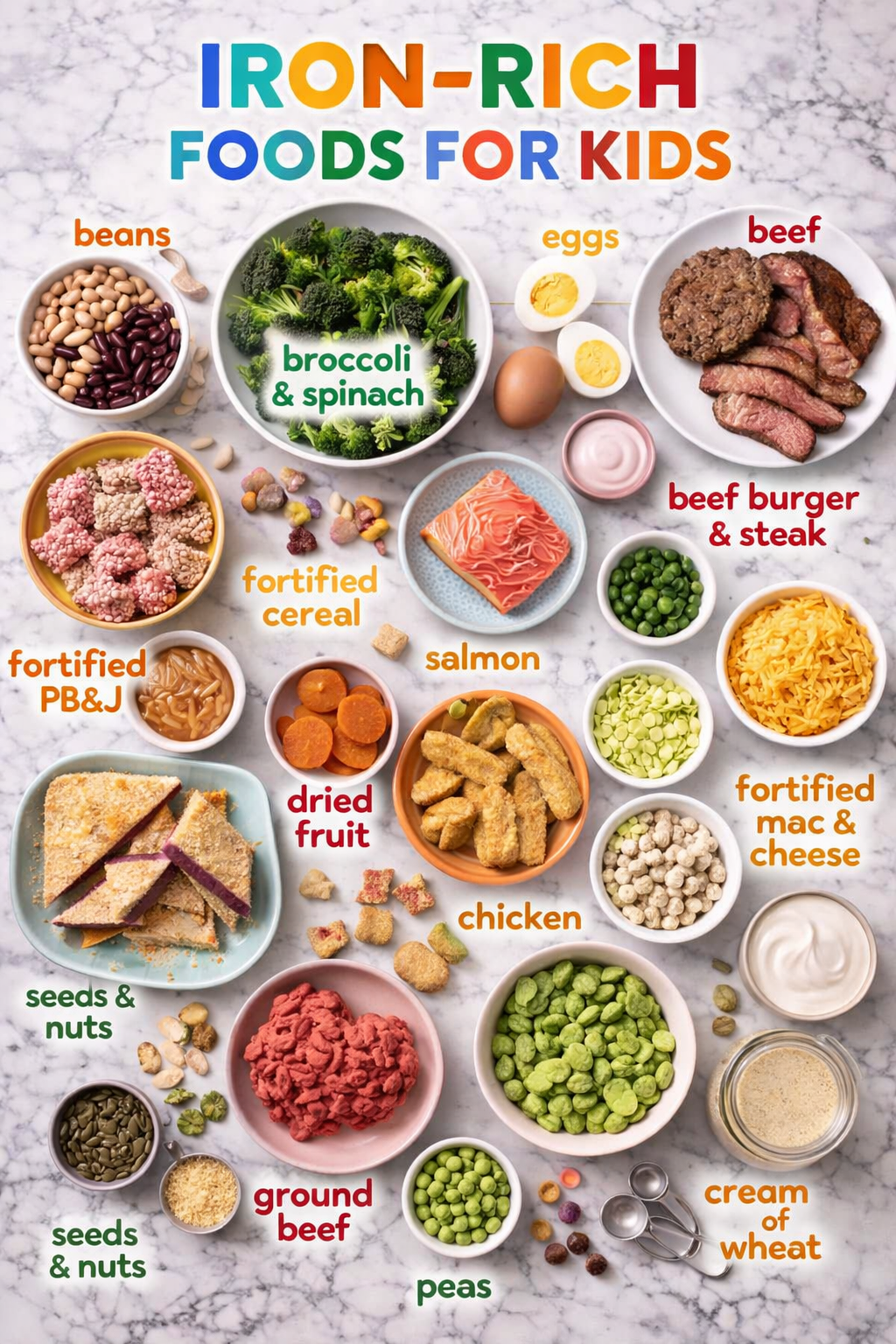
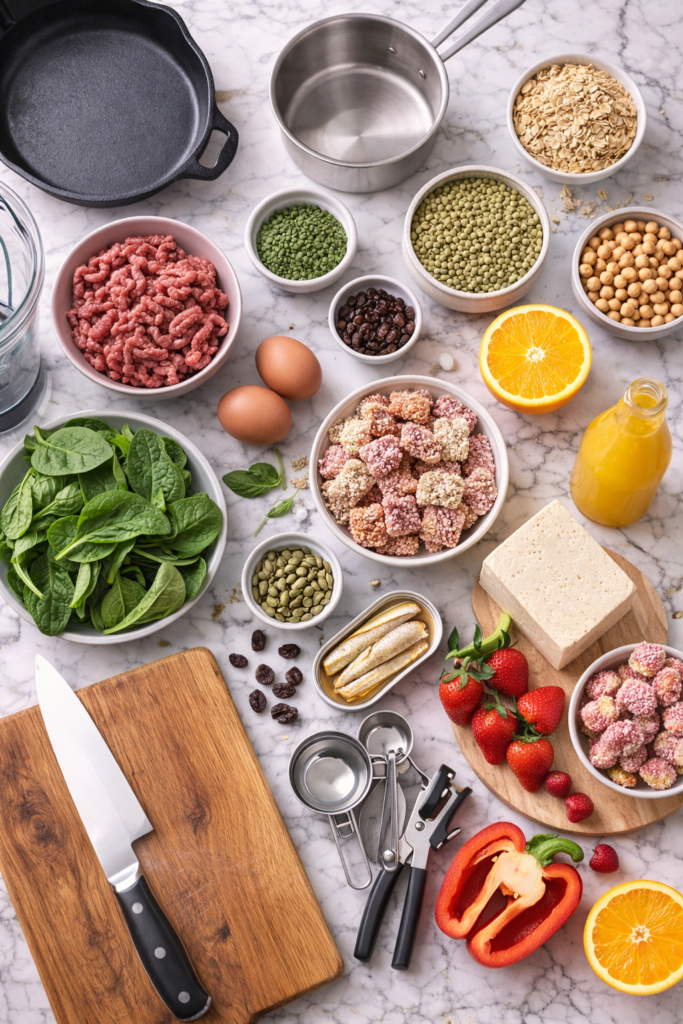
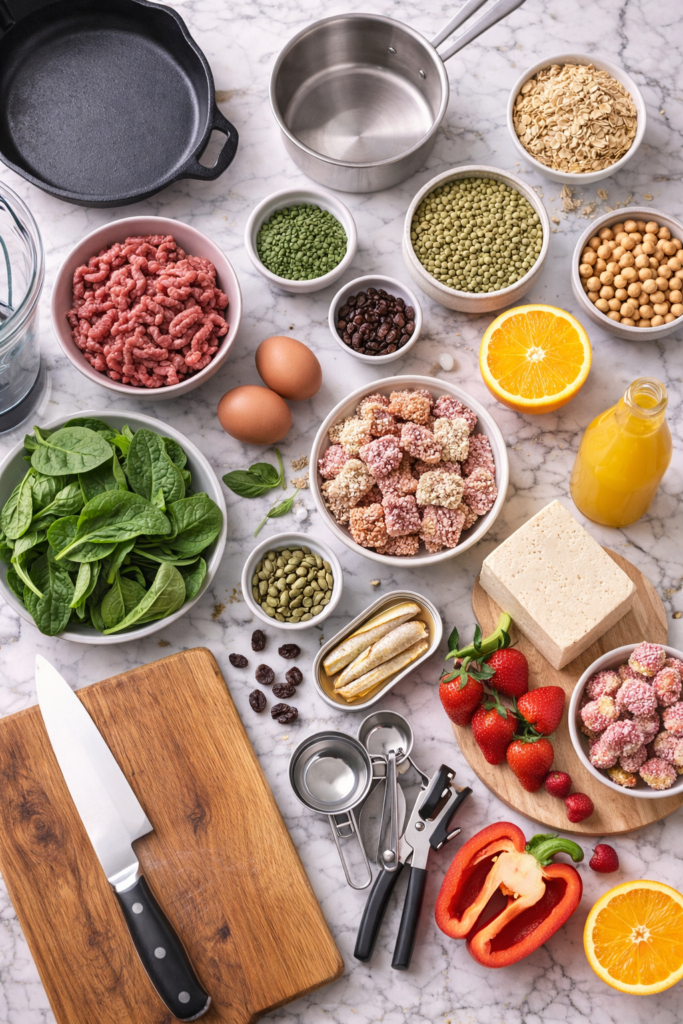
This isn’t a single recipe — it’s a lifestyle upgrade. Here’s a complete list of iron-rich foods to stock in your kitchen, organized by category, so you can start building iron into your kids’ meals immediately.
Animal-Based (Heme Iron Sources)
- Lean beef (ground beef, sirloin, stew meat)
- Chicken thighs and drumsticks (dark meat is higher in iron than white)
- Turkey (dark meat)
- Canned sardines
- Canned tuna
- Canned or fresh clams
- Eggs
- Beef liver (one of the highest iron sources available, if your kids will eat it)
Plant-Based (Non-Heme Iron Sources)
- Lentils (red, green, or brown)
- Chickpeas (great blended into hummus)
- Kidney beans and black beans
- Edamame
- Firm tofu
- Spinach (fresh or frozen)
- Kale
- Broccoli
- Pumpkin seeds (pepitas)
- Raisins and dried apricots
- Plain rolled oats
- Iron-fortified breakfast cereal (check the label — aim for 25–50% daily value)
- Iron-fortified oatmeal
- Whole wheat bread
Vitamin C Boosters (Pair With Non-Heme Sources)
- Oranges and orange juice
- Strawberries
- Bell peppers (red bell pepper is extremely high in Vitamin C)
- Tomatoes and tomato sauce
- Broccoli (yes, it’s both an iron source AND a Vitamin C source)
- Kiwi
- Cantaloupe
Tools You’ll Need
- Cast-iron skillet (a genuinely useful bonus: cooking acidic foods like tomato sauce in cast iron actually leaches small amounts of iron into the food)
- Medium saucepan
- Cutting board and sharp knife
- Can opener (for canned beans, sardines, tuna)
- Blender or food processor (for hummus, smoothies, purees)
- Measuring cups and spoons
- Mixing bowls
Pro Tips
1. Don’t serve iron-rich foods with milk. Calcium actually competes with iron for absorption. Keep dairy at a separate time of day when possible, especially for toddlers who drink a lot of milk. Between ages 1 and 5, pediatricians recommend capping cow’s milk at 24 oz (710 ml) per day.
2. Skip the tea and juice at iron-rich meals. Tea contains tannins that can reduce iron absorption by up to 50%. Orange juice with iron-rich foods? Great. Tea? Save it for later.
3. Combine small amounts of meat with plant iron sources. Even a small portion of beef or chicken added to a bean dish can significantly boost how much of the plant-based iron gets absorbed. This is especially useful for kids who mostly eat vegetarian.
4. Use iron-fortified cereal creatively. You don’t have to just serve it in a bowl. Stir it into muffin batter, mix it into mashed banana, or use it as a coating for baked chicken strips. One serving of many fortified cereals covers 100% of the daily value.
5. Offer iron-rich foods at every meal and snack — don’t try to get it all at once. The body absorbs iron more efficiently when it’s taken in smaller amounts throughout the day rather than one big dose.
Iron-Rich Meal Ideas Kids Will Actually Eat
Knowing what foods have iron is one thing. Getting a 4-year-old to eat them is another conversation entirely.
Breakfast
- Iron-fortified oatmeal topped with strawberries — the Vitamin C in the strawberries pairs perfectly with the non-heme iron in oats.
- Scrambled eggs with spinach — sneak in a handful of finely chopped spinach. They won’t notice.
- Fortified cereal with orange juice — a classic for a reason. The OJ dramatically improves absorption.
Lunch
- Bean and cheese quesadillas with tomato salsa — the tomatoes add Vitamin C to boost the bean iron.
- Tuna on whole wheat with a side of bell pepper strips — simple, fast, iron-packed.
- Lentil soup with a squeeze of lemon — lemon juice is underrated as an iron absorption booster.
Dinner
- Ground beef tacos with black beans and tomatoes — heme iron + non-heme iron + Vitamin C in one meal. 🙌
- Chicken stir-fry with broccoli and bell pepper — broccoli doubles as both an iron source and a Vitamin C source.
- Spaghetti with meat and tomato sauce in a cast-iron pan — you’re getting iron from the beef, some from the pasta, and a little boost from the cast iron itself.
Snacks
- Hummus with bell pepper strips
- Raisins with a small piece of fruit (the fruit adds Vitamin C)
- Pumpkin seeds mixed into trail mix
- Edamame with a squeeze of lemon
Substitutions and Variations
Every family’s situation is different. Here’s how to adapt these iron-rich foods to different diets and preferences:
| Situation | Best Swap |
|---|---|
| Vegetarian/Vegan kids | Tofu, lentils, chickpeas, fortified cereals. Aim for double the recommended iron and always pair with Vitamin C. |
| Picky eaters who won’t touch veggies | Blend spinach into smoothies or pasta sauce. Use iron-fortified cereal in baked goods. |
| Kids who dislike red meat | Dark chicken or turkey meat, canned tuna, sardines, eggs. |
| Nut allergy households | Pumpkin seeds and sunflower seeds are safe alternatives and high in iron. |
| Gluten-free | Quinoa is both gluten-free and a decent source of non-heme iron. Certified GF oats also work. |
Make Ahead Tips
Building iron-rich eating into your family’s routine gets a lot easier when you do a little prep in advance.
- Cook a big batch of lentils or beans on Sunday and use them throughout the week — in soups, tacos, salads, or blended into sauces.
- Pre-portion trail mix snack bags with raisins, pumpkin seeds, and dried apricots. Grab-and-go for school or after activities.
- Make a big pot of ground beef and freeze in portions. It’s the fastest way to add heme iron to any weeknight meal.
- Prep hummus on weekends. Homemade chickpea hummus is easy, iron-rich, and keeps for about a week in the fridge.
Nutritional Breakdown: Top Iron-Rich Foods at a Glance
| Food | Serving Size | Iron Content (approx.) | Iron Type |
|---|---|---|---|
| Iron-fortified cereal | 1 serving | Up to 18 mg | Non-heme |
| Beef liver | 3 oz | ~5 mg | Heme |
| Canned clams | 3 oz | ~8 mg | Heme |
| Lentils (cooked) | ½ cup | ~3.3 mg | Non-heme |
| Ground beef (cooked) | 3 oz | ~2.2 mg | Heme |
| Spinach (boiled) | ½ cup | ~3.2 mg | Non-heme |
| Chickpeas | ½ cup | ~2.4 mg | Non-heme |
| Tofu (firm) | ½ cup | ~3.4 mg | Non-heme |
| Pumpkin seeds | 1 oz | ~2.5 mg | Non-heme |
| Raisins | ¼ cup | ~1 mg | Non-heme |
| Eggs | 1 large | ~0.9 mg | Heme |
| Rolled oats (dry) | 1 cup | ~3.4 mg | Non-heme |
| Canned sardines | 3 oz | ~2.5 mg | Heme |
What Actually Blocks Iron Absorption (And How to Avoid It)
This section is just as important as knowing which foods have iron. You can feed your kids iron-rich foods all week and still not see results if absorption is being blocked.
Foods and drinks that reduce iron absorption:
- Cow’s milk and large amounts of calcium
- Tea (contains tannins)
- Coffee
- High-bran foods when eaten at the same meal as iron-rich foods
Foods that increase iron absorption:
- Any food high in Vitamin C (oranges, strawberries, bell peppers, tomatoes, broccoli, kiwi)
- Meat, poultry, or fish eaten alongside plant iron sources
- Cooking in a cast-iron pan when making acidic dishes
Leftovers and Storage
Iron-rich foods generally store well, which makes batch cooking a solid strategy.
- Cooked lentils or beans: Store in an airtight container in the fridge for up to 5 days, or freeze for up to 3 months.
- Cooked ground beef: Fridge for 3–4 days, freezer for up to 4 months.
- Hummus: Fridge for up to 7 days. Stir before serving.
- Cooked spinach: Fridge for 3–4 days. Works great stirred into scrambled eggs or pasta the next day.
- Iron-fortified cereal: Keep the box sealed and in a cool, dry place. Once you open it, clip it shut — moisture kills the crunch.
FAQ
My kid eats a lot of spinach. Isn’t that enough?
Spinach has iron, but your child’s body only absorbs a small percentage of the non-heme iron in it. The absorption rate can improve significantly when you pair spinach with a Vitamin C source, but relying on spinach alone is rarely enough to meet daily iron needs. Vary the sources.
Can too much iron be harmful for kids?
From food sources, iron toxicity is extremely rare. The risk is higher with iron supplements, which is why you should only use supplements if a doctor recommends them. Never give a child iron supplements without medical guidance.
My toddler drinks a lot of milk. Is that affecting iron?
It can be. Excessive milk intake (more than 24 oz per day for ages 1–5) is a known risk factor for iron deficiency for two reasons: milk itself is low in iron, and calcium in milk can actually block iron absorption. Pediatricians routinely flag this as one of the most common causes of low iron in toddlers.
How do I know if my child is iron deficient?
The only reliable way is a blood test. The American Academy of Pediatrics recommends screening all infants starting at 9–12 months. Watch for signs like unusual tiredness, paleness around the lips, gums, or nail beds, and frequent infections — but know that many kids have low iron with zero obvious symptoms.
Are iron supplements a good idea just in case?
Only if prescribed by a doctor. Excess iron from supplements has real risks and is unnecessary for most children eating a balanced diet. Focus on food first.
My kid is a picky eater and refuses most of these foods. Help.
Iron-fortified cereal and iron-fortified oatmeal are your best friends here. One serving of many fortified cereals can cover a toddler’s entire daily iron need. Also: blend. Spinach in a smoothie with frozen mango and OJ is undetectable and packs both iron and Vitamin C in one cup.
Does cooking method affect iron content?
A little. Overcooking vegetables does reduce some nutrients, so light steaming beats boiling for spinach and broccoli. And as mentioned, cooking acidic dishes in cast iron can actually add a small amount of iron to your food — a bonus, not a replacement for food sources.
Wrapping Up
Iron is one of those nutrients that gets overlooked until there’s a problem. And that’s totally understandable — life with kids is busy, and you’re not running iron calculations at every meal.
But the good news is this doesn’t have to be complicated.
You don’t need to overhaul your entire kitchen or become a nutrition obsessive. You just need to know which foods to reach for, which foods to pair them with, and a couple of habits to build in over time.
Start small. Add lentils to one dinner this week. Swap juice for OJ at breakfast. Toss some pumpkin seeds into your trail mix. Blend spinach into a smoothie. That’s really it.
And if your child sees you eating these foods too — that’s probably the most powerful thing on this entire list.
Give it a try this week and leave a comment below. Did you find a combination your kids actually liked? Did the OJ-with-cereal trick work for you? Any questions about iron-rich meals for specific ages or diets? Drop them below — I read every single one.