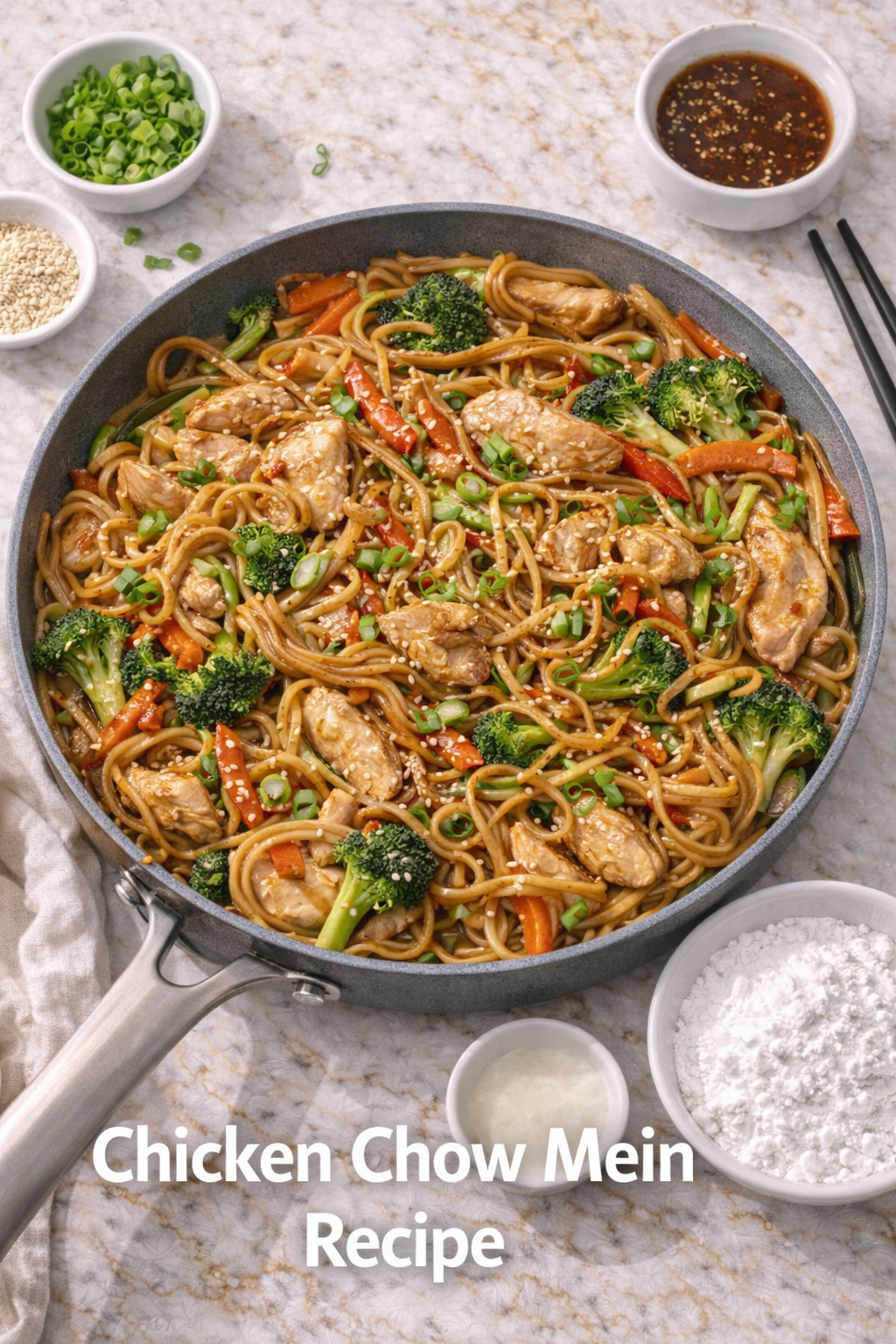
Chicken chow mein fresh from your own kitchen tastes nothing like what comes in those greasy takeout containers.
I’m talking about noodles that actually have texture. Vegetables that still have a crunch. Chicken that’s tender and flavorful instead of rubbery mystery meat swimming in cornstarch sauce.
The crazy part? This whole thing comes together in about 30 minutes. Same amount of time you’d spend waiting for delivery, except you’ll actually know what went into your food.
And here’s something wild: authentic chow mein isn’t even supposed to be drowning in sauce. The name literally means “stir-fried noodles,” and the best versions have just enough sauce to coat everything without turning it into soup. 🍜
Once you nail this recipe, you’ll start seeing takeout for what it really is.
What You’ll Need
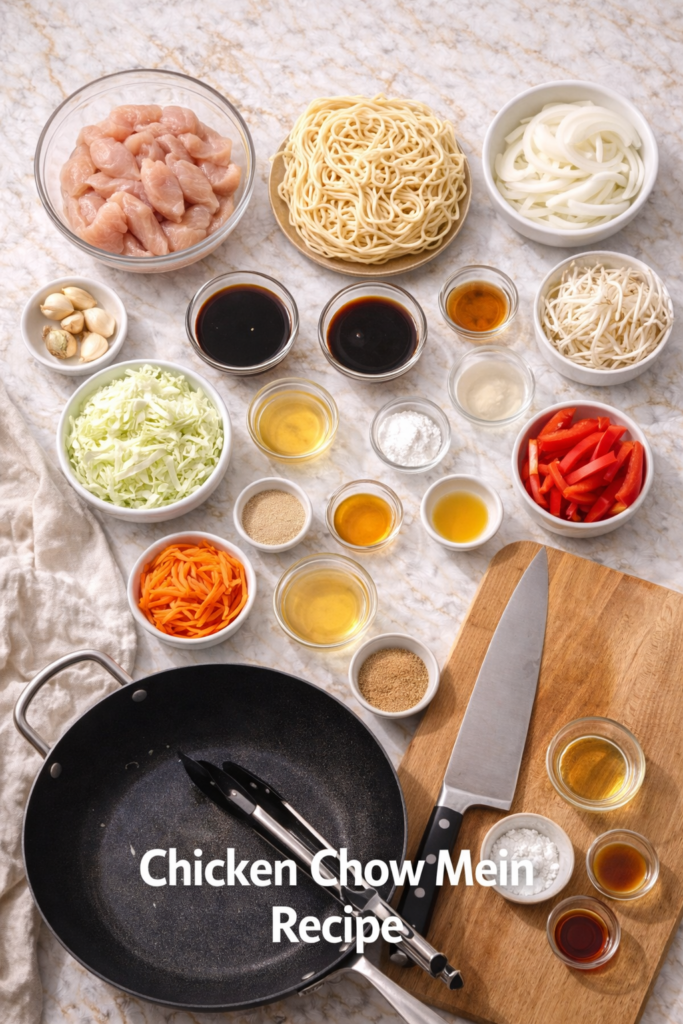
For the Sauce:
- 3 tablespoons soy sauce (low sodium works great)
- 2 tablespoons oyster sauce
- 1 tablespoon sesame oil
- 1 tablespoon Chinese rice wine (or dry sherry)
- 1 teaspoon sugar
- 1/2 teaspoon ground white pepper
- 1/4 cup chicken broth
For the Stir-Fry:
- 1 pound boneless, skinless chicken breast (cut into thin strips)
- 8 ounces chow mein noodles (or fresh lo mein noodles)
- 3 tablespoons vegetable oil (divided)
- 4 cloves garlic (minced)
- 1 tablespoon fresh ginger (grated)
- 1 medium onion (thinly sliced)
- 2 cups cabbage (shredded)
- 1 large carrot (julienned)
- 1 cup bean sprouts
- 3 green onions (cut into 2-inch pieces)
- 1/2 red bell pepper (thinly sliced)
For the Marinade:
- 1 tablespoon soy sauce
- 1 tablespoon cornstarch
- 1 teaspoon sesame oil
Tools You’ll Need
You don’t need a professional kitchen to make restaurant-quality chow mein. Here’s what actually matters:
- Large wok or deep skillet (12-14 inches is perfect)
- Sharp knife for slicing chicken and veggies
- Cutting board
- Medium pot for boiling noodles
- Small bowl for mixing the sauce
- Tongs or wooden spoon for tossing
- Colander for draining noodles
A wok is ideal because it distributes heat better and gives you more room to toss everything without making a mess. But a large skillet works fine if that’s what you have.
Pro Tips
Get your mise en place sorted before you start cooking. This is one of those dishes where everything happens fast. Once that wok gets hot, you’ll be moving nonstop. Have all your ingredients prepped, measured, and within arm’s reach. Trust me on this.
Don’t overcook your noodles. They’re going into the wok for round two, so you want them slightly undercooked when you drain them. They should still have some bite. If they’re mushy before they even hit the wok, you’re done for.
Cook in batches if your wok isn’t massive. Overcrowding drops the temperature and everything steams instead of getting that nice sear. You want that wok smoking hot, and adding too much at once kills the heat. Cook the chicken first, set it aside, then blast through the vegetables.
Use high heat and move fast. This isn’t a gentle simmer situation. Crank that heat up and keep everything moving. The whole point of stir-frying is to cook quickly at high temperature so vegetables stay crisp and flavors stay bright.
Add the sauce at the end, not the beginning. Pour it in too early and you’re basically boiling everything. Wait until the last minute, toss to coat, and get it off the heat. You want the sauce to cling to the noodles, not pool at the bottom of your bowl.
Substitutions and Variations
Protein swaps: Swap chicken for shrimp, beef, pork, or tofu. Keep the marinade the same. For shrimp, cut the cooking time in half. For beef, slice it super thin against the grain. Tofu should be extra firm and pressed dry before you cube it.
Noodle alternatives: Can’t find chow mein noodles? Use fresh lo mein, yakisoba, or even spaghetti in a pinch. Rice noodles work too, but they’ll give you a different texture. Dried noodles need to be boiled first; fresh ones sometimes just need a quick rinse under hot water.
Vegetable mix-ins: Throw in whatever you’ve got. Snow peas, bok choy, mushrooms, broccoli, zucchini. Just remember that denser vegetables like broccoli need a head start in the wok. Tender stuff like spinach or snow peas should go in last.
Make it spicy: Add sliced Thai chilies with the garlic and ginger. Or drizzle some chili oil over the finished dish. Sriracha works too if that’s your thing.
Gluten-free version: Use tamari instead of soy sauce and check your oyster sauce label. Swap the wheat noodles for rice noodles.
Make Ahead Tips
You can prep everything the night before and keep it refrigerated in separate containers. Slice the chicken, marinate it, chop all your vegetables, mix your sauce. When dinner time rolls around, you’re basically just assembling and cooking.
The sauce keeps in the fridge for up to a week, so you can make a bigger batch and use it for other stir-fries throughout the week.
Cooked chow mein doesn’t really hold up well for meal prep. The noodles get mushy and everything loses that fresh-cooked texture. If you’re determined to make it ahead, slightly undercook everything and reheat in a screaming hot wok with a splash of water.
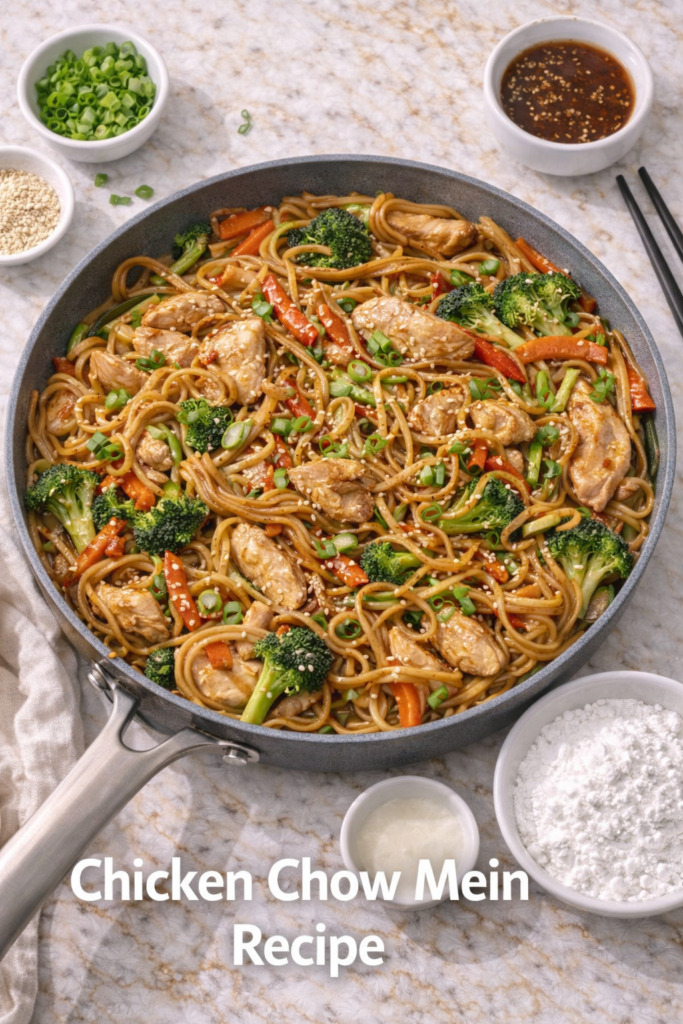
How to Make Chicken Chow Mein
Step 1: Marinate the chicken
Toss your sliced chicken with soy sauce, cornstarch, and sesame oil in a bowl. Mix it around until everything’s coated. Let it sit while you prep everything else. This does two things: adds flavor and helps the chicken stay tender when it hits that hot wok.
Step 2: Cook the noodles
Bring a pot of water to a boil. Add your noodles and cook them for about 2 minutes less than the package directions say. You want them al dente because they’re going back in the wok later. Drain them and toss with a tiny bit of oil so they don’t stick together.
Step 3: Mix your sauce
Whisk together the soy sauce, oyster sauce, sesame oil, rice wine, sugar, white pepper, and chicken broth in a small bowl. Set it next to the stove because once things start moving, you won’t have time to hunt for it.
Step 4: Cook the chicken
Heat your wok over high heat until it’s smoking. Add 1 tablespoon of vegetable oil and swirl it around. Toss in your marinated chicken and spread it out in a single layer. Let it sit for about 30 seconds before you start moving it around. You want a good sear. Cook for 3-4 minutes total until it’s just cooked through. Remove it from the wok and set it aside.
Step 5: Stir-fry the aromatics and vegetables
Add another tablespoon of oil to the wok. Toss in the garlic and ginger. Stir for about 10 seconds until you can smell them. Don’t let the garlic burn or it’ll taste bitter.
Add the onion and carrot first since they take longer. Stir-fry for about 2 minutes. Then add the cabbage and bell pepper. Keep everything moving for another 2-3 minutes. The vegetables should still have some crunch.
Step 6: Bring it all together
Add your cooked noodles to the wok. Toss everything around to mix it up. Pour the chicken back in. Add the bean sprouts and green onions.
Pour your sauce over everything and toss like crazy for about 1-2 minutes. You want every noodle coated but not swimming in sauce. The noodles should pick up a little color from the soy sauce and get slightly crispy on the edges if your wok is hot enough.
Step 7: Taste and adjust
Grab a noodle and taste it. Need more salt? Add a splash more soy sauce. Want it sweeter? Pinch of sugar. More umami? Drop of sesame oil. This is your dish, so make it taste how you want it.
Kill the heat and plate it up immediately.
Nutritional Information
This recipe serves 4 people. Here’s roughly what you’re looking at per serving:
- Calories: 425
- Protein: 28g
- Carbohydrates: 48g
- Fat: 13g
- Fiber: 4g
- Sodium: 920mg
Keep in mind these are estimates. Your numbers will shift depending on what noodles you use, how heavy-handed you are with the oil, and whether you add extra vegetables or protein.
If you’re watching sodium, go with low-sodium soy sauce and cut the oyster sauce in half. You can also bulk up the vegetables and use less noodles to drop the carbs and up the fiber.
Pairing Suggestions
Chicken chow mein is pretty filling on its own, but if you want to round out the meal:
Egg rolls or spring rolls are classic. The crispy texture plays nice against the soft noodles.
Hot and sour soup or egg drop soup makes a great starter. Something light and brothy balances out the heavier noodles.
Cucumber salad with rice vinegar and sesame seeds adds a cool, crunchy contrast.
For drinks, go with jasmine tea, Chinese beer, or even a crisp white wine like Riesling or Sauvignon Blanc. Something light that won’t fight with all those savory flavors.
Leftovers and Storage
Store leftovers in an airtight container in the fridge for up to 3 days. The noodles will soak up more sauce as they sit, so they’ll be softer when you reheat them.
Best reheating method: Hot wok or skillet with a splash of water or chicken broth. Toss it around over medium-high heat until everything’s hot. This brings back some of that stir-fried texture.
Microwave method: If you’re in a rush, microwave works. Add a tablespoon of water, cover it, and heat in 1-minute bursts, stirring between each one. It won’t be as good as fresh, but it’ll do the job.
Don’t freeze this. The noodles turn into mush and the vegetables get watery when you thaw them. Just make what you’ll eat in the next few days.
FAQ
What’s the difference between chow mein and lo mein?
Chow mein noodles are stir-fried until they’re slightly crispy. Lo mein noodles get tossed with sauce but stay soft. Different cooking methods, different textures, but both are delicious.
Can I use dried noodles instead of fresh?
Yeah, absolutely. Just boil them first according to package directions, drain them really well, and proceed with the recipe. Fresh noodles have a better texture, but dried works in a pinch.
Why is my chow mein soggy?
Usually because the wok wasn’t hot enough or there was too much sauce. Make sure your wok is smoking hot before you add anything, and go easy on the sauce. You can always add more, but you can’t take it back.
Do I really need a wok?
Nope. A large, deep skillet works fine. You won’t get quite the same smoky flavor that comes from a super hot wok, but the dish will still taste great.
Can I make this vegetarian?
Sure. Skip the chicken and oyster sauce. Use vegetable broth and add hoisin sauce or mushroom sauce for that savory umami flavor. Load it up with extra vegetables and maybe some crispy tofu.
What kind of noodles should I buy?
Look for fresh chow mein noodles in the refrigerated section of Asian grocery stores. They’re usually labeled as “chow mein noodles” or “stir-fry noodles.” If you can’t find them, fresh lo mein noodles or even fresh ramen noodles work.
How do I keep the vegetables crunchy?
High heat and fast cooking. Don’t let them sit in the wok too long. They should still have bite when you take them off the heat.
Wrapping Up
Once you get the hang of this chicken chow mein, you’ll probably stop ordering it out.
It’s faster than waiting for delivery, tastes better than anything that comes in a paper box, and you actually know what’s in it.
The key is keeping that wok hot and moving fast. Everything else is just chopping vegetables and tossing noodles around.
Give it a shot this week. Make it your own. Swap in whatever vegetables you like. Add more heat if you’re into that. Make it exactly how you want it.
Drop a comment below once you’ve tried it. I want to hear how it turned out and what tweaks you made.