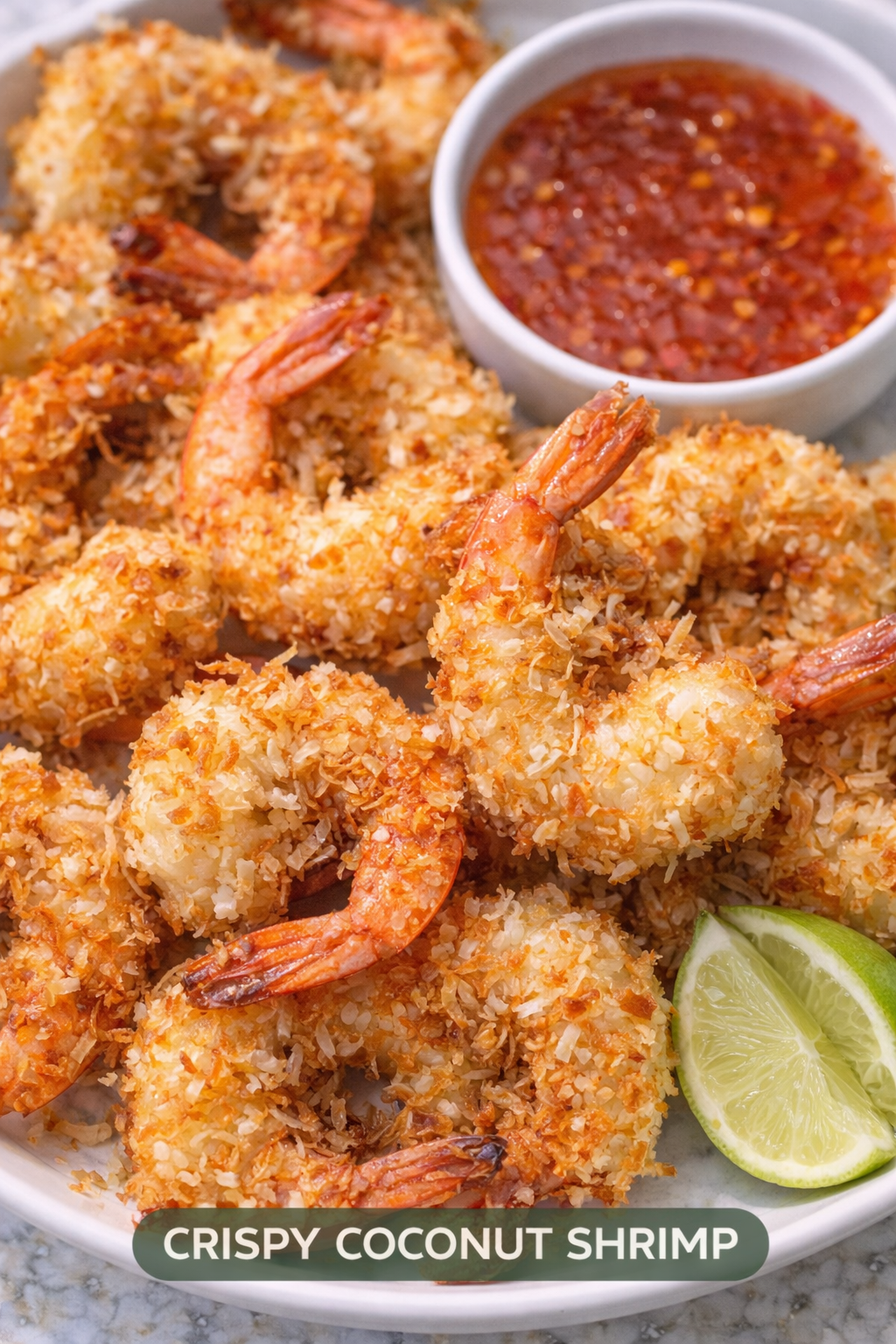
Ever ordered coconut shrimp at a restaurant and thought, “This is good, but it could be so much better”?
You’re not wrong.
Most versions are either greasy, under-seasoned, or the coconut coating falls off the second you pick one up. And I’m tired of accepting mediocre coconut shrimp when homemade is literally a thousand times better.
So here’s the thing: making coconut shrimp at home is stupidly easy. Like, so easy you’ll wonder why you’ve been paying $15 for six pieces at restaurants. And once you nail the technique (which I’m about to walk you through), you’ll have restaurant-quality shrimp that are crispy, golden, sweet, and savory all at once.
The key is getting that perfect crunch without turning your shrimp into rubber. And having the right dipping sauce because let’s be real, the sauce can make or break the entire experience.
I’ve made this recipe at least 20 times, and every time, people ask for seconds. Then thirds. And then they ask me to send them the recipe.
So if you’re ready to make coconut shrimp that’s actually worth the hype, keep reading.
What You’ll Need
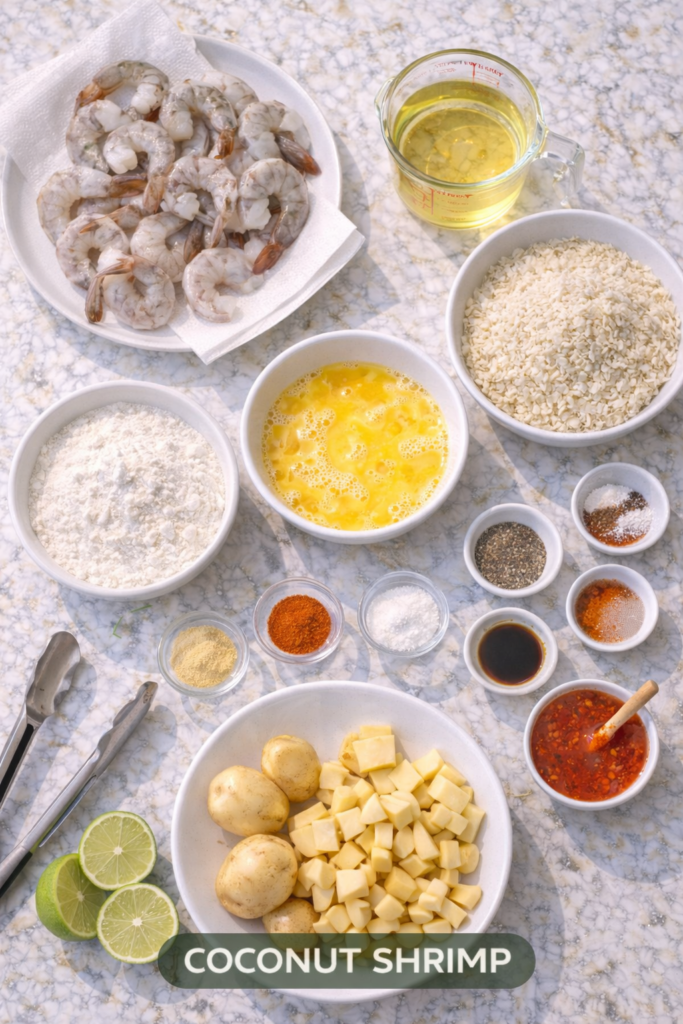
For the Shrimp:
- 1 pound large shrimp (peeled and deveined, tails on)
- 1 cup all-purpose flour
- 2 teaspoons garlic powder
- 1 teaspoon paprika
- 1 teaspoon salt
- ½ teaspoon black pepper
- ½ teaspoon cayenne pepper (optional, for a little kick)
- 2 large eggs
- 2 tablespoons water
- 1½ cups panko breadcrumbs
- 1½ cups sweetened shredded coconut
- Vegetable oil for frying
For the Sweet Chili Dipping Sauce:
- ½ cup sweet chili sauce
- 2 tablespoons lime juice
- 1 tablespoon honey
- 1 teaspoon soy sauce
- Pinch of red pepper flakes (optional)
Tools You’ll Need
Here’s what you’ll actually use (no fancy equipment required):
- 3 shallow bowls or plates for breading
- Large skillet or deep frying pan
- Tongs or fork
- Paper towel-lined plate
- Mixing spoon
- Meat thermometer (helpful but not essential)
Pro Tips
1. Pat your shrimp completely dry before you start
Seriously, this is non-negotiable. Wet shrimp = coating that slides right off. Use paper towels and really get them dry. I usually let mine sit on a paper towel for a few minutes while I set up my breading station.
2. Double-coating is your secret weapon
If you want that extra-thick, restaurant-style crust, dip your shrimp back into the egg mixture and then the coconut mixture one more time. It takes an extra 30 seconds per shrimp but the payoff is huge.
3. Don’t overcrowd your pan
I know you want to cook everything at once, but cramming too many shrimp in the pan drops the oil temperature and you end up with soggy, greasy shrimp. Cook in batches. Your patience will be rewarded.
4. Toast your coconut first for next-level flavor
This is totally optional, but if you want to take these to the next level, toast your shredded coconut in a dry pan for 2-3 minutes before using it in the coating. It brings out this nutty, caramelized flavor that’s unreal.
5. Serve immediately
Coconut shrimp are best when they’re hot and fresh. The coating starts to lose its crunch after about 15 minutes. So don’t make these hours ahead of time. Get everything prepped, then cook and serve.
Substitutions and Variations
Gluten-free: Swap the all-purpose flour for a 1:1 gluten-free flour blend and use gluten-free panko (or crushed cornflakes).
Air fryer version: You can absolutely make these in an air fryer. Spray the coated shrimp with cooking spray and air fry at 400°F for 8-10 minutes, flipping halfway through.
Baked version: Place coated shrimp on a greased baking sheet, spray with cooking spray, and bake at 425°F for 12-15 minutes, flipping once.
Spicy coconut shrimp: Add more cayenne to the flour mixture or mix sriracha into your dipping sauce.
Mango dipping sauce: Mix ½ cup mango puree with 2 tablespoons lime juice and 1 tablespoon honey for a tropical twist.
Use unsweetened coconut: If you don’t like things too sweet, use unsweetened coconut flakes instead. You’ll get all the coconut flavor without the extra sugar.
How to Make Coconut Shrimp
Step 1: Prep Your Shrimp
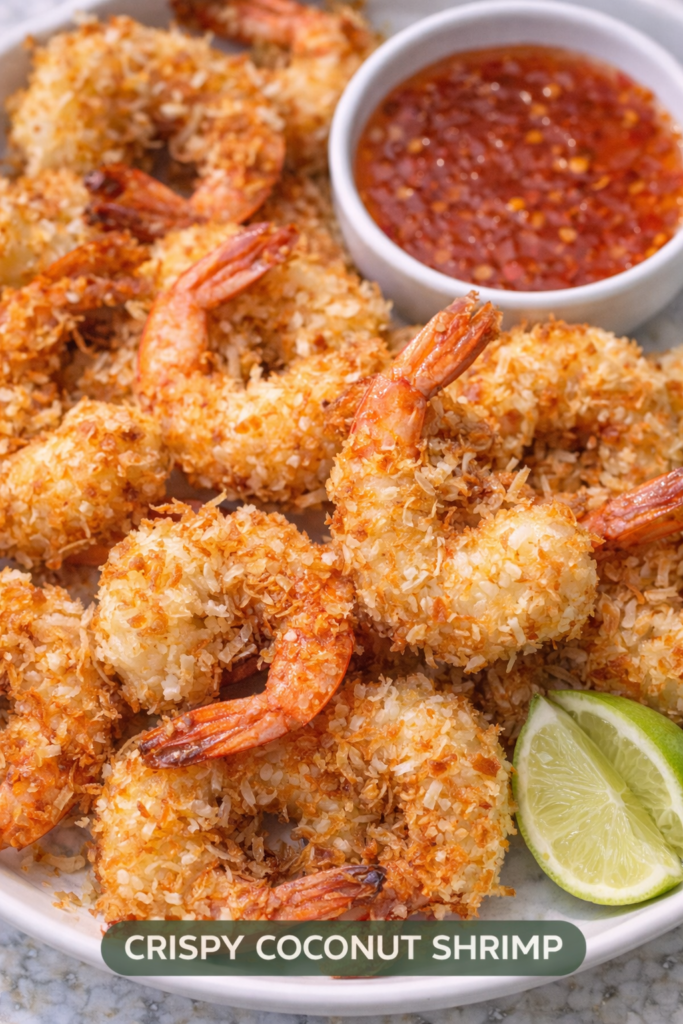
Pat your shrimp completely dry with paper towels. Like, really dry. This is crucial.
If your shrimp still have tails on, keep them. They make great little handles for dipping.
Step 2: Set Up Your Breading Station
Grab three shallow bowls or plates.
Bowl 1: Mix together the flour, garlic powder, paprika, salt, black pepper, and cayenne (if using).
Bowl 2: Whisk together the eggs and water until smooth.
Bowl 3: Combine the panko breadcrumbs and shredded coconut. Mix them up really well so they’re evenly distributed.
Set them up in a row: flour, egg, coconut mixture. This is your assembly line.
Step 3: Bread the Shrimp
Take a shrimp and coat it in the flour mixture first. Shake off any excess.
Dip it into the egg mixture. Let any extra egg drip off.
Press the shrimp into the coconut-panko mixture. Really press it in so the coating sticks. You want full coverage.
Place the coated shrimp on a clean plate and repeat with the rest.
If you want an extra-thick coating (which I highly recommend), dip each shrimp back into the egg and then the coconut mixture one more time.
Step 4: Heat Your Oil
Pour about ½ inch of vegetable oil into a large skillet. Heat it over medium-high heat.
You want it hot enough that when you drop a pinch of the coconut mixture in, it sizzles immediately. That’s usually around 350°F if you’re using a thermometer.
Step 5: Fry the Shrimp
Working in batches (don’t crowd the pan!), carefully add the shrimp to the hot oil.
Fry for about 2-3 minutes per side. You want them golden brown and crispy.
The shrimp will turn pink and opaque when they’re cooked through. Don’t overcook them or they’ll get rubbery.
Use tongs to transfer the fried shrimp to a paper towel-lined plate to drain.
Step 6: Make the Dipping Sauce
While your shrimp are frying (or before you even start), mix together the sweet chili sauce, lime juice, honey, soy sauce, and red pepper flakes in a small bowl.
Give it a taste. Want it sweeter? Add more honey. Want it tangier? Add more lime juice.
Step 7: Serve
Arrange your crispy coconut shrimp on a serving plate.
Put the dipping sauce in a small bowl next to them.
Serve immediately while they’re hot and crunchy.
Watch them disappear in about 3 minutes.
Leftovers and Storage
Here’s the truth: coconut shrimp don’t keep well.
The coating gets soft and soggy pretty quickly, even in the fridge.
If you do have leftovers, store them in an airtight container in the fridge for up to 2 days.
To reheat, your best bet is the oven or air fryer. Put them on a baking sheet and bake at 400°F for 5-7 minutes, or air fry at 350°F for 3-4 minutes. Don’t microwave them unless you want sad, limp shrimp.
But honestly? These are best eaten fresh. So maybe just invite friends over and make sure there are no leftovers to worry about. 😏
Make Ahead Tips
You can set up your breading station and coat all the shrimp ahead of time.
Place the coated shrimp on a baking sheet lined with parchment paper and refrigerate for up to 4 hours before frying.
You can also freeze the coated (uncooked) shrimp for up to 2 months. Freeze them on a baking sheet first, then transfer to a freezer bag once solid. Fry from frozen, just add an extra minute or two to the cooking time.
The dipping sauce can be made up to 3 days ahead and stored in the fridge.
Nutritional Information (Per Serving)
This recipe makes about 4 servings.
- Calories: 380
- Protein: 28g
- Carbohydrates: 32g
- Fat: 16g
- Saturated Fat: 8g
- Fiber: 2g
- Sugar: 12g
- Sodium: 920mg
Keep in mind these are fried, so they’re not exactly health food. But you can bake or air fry them to cut down on the fat.
Meal Pairing Suggestions
Coconut shrimp are pretty versatile, so here are some ideas:
With rice: Serve over jasmine rice or coconut rice with a side of sautéed veggies.
As an appetizer: These are perfect for parties. Just put out a big platter with the dipping sauce.
In a salad: Toss them on top of a tropical salad with mango, avocado, and mixed greens.
With noodles: Serve with cold rice noodles and a peanut sauce for a Thai-inspired meal.
Taco night: Use them as taco filling with cabbage slaw and lime crema.
FAQ
Can I use frozen shrimp?
Yep. Just make sure to thaw them completely and pat them very dry before breading. Frozen shrimp often have extra moisture, so this step is even more important.
What size shrimp should I use?
Large or jumbo shrimp work best. You want them big enough that they don’t overcook before the coating gets crispy. Look for 16-20 count or 21-25 count per pound.
Can I use fresh coconut instead of shredded?
You could, but it would be a lot of work. Shredded coconut is already the perfect size and texture for this recipe. Fresh coconut might not stick as well either.
Why is my coating falling off?
Usually this happens because the shrimp weren’t dry enough or the oil wasn’t hot enough. Make sure you pat them completely dry and let your oil get nice and hot before frying.
Can I skip the panko and just use coconut?
You could, but I don’t recommend it. The panko gives the coating structure and helps it stay crispy. Without it, the coconut can burn before the shrimp are cooked.
What if I don’t like sweet chili sauce?
Try a mango dipping sauce, cocktail sauce, or even ranch. Honestly, these shrimp are good enough that you could eat them plain.
How do I know when the oil is hot enough?
Drop a pinch of the coconut-panko mixture into the oil. If it sizzles immediately and floats to the surface, you’re good to go. If it just sits there, wait another minute.
Can I use this same method for chicken?
Absolutely. Coconut chicken tenders are amazing. Just adjust the cooking time since chicken takes longer to cook through than shrimp.
Wrapping Up
Once you make coconut shrimp at home, there’s no going back to the restaurant version.
The combination of crispy, golden coconut coating and tender, juicy shrimp is unbeatable. And when you dip them in that sweet chili sauce? Pure perfection.
The whole recipe comes together in about 30 minutes, and you get way more shrimp for way less money than ordering out.
Plus, you can customize the heat level, make them gluten-free, or even bake them if you want. It’s completely flexible.
So grab your shrimp, set up that breading station, and get ready to make the crispiest, most delicious coconut shrimp you’ve ever had.
And after you make them, come back and drop a comment. Did you double-coat yours? What dipping sauce did you use? I want to hear all about it.