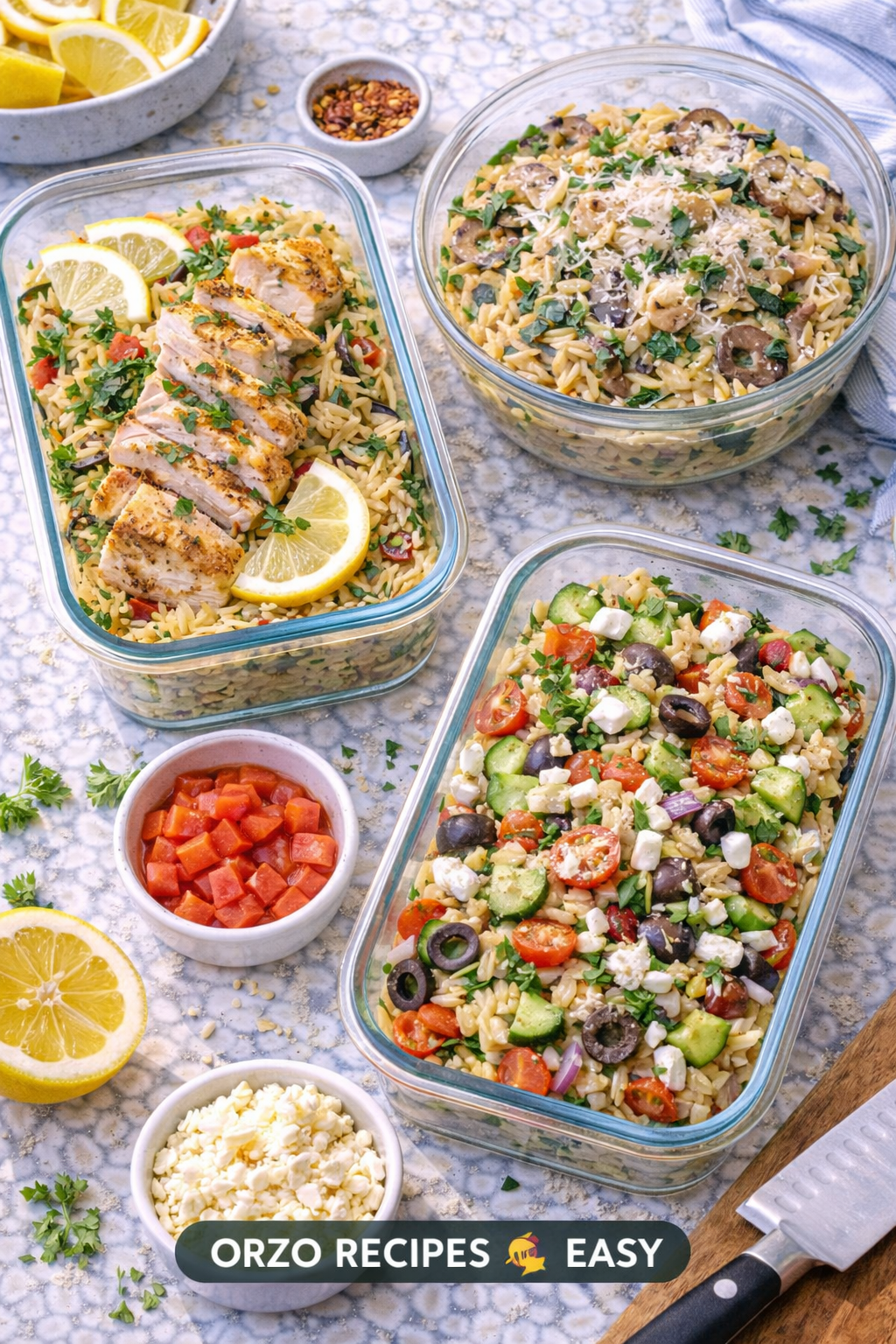
Can tiny rice-shaped pasta actually be better than traditional noodles?
I used to walk right past orzo in the grocery store. It looked like rice, lived in the pasta aisle, and I had no idea what to do with it. Then I made this one-pan Mediterranean orzo on a random Tuesday night and now it’s the only pasta I want to eat.
The texture is completely different from regular pasta. It’s creamy without adding cream, it soaks up flavor like nobody’s business, and you can make an entire meal in one pan in under 30 minutes.
No draining required. No waiting for water to boil. Just dump everything in and let it do its thing.
What You’ll Need
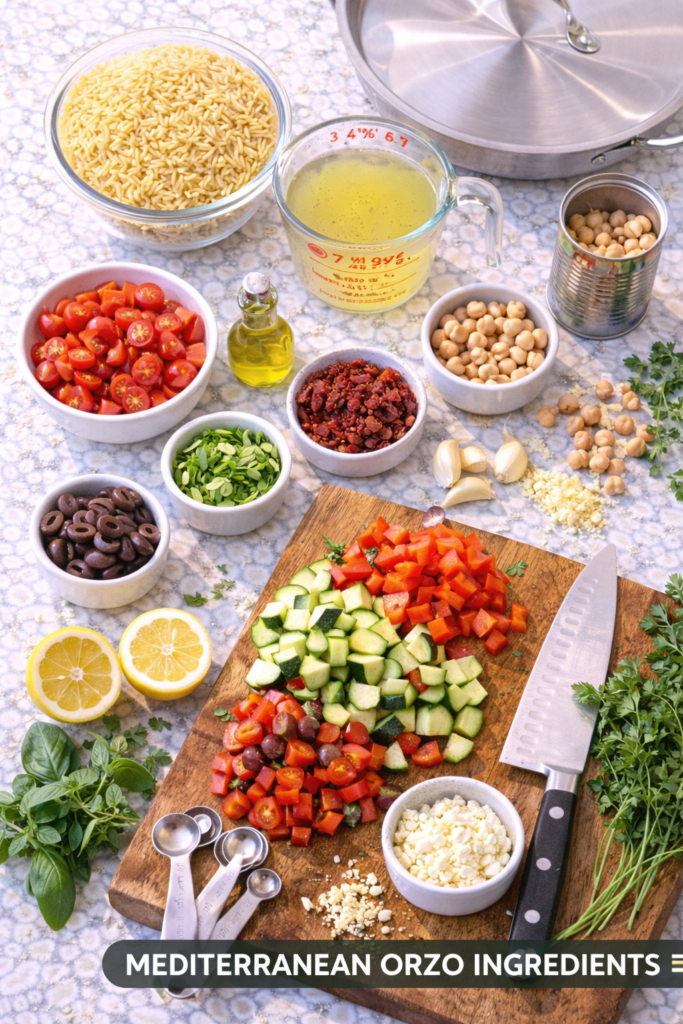
For the Orzo:
- 2 cups orzo pasta
- 3 ½ cups vegetable or chicken broth (low-sodium works best)
- 1 cup cherry tomatoes, halved
- ½ cup sun-dried tomatoes, chopped
- 1 medium zucchini, diced
- 1 red bell pepper, diced
- 4 cloves garlic, minced
- ½ cup Kalamata olives, pitted and halved
- 1 can (15 oz) chickpeas, drained and rinsed
- 3 tablespoons olive oil
- 1 teaspoon dried oregano
- 1 teaspoon dried basil
- ½ teaspoon red pepper flakes (optional)
- Salt and black pepper to taste
- Juice of 1 lemon
- ½ cup crumbled feta cheese
- ¼ cup fresh basil, chopped
- ¼ cup fresh parsley, chopped
Tools You’ll Need
- Large deep skillet or sauté pan with lid (at least 12 inches)
- Wooden spoon or spatula
- Measuring cups and spoons
- Sharp knife
- Cutting board
- Can opener
Pro Tips
Toast the orzo first. Before adding any liquid, toast your dry orzo in olive oil for 2-3 minutes until it’s golden brown. This gives it a nutty flavor that makes the whole dish taste more complex.
Don’t skip the lemon juice. Add it at the very end, not during cooking. The bright acidity cuts through the richness and makes everything taste fresher. I learned this the hard way after making bland orzo for weeks.
Let it rest for 5 minutes. After you turn off the heat, put the lid on and let it sit. The orzo continues absorbing liquid and gets even creamier. If you serve it immediately, it’ll be soupy.
Save some pasta water. If your orzo gets too thick as it sits, add a splash of warm broth or pasta water to loosen it up. It happens, especially with leftovers.
Add the feta last. Crumble it on top after cooking so it stays creamy and doesn’t completely melt into the dish. You want those little pockets of salty cheese throughout.
How to Make It
Step 1: Prep your vegetables.
Dice the zucchini and bell pepper into small, bite-sized pieces. Halve the cherry tomatoes. Chop the sun-dried tomatoes. Mince your garlic. Having everything ready before you start cooking makes this so much easier.
Step 2: Toast the orzo.
Heat 2 tablespoons of olive oil in your large skillet over medium heat. Add the dry orzo and stir constantly for 2-3 minutes until it turns golden brown and smells nutty. This step is optional but it makes a huge difference.
Step 3: Sauté the aromatics.
Push the toasted orzo to the side of the pan. Add the remaining tablespoon of olive oil and the minced garlic. Cook for 30 seconds until fragrant but not burned. Garlic burns fast, so watch it closely.
Step 4: Add the vegetables.
Toss in the bell pepper, zucchini, sun-dried tomatoes, and chickpeas. Stir everything together and cook for 2-3 minutes. You’re not trying to fully cook the vegetables here, just get them started.
Step 5: Add the broth and seasonings.
Pour in the broth and add the oregano, basil, red pepper flakes (if using), salt, and black pepper. Stir everything together and bring it to a boil.
Step 6: Simmer the orzo.
Once it’s boiling, reduce the heat to medium-low. Cover the pan with a lid and let it simmer for 12-15 minutes, stirring every 3-4 minutes to prevent sticking. The orzo should absorb most of the liquid and become tender.
Step 7: Add the tomatoes and olives.
When the orzo is almost done (still slightly al dente), stir in the cherry tomatoes and Kalamata olives. Cook uncovered for another 2-3 minutes. The cherry tomatoes will soften slightly but still hold their shape.
Step 8: Finish and rest.
Turn off the heat. Squeeze in the lemon juice and stir. Put the lid back on and let it sit for 5 minutes. This is when the magic happens and everything gets creamy.
Step 9: Add the cheese and herbs.
Remove the lid and stir in half of the fresh basil and parsley. Top with crumbled feta and the remaining herbs.
Serve it straight from the pan. 🍋
Substitutions and Variations
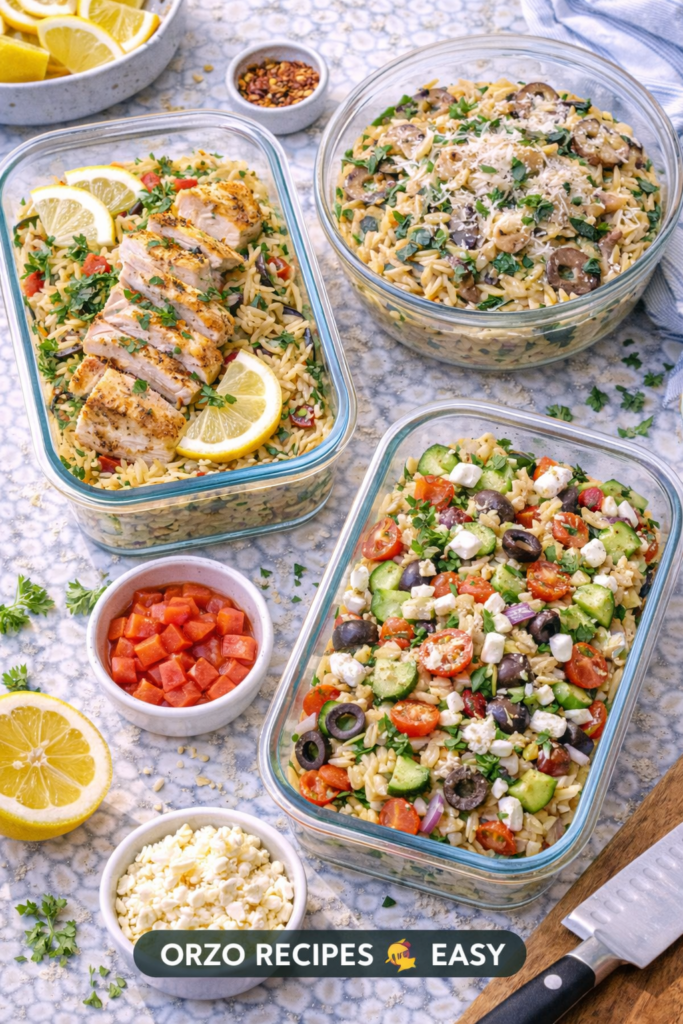
Make it vegan: Skip the feta or use vegan feta. The dish is still really flavorful without it.
Swap the protein: Use white beans instead of chickpeas, or add cooked chicken, shrimp, or Italian sausage in step 4.
Different vegetables: Spinach, kale, eggplant, or asparagus all work great here. Add leafy greens in the last 2 minutes of cooking so they don’t get mushy.
No sun-dried tomatoes? Use an extra ½ cup of cherry tomatoes or 1 cup of diced fresh tomatoes instead.
Spice it up: Add ½ teaspoon of smoked paprika or a pinch of cayenne pepper for extra heat.
Cheese options: Swap feta for goat cheese, shaved Parmesan, or fresh mozzarella balls.
Make-Ahead Tips
You can prep all your vegetables up to 2 days in advance. Store them in airtight containers in the fridge.
The chickpeas can be drained and rinsed ahead of time too.
I don’t recommend making the entire dish ahead because orzo continues absorbing liquid as it sits. If you do make it ahead, undercook it slightly and add extra broth when reheating.
Leftovers and Storage
Store leftovers in an airtight container in the fridge for up to 4 days.
The orzo will thicken up as it sits. When reheating, add 2-3 tablespoons of broth or water and stir it in. Heat it on the stove over medium-low heat or microwave in 1-minute intervals, stirring between each interval.
You can freeze this for up to 2 months, but the texture of the vegetables won’t be quite as good when you thaw it. The orzo itself freezes fine though.
Nutrition Information (Per Serving)
Makes 6 servings
- Calories: 385
- Protein: 12g
- Carbohydrates: 52g
- Fat: 14g
- Fiber: 6g
- Sugar: 5g
- Sodium: 680mg
This is comfort food that doesn’t make you feel terrible after eating it. The chickpeas and veggies add protein and fiber, so it’s actually filling.
Meal Pairing Suggestions
This orzo is a complete meal on its own, but if you want to serve it with something:
Garlic bread is always a good call. Toast some crusty bread with butter, garlic, and parsley.
Simple green salad with lemon vinaigrette balances out the richness.
Roasted vegetables like broccoli or Brussels sprouts add more texture.
Grilled chicken or fish if you want extra protein without changing the orzo itself.
White wine like Pinot Grigio or Sauvignon Blanc pairs really well with the Mediterranean flavors.
Cooking Time Efficiency Tips
Get all your chopping done before you turn on the stove. Seriously. This makes the actual cooking process so much faster and less stressful.
Use pre-minced garlic from a jar if you’re short on time. I know fresh is better, but jarred garlic still works.
Buy pre-crumbled feta cheese. It costs a bit more but saves you 30 seconds.
If you’re making this for meal prep, double the recipe. It takes the same amount of active cooking time and you’ll have lunch for the week.
Why This Works
Orzo cooks directly in the broth, which means it absorbs all those flavors instead of getting drained away like regular pasta. It’s basically a risotto technique without all the stirring and babysitting.
The vegetables release their moisture as they cook, adding even more flavor to the dish.
The sun-dried tomatoes bring this concentrated tomato flavor that fresh tomatoes alone can’t give you.
And the lemon juice at the end brightens everything up so it doesn’t taste heavy or one-dimensional.
What Makes This Different
Most orzo recipes tell you to boil it separately and then mix it with other stuff. That’s fine, but you’re missing out on so much flavor.
Cooking everything together in one pan means the orzo absorbs all the vegetable juices, the herbs, the garlic, everything. Each grain is packed with flavor.
Plus, you only have one pan to wash. That alone makes this recipe worth it.
Common Mistakes to Avoid
Using too much liquid. Stick to the 3 ½ cups. If you add more, you’ll end up with soup instead of creamy orzo.
Not stirring enough. Orzo sticks to the bottom of the pan if you don’t stir it every few minutes. Just give it a quick stir and you’re good.
Adding the cheese too early. If you stir feta into hot orzo, it melts completely and disappears. Crumble it on top at the very end.
Skipping the resting time. I know you’re hungry, but those 5 minutes make the texture so much better.
Overcooking the vegetables. They should be tender but not mushy. If you’re adding spinach or other leafy greens, wait until the last 2 minutes.
FAQ
Can I use regular pasta instead of orzo?
You could, but the cooking method would need to change. Regular pasta needs more water and gets drained. Orzo works specifically because it absorbs the exact amount of liquid you give it.
Is orzo gluten-free?
No, traditional orzo is made from wheat. But you can find gluten-free orzo made from rice or corn. The cooking time might be slightly different, so check the package instructions.
Can I make this in an Instant Pot?
Yes. Sauté the garlic and vegetables using the sauté function, then add everything else, seal the lid, and cook on high pressure for 6 minutes. Quick release the pressure and stir in the lemon juice, cheese, and herbs.
Why is my orzo mushy?
You either used too much liquid or cooked it too long. Next time, check it at the 12-minute mark and stop cooking as soon as it’s al dente. It’ll continue softening as it rests.
Can I add meat to this?
Absolutely. Cook diced chicken, shrimp, or Italian sausage in the pan first, remove it, then follow the recipe. Add the cooked meat back in during step 7 with the tomatoes and olives.
How do I know when the orzo is done?
Taste it. It should be tender with a slight bite, like al dente pasta. If it’s still crunchy in the center, add a splash more broth and cook for another 2-3 minutes.
Can I use milk instead of broth?
I wouldn’t recommend it. Milk doesn’t have the same flavor depth and it might curdle with the lemon juice. Stick with broth for best results.
What’s the difference between orzo and risotto?
Orzo is pasta shaped like rice. Risotto is actually rice (specifically Arborio rice). They have similar textures when cooked, but orzo cooks faster and doesn’t need constant stirring.
Wrapping Up
This Mediterranean orzo is one of those recipes that feels fancy but requires basically zero effort. You chop some vegetables, dump everything in a pan, and 30 minutes later you have dinner.
I’ve made this at least 20 times in the past few months and it never gets old. Sometimes I add artichoke hearts, sometimes I use different beans, sometimes I throw in whatever vegetables are about to go bad in my fridge.
The base recipe is solid enough that you can mess with it and it’ll still turn out great.
Give it a try this week and let me know how it goes in the comments. Did you add anything extra? Swap any ingredients? I’m always curious to see how people make recipes their own.