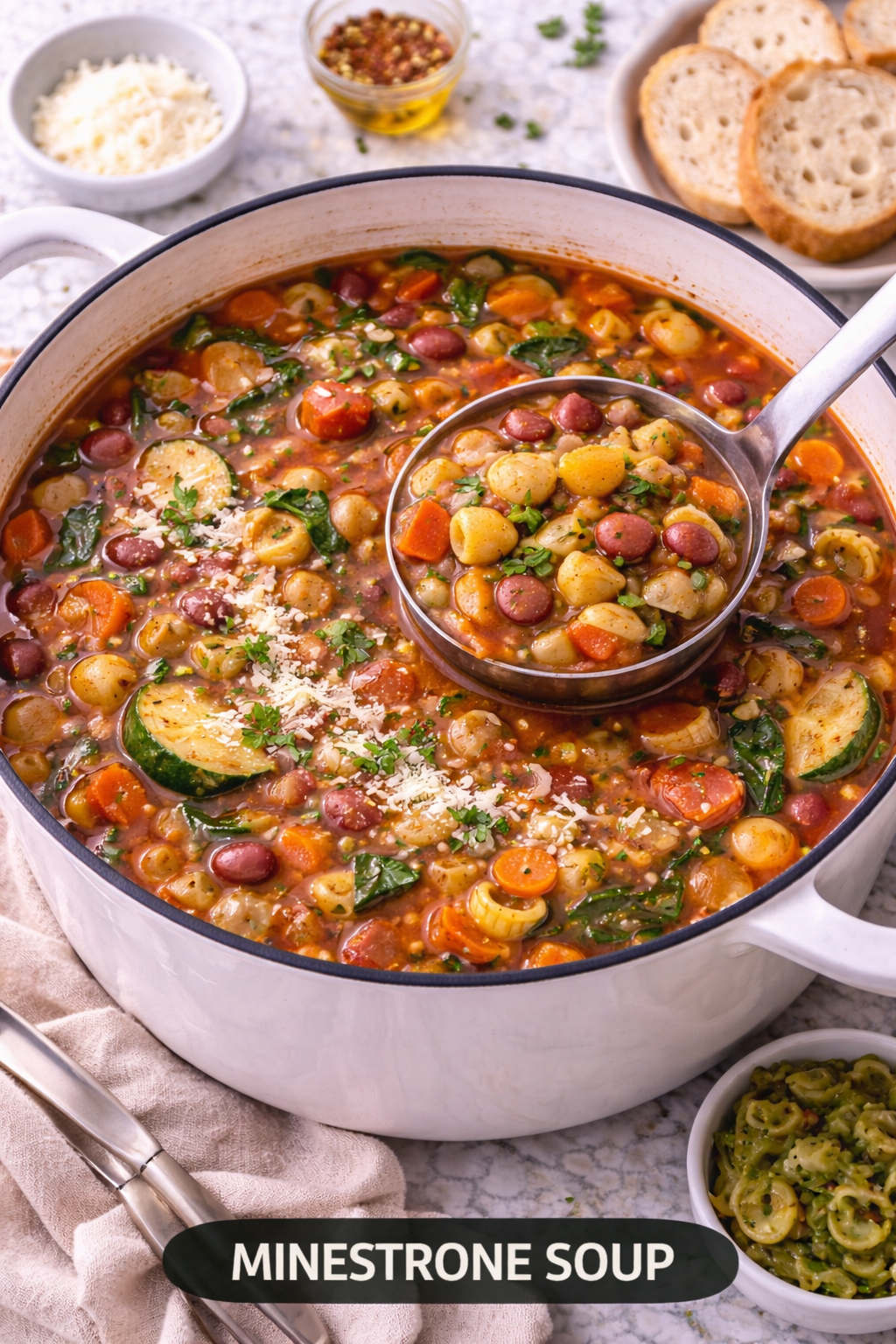
Forget every bland, watery minestrone you’ve ever had. This one’s different.
You know how most vegetable soups taste like…well, just hot vegetable water? This isn’t that. This is the kind of soup that makes you go back for thirds even when you’re already full. The kind that tastes even better the next day (if it lasts that long).
I’m talking about a thick, hearty, actually-has-flavor minestrone that’ll make you understand why Italians have been making this for centuries.
And here’s the thing: it’s not complicated. You don’t need fancy equipment or hard-to-find ingredients. Just vegetables, beans, pasta, and a few smart tricks that make all the difference.
Ready to make the soup that’ll have everyone asking for the recipe?
What You’ll Need
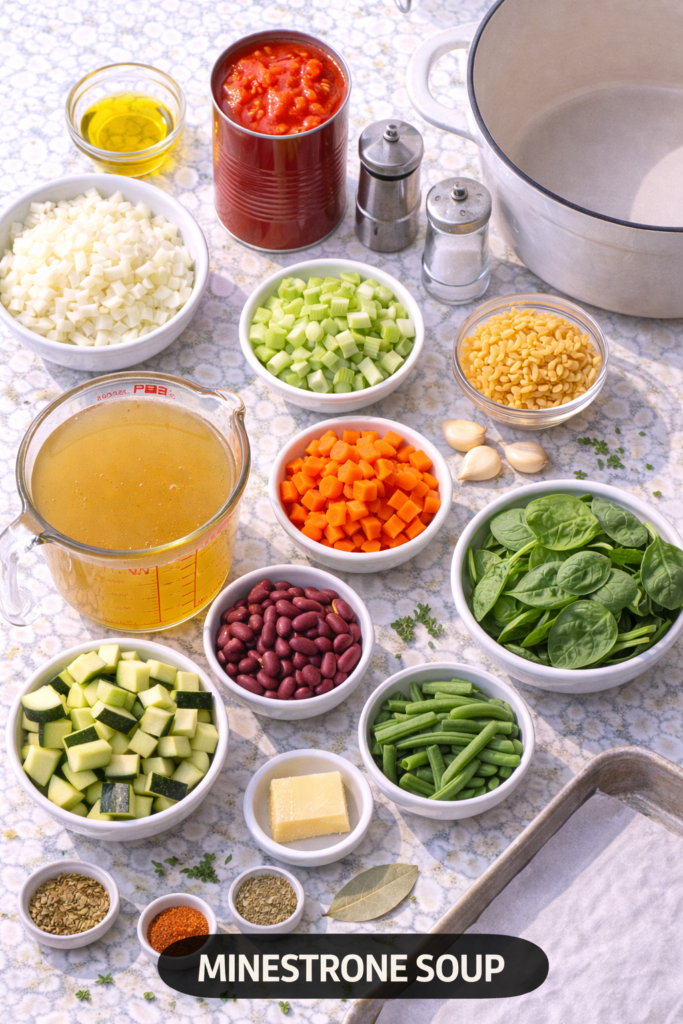
For the Soup Base:
- 3 tablespoons olive oil (extra virgin if you have it)
- 1 large onion, diced
- 3 carrots, peeled and diced
- 3 celery stalks, diced
- 4 garlic cloves, minced
- 1 (28-ounce) can diced tomatoes
- 6 cups vegetable broth (low sodium works best)
- 2 cups water
- 1 parmesan rind (game changer 🧀)
Vegetables & Beans:
- 2 medium zucchini, diced
- 1 (15-ounce) can kidney beans, drained and rinsed
- 1 (15-ounce) can cannellini beans, drained and rinsed
- 2 cups fresh spinach (or kale if you prefer)
- 1 cup green beans, trimmed and cut into 1-inch pieces
Pasta & Seasonings:
- 1 cup small pasta (ditalini, elbow, or small shells)
- 2 teaspoons dried oregano
- 2 teaspoons dried basil
- 1 bay leaf
- Salt and black pepper to taste
- Red pepper flakes (optional, but recommended)
For Serving:
- Fresh basil leaves
- Grated parmesan cheese
- Crusty bread (not optional in my book)
Tools You’ll Need
- Large heavy-bottomed pot or Dutch oven (at least 6 quarts)
- Wooden spoon for stirring
- Sharp knife
- Cutting board
- Can opener
- Measuring cups and spoons
- Ladle for serving
Pro Tips
Don’t skip the parmesan rind. I know it sounds weird to throw cheese rind into soup, but trust me on this one. It adds this rich, umami depth that you just can’t get any other way. Save your rinds in the freezer and thank me later.
Cook the pasta separately. If you’re planning on having leftovers, cook the pasta in a separate pot and add it to individual bowls. Otherwise, it’ll soak up all your broth overnight and you’ll end up with pasta casserole instead of soup.
Let it simmer longer than you think. The longer this soup simmers, the better it gets. The flavors meld together and everything just tastes more…complete. I usually give it at least 30 minutes, but an hour is even better if you have the time.
Season in layers. Add salt and pepper as you go, not just at the end. Season the vegetables when you sauté them, taste the broth before adding the beans, and adjust again at the very end. This builds flavor instead of just making things salty.
Save the spinach for last. Overcooked spinach gets slimy and weird. Add it right at the end so it just wilts into the soup while keeping its color and texture.
How to Make It
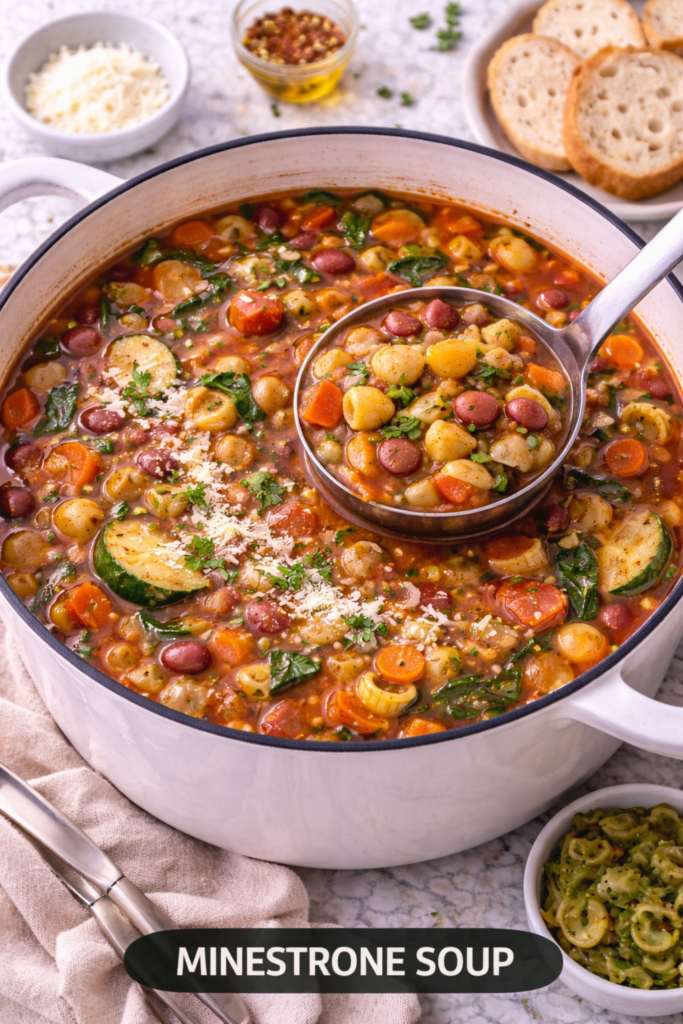
Start by heating the olive oil in your large pot over medium heat. Once it’s shimmering (not smoking), add the onion, carrots, and celery. This is your soffritto, which is basically the flavor foundation of Italian cooking.
Sauté these vegetables for about 8-10 minutes. You want them soft and starting to get a little color. Don’t rush this part by cranking up the heat. Low and slow is your friend here.
Toss in the minced garlic and cook for another minute until it smells amazing. If your garlic starts to brown, you’ve gone too far.
Now add the diced tomatoes with all their juices, the vegetable broth, water, oregano, basil, bay leaf, and that magical parmesan rind. Give everything a good stir and bring it to a boil.
Once it’s boiling, reduce the heat to low and let it simmer for 20 minutes. This is when your kitchen starts to smell incredible and everyone starts asking “what’s for dinner?”
After 20 minutes, add the zucchini, green beans, kidney beans, and cannellini beans. Bring it back to a simmer and cook for another 15 minutes.
Taste your soup and adjust the seasoning. Add salt, pepper, maybe a pinch of red pepper flakes if you want a little kick.
Stir in the spinach and let it wilt for about 2 minutes. Fish out the parmesan rind and bay leaf (they’ve done their job).
If you’re eating right away, add the cooked pasta directly to the pot. If you’re meal prepping, keep it separate.
Ladle into bowls, top with fresh basil and grated parmesan, and serve with crusty bread for dipping.
Substitutions and Variations
Make it vegan: Skip the parmesan rind and use nutritional yeast instead. Add a splash of soy sauce for that umami depth.
No fresh spinach? Frozen works just fine. You can also use kale, Swiss chard, or even arugula.
Switch up the beans: Any white beans work great here. Great northern beans, navy beans, or even chickpeas are all fair game.
Gluten-free option: Use your favorite gluten-free pasta. Rice pasta or chickpea pasta both work well in this soup.
Add protein: Stir in some cooked Italian sausage, shredded chicken, or crispy pancetta if you want to make it heartier.
Different vegetables: Throw in whatever you have. Potatoes, cabbage, butternut squash, or bell peppers all work. Just adjust cooking times based on how long each vegetable needs.
Spice it up: Add a teaspoon of Italian seasoning blend, some fresh thyme, or a splash of white wine when you add the broth.
Make Ahead Tips
This soup actually gets better after sitting in the fridge overnight. The flavors continue to develop and everything just tastes more cohesive.
Make a big batch on Sunday and you’ve got lunch sorted for the week. It reheats beautifully on the stovetop or in the microwave.
Just remember: if you’re making it ahead, keep the pasta separate. Add it when you reheat individual portions so it doesn’t turn to mush.
You can also freeze this soup for up to 3 months. Let it cool completely, portion it into freezer-safe containers (leaving some room for expansion), and freeze. Thaw in the fridge overnight before reheating.
Nutritional Information
Per serving (based on 8 servings):
- Calories: 245
- Protein: 11g
- Carbohydrates: 42g
- Fiber: 9g
- Fat: 6g
- Sodium: 580mg (varies based on broth)
This soup is packed with vegetables, fiber, and plant-based protein from the beans. It’s filling without being heavy, and you can easily adjust the pasta amount if you’re watching carbs.
What to Serve With It
Crusty bread: A good baguette or sourdough is non-negotiable. You need something to soak up all that delicious broth.
Simple salad: A crisp Caesar or arugula salad with lemon vinaigrette balances out the heartiness of the soup.
Garlic bread: Because why not? Butter, garlic, parsley, toasted bread. Yes.
White wine: A crisp Italian white like Pinot Grigio or Vermentino pairs perfectly.
Focaccia: If you’re feeling fancy, homemade focaccia takes this meal to another level.
Leftovers and Storage
Store leftover soup in an airtight container in the fridge for up to 5 days. Like I mentioned, keep the pasta separate if possible.
When reheating, add a splash of water or broth because the soup will thicken as it sits. Heat on the stovetop over medium-low heat, stirring occasionally, until warmed through.
Frozen soup will keep for up to 3 months. Thaw overnight in the fridge, then reheat on the stovetop. You might need to add extra liquid since freezing can change the texture slightly.
If your pasta did get mixed in and is now mushy, don’t stress. Just cook fresh pasta and add it to your reheated soup. Problem solved.
Frequently Asked Questions
Can I use chicken broth instead of vegetable broth?
Absolutely. Chicken broth adds a different depth of flavor that’s also really good. Use whatever you have on hand.
Do I have to use canned beans?
Nope! If you want to cook dried beans from scratch, go for it. You’ll need about 3 cups of cooked beans total. Just know it adds time to your prep.
What if I don’t have a parmesan rind?
The soup will still be delicious without it. You can add a tablespoon of tomato paste for extra umami, or just load up on the grated parmesan when serving.
Can I make this in a slow cooker?
Yes! Add everything except the spinach and pasta to your slow cooker. Cook on low for 6-8 hours or high for 3-4 hours. Add spinach in the last 10 minutes and pasta in the last 30 minutes.
My soup is too thick. What do I do?
Just add more broth or water until you reach your desired consistency. Minestrone is supposed to be hearty, but it shouldn’t be a stew.
Is this soup actually authentic Italian?
Every Italian grandmother has her own version of minestrone. There’s no single “authentic” recipe. This version is inspired by traditional recipes but adapted for easy weeknight cooking.
How do I keep the vegetables from getting mushy?
Don’t overcook them. Add firmer vegetables first (carrots, green beans) and softer ones later (zucchini). The vegetables should be tender but still have some bite.
Can kids eat this?
Definitely. You might want to go lighter on the garlic and skip the red pepper flakes, but this is a great way to get kids to eat their vegetables. Let them help you stir and they’ll be even more excited to try it.
Wrapping Up
There’s something really satisfying about making a huge pot of soup that feeds your family for days and actually gets better with time.
This minestrone isn’t fancy or complicated. It’s just really, really good. The kind of soup that makes you feel like you’ve got your life together even when you definitely don’t.
So grab your biggest pot, dice up some vegetables, and make this happen. Your future self (the one eating leftovers for lunch all week) will thank you.
Have you made this yet? Drop a comment below and let me know what you think. And if you switched anything up or added your own twist, I want to hear about it 👇