Ever thought onions were just the supporting actor in your meals? Think again.
I stumbled onto this onion boil recipe when I was digging through my grandmother’s old recipe box, and I’m not gonna lie, I was skeptical. Boiling onions? That’s it? Sounds boring, right?
Wrong. So wrong.
This dish turned out to be one of those simple, soul-warming recipes that makes you wonder why you’ve been complicating your life with fancy ingredients. It’s the kind of food that feels like a warm hug after a long day, and honestly, it’s become my go-to whenever I need something comforting but don’t want to spend hours in the kitchen.
The onions become incredibly tender and sweet, almost candy-like, but in a savory way that’s hard to describe until you taste it. And the broth? You’ll want to drink it straight from the bowl (no judgment here, I’ve done it).
Let me show you how to make this ridiculously simple recipe that’ll have you looking at onions in a whole new light.
What You’ll Need
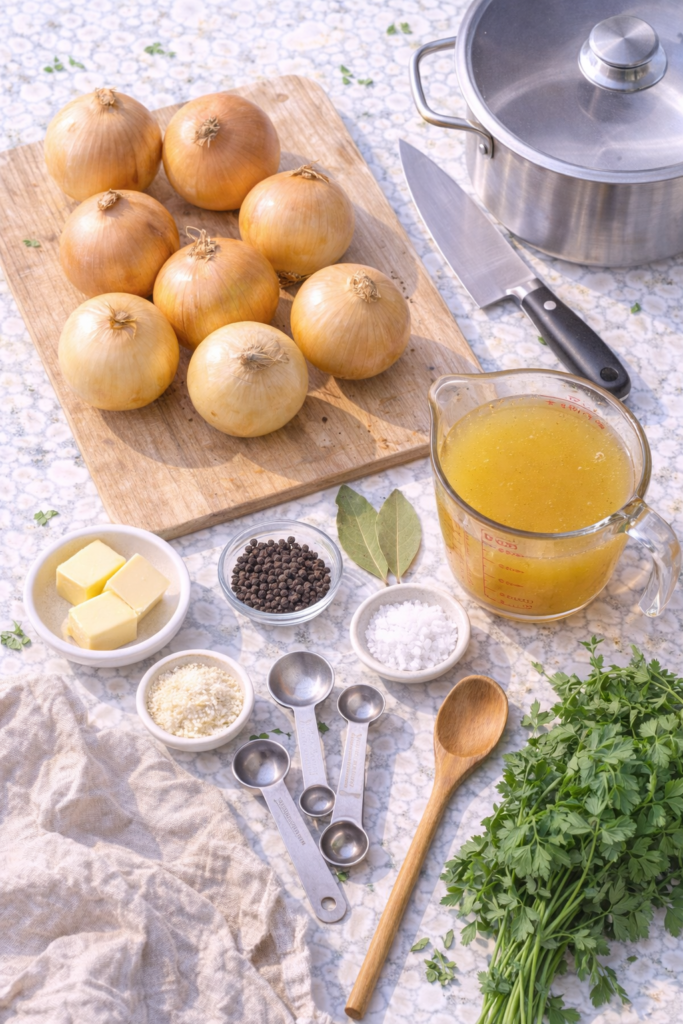
For the Onion Boil:
- 6 medium yellow onions (about 2 lbs total)
- 4 cups chicken or vegetable broth
- 3 tablespoons butter
- 2 bay leaves
- 4 cloves garlic, smashed
- 1 teaspoon fresh thyme leaves (or 1/2 teaspoon dried)
- 1/2 teaspoon black peppercorns
- 1 teaspoon sea salt
- 1/2 teaspoon smoked paprika
- Fresh parsley for garnish
Optional Add-ins:
- 2 tablespoons white wine
- 1 tablespoon honey (if you like it slightly sweet)
- A pinch of red pepper flakes for heat
Tools You’ll Need
You probably have everything already:
- Large pot with lid (at least 4-quart capacity)
- Sharp knife and cutting board
- Measuring cups and spoons
- Ladle
- Slotted spoon
- Serving bowls
That’s literally it. No fancy gadgets, no special equipment. Just your basic kitchen tools.
Pro Tips
These little tricks will take your onion boil from good to “can I have the recipe?”
Pick the right onions. Yellow onions are your best friend here. They have the perfect balance of sweet and sharp, and they hold their shape beautifully when boiled. Red onions work too, but they can get a bit mushy. White onions? Skip them for this recipe.
Don’t skip the smashed garlic. I know it seems like the onions should be the star here, but the garlic adds this subtle depth that makes the whole dish sing. Smash the cloves with the side of your knife instead of mincing them. You want those big pieces that’ll infuse the broth without overpowering everything.
Low and slow wins the race. You’re not making pasta here. Keep that heat on medium-low and let the onions simmer gently. If you rush it on high heat, they’ll fall apart and you’ll end up with onion soup instead of beautiful, tender whole onions.
Taste as you go. Every onion is different. Some are sweeter, some are sharper. Start with less salt than you think you need, then adjust. You can always add more, but you can’t take it back.
Save that broth! Once you’ve eaten all the onions, don’t you dare throw away that golden liquid. It’s perfect for making rice, deglazing pans, or sipping on a cold day. I freeze mine in ice cube trays and use it whenever a recipe calls for broth.
Substitutions and Variations
Life happens. Here’s how to make this recipe work with what you’ve got:
Broth: No broth? Use water with a couple bouillon cubes. Bone broth works great too and adds extra richness. Vegetable broth keeps it plant-based.
Butter: Olive oil or coconut oil work fine. Ghee is amazing if you have it. Each fat brings its own flavor, so pick what sounds good to you.
Thyme: Rosemary is a solid swap. So is oregano. Really, any woody herb will do the trick. Fresh is always better, but dried works in a pinch (just use half the amount).
Bay leaves: Got a cinnamon stick? That works. A few whole cloves? Sure. You’re building flavor, so get creative.
Want to make it fancy? Add a splash of white wine or sherry. Toss in some mushrooms. Stir in a spoonful of miso paste for umami. This recipe is super forgiving.
Make it a meal: Throw in some sausage, chicken thighs, or white beans during the last 15 minutes of cooking. Suddenly you’ve got dinner instead of just a side dish.
Make Ahead Tips

This is one of those recipes that actually gets better with time.
Cook it up to 3 days ahead and keep it in the fridge in an airtight container. The onions will soak up even more of that delicious broth and the flavors will meld together beautifully.
When you’re ready to eat, just reheat gently on the stove. Add a splash of water or broth if it’s gotten too thick.
You can also freeze this for up to 3 months. I like to freeze it in individual portions so I can grab one whenever I need comfort food fast. Thaw overnight in the fridge, then reheat on the stovetop.
Pro move: Prep the onions and aromatics the night before and keep them in the fridge. Then all you have to do is dump everything in a pot when you’re ready to cook.
How to Make Onion Boil
Ready to get cooking? This is easier than you think.
Step 1: Prep your onions. Peel them, but leave them whole. You want to keep the root end intact so they hold together while cooking. If your onions are huge, cut them in half through the root. Small ones stay whole.
Step 2: Get that pot going. Pour your broth into a large pot and add the butter. Turn the heat to medium and let the butter melt while you prep everything else.
Step 3: Add the aromatics. Toss in the bay leaves, smashed garlic, thyme, peppercorns, salt, and smoked paprika. Stir it around and let it heat through for about 2 minutes. Your kitchen is about to smell incredible.
Step 4: Add the onions. Carefully place your whole onions into the pot. They should be mostly submerged in the broth. If they’re not, add a bit more broth or water until they’re about three-quarters covered.
Step 5: Bring to a simmer. Crank the heat up to medium-high and bring everything to a gentle boil. Once you see bubbles, immediately turn the heat down to medium-low.
Step 6: Cover and simmer. Put that lid on and let everything simmer away for 30-40 minutes. The onions should be fork-tender when they’re done. Check them after 30 minutes by poking with a fork. If it slides in easily, you’re good. If there’s resistance, give them another 10 minutes.
Step 7: Baste occasionally. Every 10 minutes or so, lift the lid and spoon some of that broth over the tops of the onions. This keeps them moist and helps them cook evenly.
Step 8: Check for doneness. Your onions are ready when they’re completely tender but still holding their shape. They should look glossy and golden, and the broth should have reduced slightly and thickened a bit.
Step 9: Rest and serve. Turn off the heat and let everything sit for 5 minutes. This lets the onions absorb even more flavor. Carefully transfer the onions to serving bowls using a slotted spoon. Ladle some of that gorgeous broth over the top.
Step 10: Garnish and enjoy. Sprinkle with fresh parsley. Maybe add a crack of black pepper. Serve it up while it’s hot.
The whole process takes about 50 minutes from start to finish, and most of that is hands-off simmering time.
What to Serve With Onion Boil
This dish is a chameleon. It works as a side, but it can also be the main event.
As a side dish: Pair it with roasted chicken, grilled steak, or pan-seared fish. It’s especially good with pork chops. The sweetness of the onions balances out rich, fatty meats perfectly.
As a light meal: Serve it over mashed potatoes, polenta, or rice. Add a fried egg on top and you’ve got breakfast for dinner. Spoon it over crusty bread that’s been rubbed with garlic. Chef’s kiss.
With other vegetables: Roasted carrots, sautéed greens, or a simple salad make great companions. The onions are rich and savory, so you want something fresh to cut through that richness.
Wine pairing: A crisp white wine like Sauvignon Blanc or Pinot Grigio works beautifully. If you’re more of a red wine person, go for something light like Pinot Noir.
Nutritional Info
Per serving (1 onion with broth):
- Calories: 110
- Protein: 3g
- Carbohydrates: 14g
- Fiber: 2g
- Sugar: 6g
- Fat: 5g
- Sodium: 420mg
These onions are surprisingly low in calories and packed with flavor. They’re also full of quercetin, an antioxidant that’s great for your immune system. Plus, cooking onions actually increases their health benefits. Who knew comfort food could be good for you?
Leftovers and Storage
Here’s the beautiful thing about this recipe: it keeps like a dream.
In the fridge: Store the onions and broth together in an airtight container for up to 4 days. The flavors will continue to develop, and honestly, day-two onion boil hits different. Reheat gently on the stovetop or in the microwave. Add a splash of water if the broth has thickened too much.
In the freezer: This freezes beautifully for up to 3 months. I like to freeze individual portions in freezer bags. Lay them flat to freeze so they stack nicely. When you’re ready to eat, thaw overnight in the fridge and reheat on the stove.
Leftover ideas: Chop up the leftover onions and add them to scrambled eggs. Puree the whole thing (onions and broth) for an amazing soup. Use the onions as a topping for pizza or flatbread. Mash them into potatoes for the best mashed potatoes you’ve ever had.
That leftover broth: If you run out of onions before you run out of broth, don’t even think about tossing it. Use it to cook grains like rice, quinoa, or farro. Use it as a base for soup. Reduce it down and use it as a sauce for vegetables or meat. It’s liquid gold.
FAQ
Can I use red onions instead of yellow?
You can, but they’ll be a bit softer and won’t hold their shape quite as well. They also tend to lose their color when boiled, so you’ll end up with pale purple-ish onions. Not a dealbreaker, just something to know.
My onions are falling apart. What did I do wrong?
You probably cooked them too long or at too high a temperature. Next time, keep the heat lower and check them earlier. Different onions cook at different rates, so stay flexible.
Can I make this in a slow cooker?
Yep! Put everything in the slow cooker and cook on low for 4-6 hours or high for 2-3 hours. The onions will be super tender and flavorful.
Is this recipe good for meal prep?
Absolutely. It reheats beautifully and tastes even better the next day. Make a big batch on Sunday and you’ve got an easy side dish all week long.
Can I add other vegetables to this?
Sure! Carrots, potatoes, and mushrooms all work great. Just keep in mind that different vegetables have different cooking times. Add harder veggies like carrots at the beginning, softer ones like mushrooms toward the end.
What’s the best way to peel onions without crying?
Chill them in the fridge for 30 minutes before cutting. Or cut them under running water. Or wear goggles. Or just embrace the tears and let it all out. Sometimes we need a good cry anyway. 😂
Can I use chicken instead of vegetable broth?
Of course! Use whatever broth you like or have on hand. Chicken broth makes it richer, vegetable broth keeps it lighter. Both are delicious.
How do I know when the onions are done?
They should be fork-tender. A fork should slide in easily with no resistance. They’ll still hold their shape but be super soft and almost melting.
Can I make this ahead for a dinner party?
Yes! Make it the day before, store it in the fridge, and reheat gently before serving. It’s actually better the second day because the flavors have more time to develop.
What can I do with the leftover broth?
So many things! Use it in soups, gravies, or sauces. Cook rice or pasta in it. Reduce it down for a concentrated onion sauce. Freeze it in ice cube trays for easy portioning.
Wrapping Up
There’s something deeply satisfying about taking a humble ingredient like onions and turning them into something special.
This onion boil recipe is one of those dishes that’ll surprise you. It’s simple, it’s comforting, and it proves that you don’t need a million ingredients to make something delicious. Just good quality basics and a little patience.
The first time I made this, I ate three onions in one sitting. No shame. They were that good.
So grab some onions, give this recipe a try, and see what all the fuss is about. I think you’re gonna love it.
Have you made this? Drop a comment below and let me know how it turned out! Did you add any fun variations? Use a different type of onion? I wanna hear all about it.
And if you have questions, ask away. I’m here to help make your onion boil dreams come true. 🧅