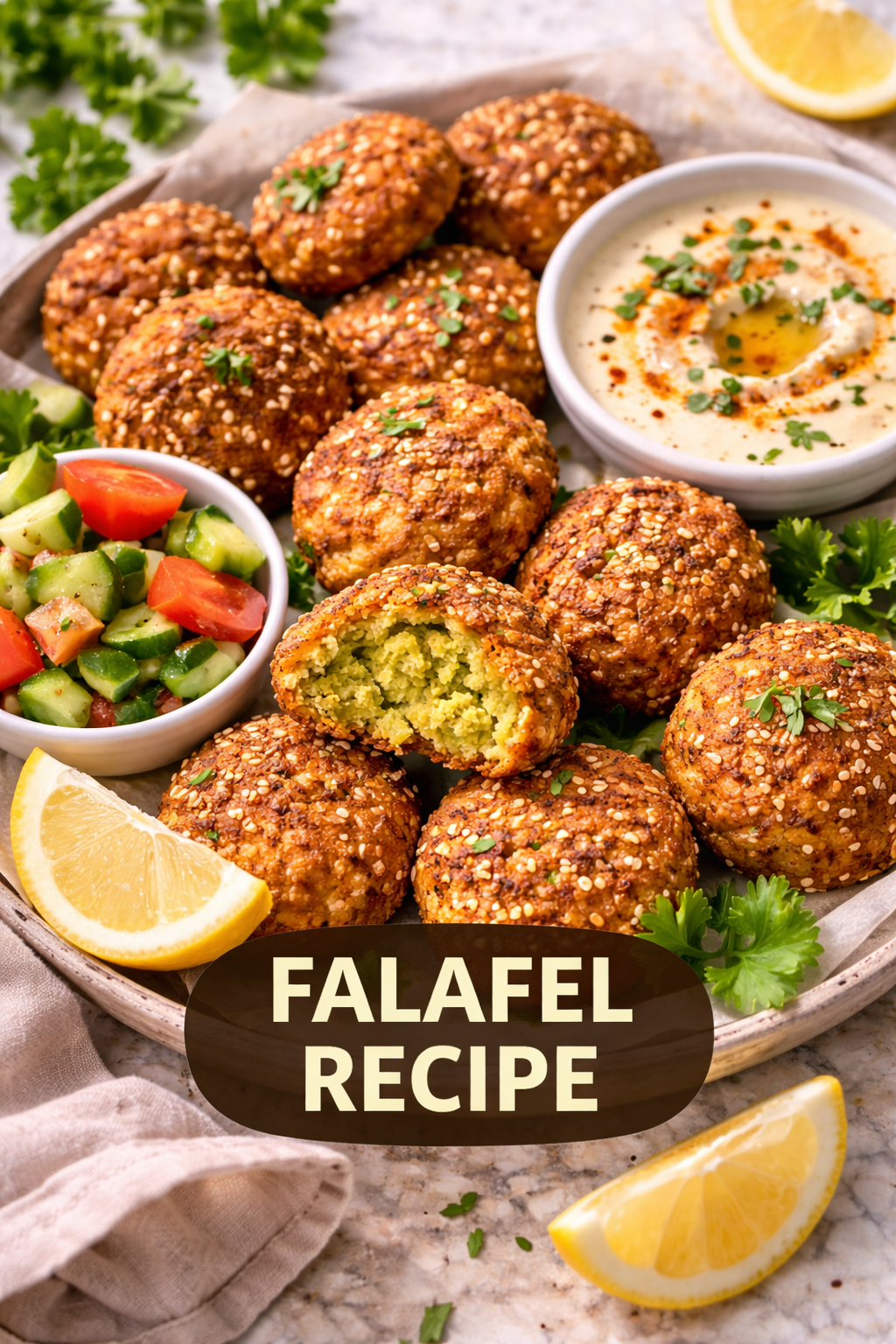
You know what’s funny about falafel?
Most people think it’s this complicated Middle Eastern dish that requires some secret technique passed down through generations.
Turns out, it’s basically just chickpeas, herbs, and spices you probably already have sitting in your pantry right now.
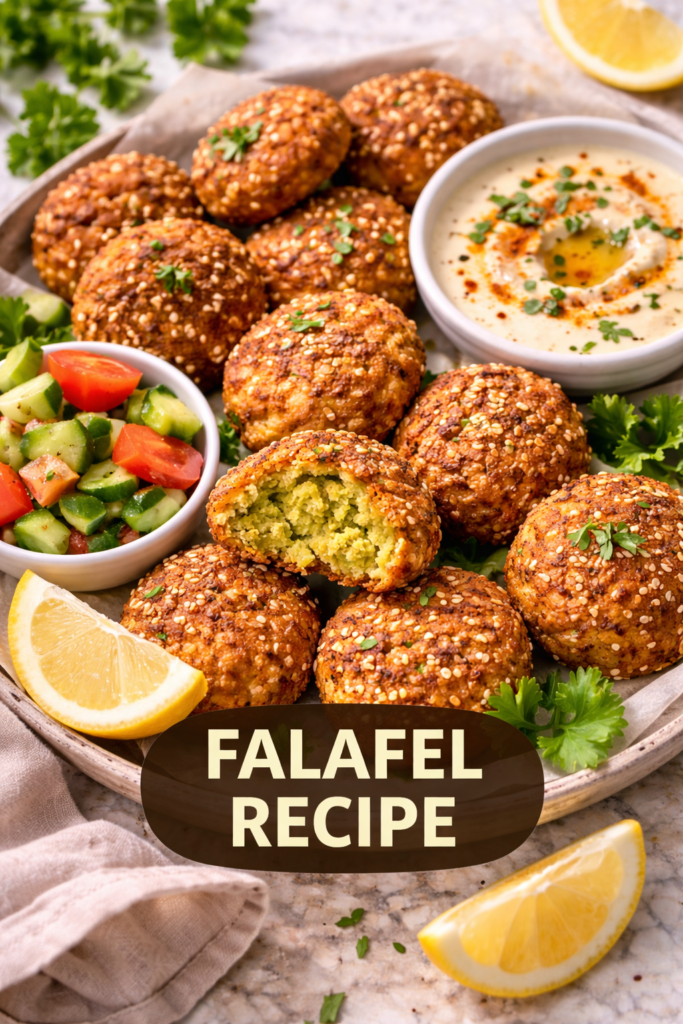
I’m about to show you how to make falafel at home that’s crispier on the outside and fluffier on the inside than anything you’ll get from a restaurant. And you won’t need any fancy equipment or hard-to-find ingredients.
Just a food processor, some dried chickpeas (NOT canned, we’ll get to that), and about 30 minutes of your time.
Ready? Let’s do this.
What You’ll Need
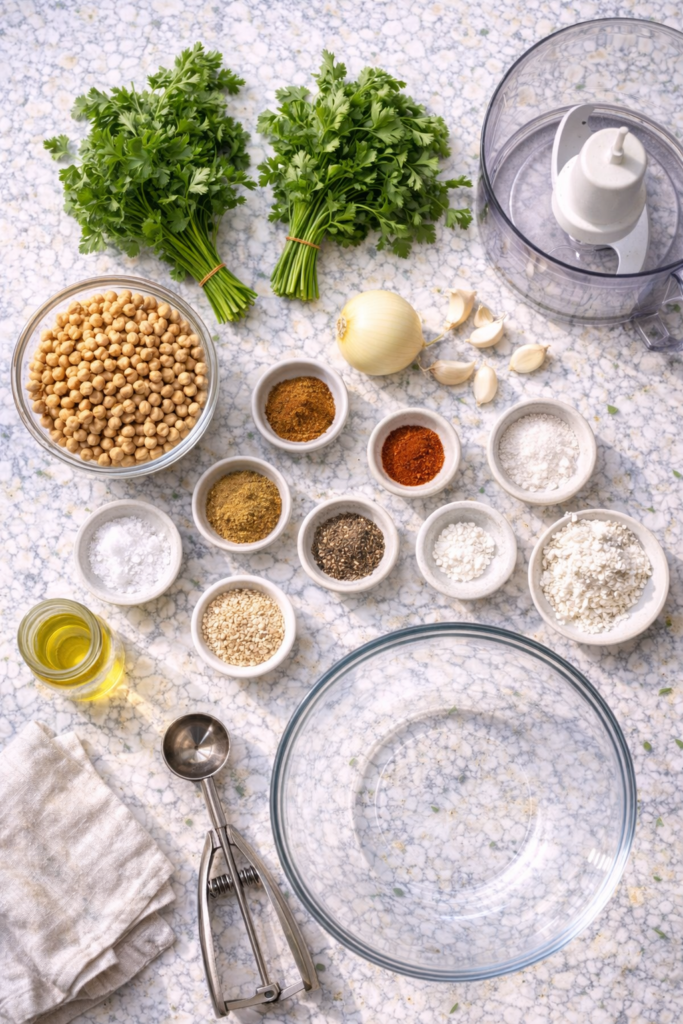
For the Falafel
- 1 cup dried chickpeas (soaked overnight)
- 1/2 cup fresh parsley (packed)
- 1/2 cup fresh cilantro (packed)
- 1 small onion (roughly chopped)
- 4 cloves garlic (minced)
- 1 1/2 teaspoons cumin
- 1 teaspoon coriander
- 1/2 teaspoon cayenne pepper
- 1 teaspoon salt
- 1/2 teaspoon black pepper
- 1/2 teaspoon baking powder
- 2 tablespoons all-purpose flour
- 2 tablespoons sesame seeds (optional)
- Vegetable oil (for frying)
For Serving (Optional)
- Pita bread
- Tahini sauce
- Diced tomatoes
- Sliced cucumbers
- Pickled vegetables
- Fresh lettuce
Tools You’ll Need
- Food processor (this is non-negotiable)
- Large mixing bowl
- Baking sheet
- Paper towels
- Deep pot or Dutch oven for frying
- Slotted spoon or spider strainer
- Thermometer (helpful but not required)
- Falafel scoop or small ice cream scoop
Pro Tips
Use dried chickpeas, not canned. I can’t stress this enough. Canned chickpeas have way too much moisture and your falafel will fall apart in the oil. You need the texture that comes from soaking dried chickpeas overnight.
Don’t over-process the mixture. You want a coarse, grainy texture that holds together when squeezed. If you blend it into a smooth paste, your falafel will be dense and gummy instead of light and fluffy.
Chill the mixture before frying. Pop that bowl in the fridge for at least 30 minutes (or up to 24 hours). Cold mixture = falafel that stays together when it hits the hot oil.
Test one first. Before you shape all your falafel, fry up one test ball. If it falls apart, add a bit more flour. If it’s too dense, add a tablespoon of water.
Keep the oil temperature consistent. Around 350-375°F is your sweet spot. Too hot and the outside burns before the inside cooks. Too cool and they’ll absorb oil like a sponge.
How to Make Falafel
Step 1: Soak Your Chickpeas
This is where most people mess up.
Take your dried chickpeas and cover them with water (about 3 inches above the chickpeas). Let them sit on your counter overnight or for at least 12 hours.
They’ll double in size, so make sure you use a big enough bowl.
In the morning, drain them completely and pat them dry with paper towels. The drier they are, the crispier your falafel will be.
Step 2: Make the Falafel Mixture
Toss the soaked chickpeas into your food processor along with the parsley, cilantro, onion, and garlic.
Pulse it about 10-15 times until everything is broken down but still has texture. You’re going for something that looks like coarse breadcrumbs, not hummus.
Transfer this to a large bowl and stir in the cumin, coriander, cayenne, salt, pepper, baking powder, and flour.
Mix it all together with your hands (it’s easier and more fun). The mixture should hold together when you squeeze it. If it’s too crumbly, add a tablespoon of water. If it’s too wet, add a bit more flour.
Step 3: Chill It
Cover the bowl and stick it in the fridge for at least 30 minutes.
This step is not optional. Trust me on this one.
While you’re waiting, this is the perfect time to prep your toppings or make a quick tahini sauce.
Step 4: Shape the Falafel
Pull the mixture out of the fridge.
Using a falafel scoop or a small ice cream scoop (about 2 tablespoons), form balls or small patties. I like patties better because they get more crispy surface area.
Press them firmly so they hold together. If you’re adding sesame seeds, now’s the time to press them into the outside.
You should get about 18-20 falafel from this recipe.
Step 5: Fry Them Up
Fill a deep pot with about 3 inches of vegetable oil and heat it to 350-375°F.
Carefully slide 4-5 falafel into the oil (don’t overcrowd the pot or the temperature will drop).
Fry for 3-4 minutes, flipping halfway through, until they’re deep golden brown all over.
Use a slotted spoon to transfer them to a paper towel-lined plate.
Repeat with the remaining falafel, making sure the oil comes back to temperature between batches.
Step 6: Serve
Eat them immediately while they’re hot and crispy.
Stuff them in pita bread with all the fixings, or eat them plain with tahini sauce for dipping.
They’re incredible either way.
Substitutions and Variations
Baked falafel: Brush them with oil and bake at 400°F for 25-30 minutes, flipping halfway. They won’t be as crispy, but they’re still delicious and way healthier.
Air fryer: Spray with oil and air fry at 375°F for 12-15 minutes, shaking the basket halfway through.
Spice it up: Add 1/2 teaspoon of ground cardamom or a pinch of sumac for a different flavor profile.
Extra herbs: Swap half the parsley for fresh dill or mint. Both are super traditional in different regions.
Make them spicier: Double the cayenne or add a minced jalapeño to the mixture.
Gluten-free: Replace the all-purpose flour with chickpea flour or use 2 tablespoons of cornstarch instead.
Make Ahead Tips
The uncooked falafel mixture keeps in the fridge for up to 3 days. Just make sure it’s in an airtight container.
You can also shape the falafel and freeze them on a baking sheet. Once they’re frozen solid, transfer them to a freezer bag. They’ll keep for up to 3 months.
When you’re ready to cook them, fry them straight from frozen. Just add an extra minute or two to the cooking time.
Leftovers and Storage
Cooked falafel will last in the fridge for about 4-5 days in an airtight container.
To reheat, pop them in a 350°F oven for 10 minutes or in the air fryer for 5 minutes. This brings back some of that crispy exterior.
Don’t microwave them unless you want sad, soggy falafel. You deserve better than that.
You can also freeze cooked falafel for up to 3 months. Reheat from frozen in the oven at 375°F for 15-20 minutes.
Nutritional Information (Per Serving, About 3 Falafel)
- Calories: 180
- Protein: 7g
- Carbohydrates: 22g
- Fiber: 6g
- Fat: 7g
- Sodium: 290mg
- Iron: 15% DV
- Vitamin C: 20% DV
Falafel is actually pretty nutritious. The chickpeas give you plant-based protein and fiber, while the herbs add vitamins and antioxidants.
Just keep in mind that deep frying adds calories. If you’re watching that, go for the baked or air-fried version.
What to Serve With Falafel
Classic pita sandwich: Stuff warm pita with falafel, tahini sauce, diced tomatoes, cucumbers, and pickled turnips.
Falafel bowl: Serve over rice or quinoa with hummus, tabbouleh, and a drizzle of tahini.
Mezze platter: Pair with baba ganoush, hummus, dolmas, and warm pita bread.
Salad topper: Crumble falafel over a Mediterranean salad with feta, olives, and a lemon vinaigrette.
Breakfast scramble: Crumble leftover falafel into scrambled eggs with spinach and feta. Sounds weird but it’s amazing.
FAQ
Can I use canned chickpeas?
Technically yes, but your falafel will likely fall apart. Canned chickpeas are too soft and wet. If you absolutely must use them, drain them really well, pat them dry, and add an extra tablespoon of flour. But honestly, just soak the dried ones. It’s worth it.
Why did my falafel fall apart in the oil?
Usually this happens because the mixture is too wet, you didn’t chill it long enough, or you used canned chickpeas. Make sure you’re using dried chickpeas that have been soaked (not cooked), and refrigerate the mixture for at least 30 minutes.
Can I make falafel without a food processor?
Not really. A blender will make the mixture too smooth, and chopping everything by hand won’t give you the right texture. A food processor is pretty much essential here.
How do I know when the oil is hot enough?
If you have a thermometer, aim for 350-375°F. If you don’t, drop a small piece of the falafel mixture into the oil. If it sizzles immediately and rises to the surface, you’re good to go.
Are falafel vegan?
Yep! Traditional falafel is completely plant-based. Just make sure whatever you’re serving it with is also vegan if that matters to you.
What’s the difference between falafel and chickpea fritters?
Falafel is made with raw soaked chickpeas, while chickpea fritters typically use cooked or canned chickpeas. The texture and taste are completely different.
Can I add other vegetables to the mixture?
You can, but it might affect the texture. Some people add a small amount of grated zucchini or carrot, but you’ll need to squeeze out any excess moisture first.
Why are my falafel dense instead of fluffy?
You probably over-processed the mixture or packed them too tightly when shaping. Remember, you want a coarse texture and a gentle hand when forming the balls.
Wrapping Up
There’s something pretty satisfying about making falafel from scratch.
Maybe it’s the way they sizzle when they hit the oil, or that first bite when the crispy outside gives way to the fluffy, herb-packed center.
Or maybe it’s just knowing you can whip up restaurant-quality falafel in your own kitchen whenever the craving hits.
Give this recipe a try and let me know how it turns out. Did you stuff them in pita? Make a bowl? Eat them straight off the plate while standing over the stove? (No judgment, I’ve been there.)
Drop a comment below and tell me about your falafel experience. And if you have any questions, I’m here for it.