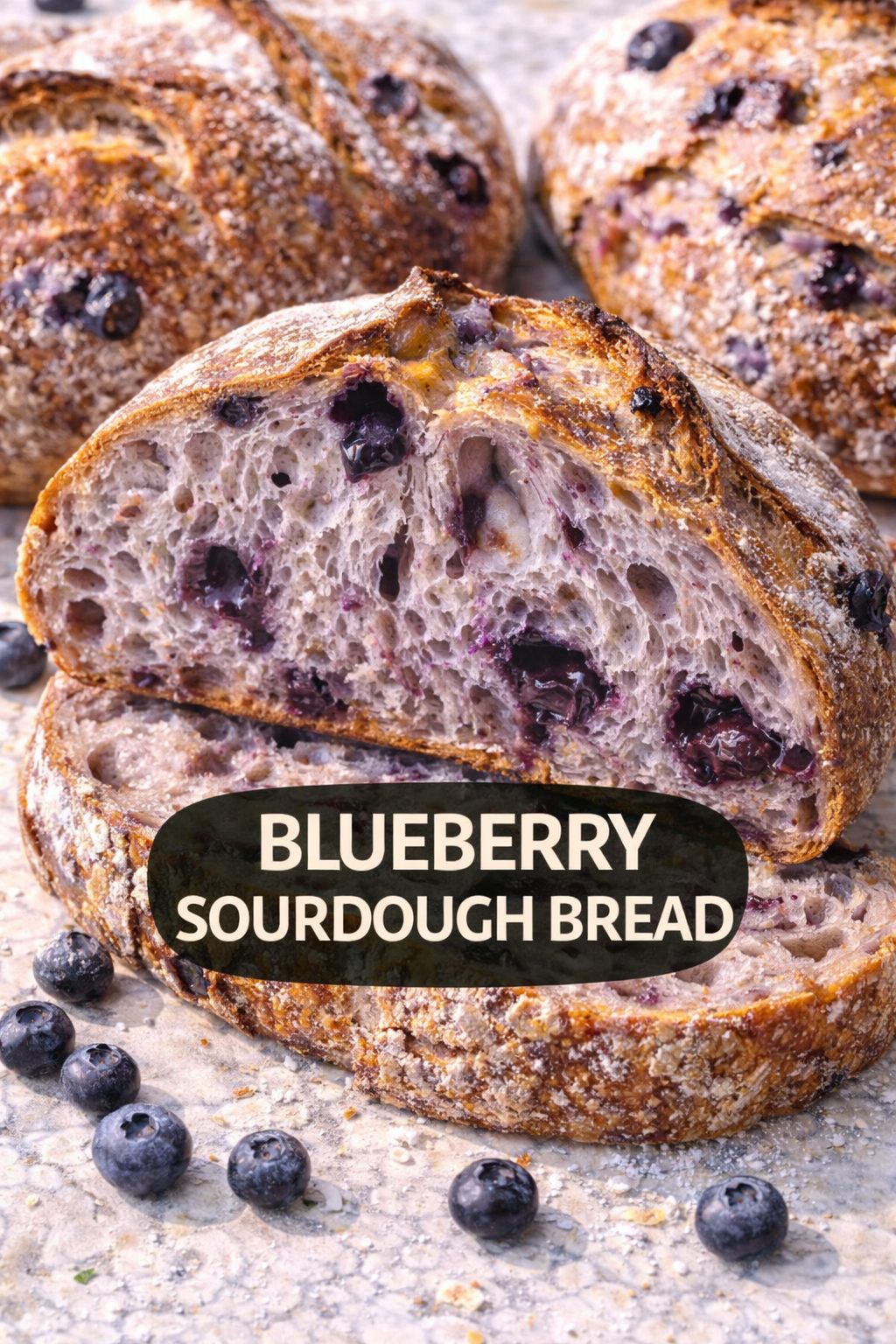
Ever bitten into sourdough and wished it had more personality?
This blueberry sourdough changes everything. Fresh blueberries folded into tangy, chewy sourdough that’s crusty on the outside and pillow-soft inside.
I’ve made this loaf at least 15 times now, tweaking until it was just right. And I’m not exaggerating when I say this might be my favorite thing to bake.
The blueberries get jammy while baking but keep their shape. The sourdough tang balances the sweetness perfectly. And that crust? Pure gold.
If you’ve been feeding your sourdough starter and wondering what to do with it besides the same old loaf, this is your answer.
What You’ll Need
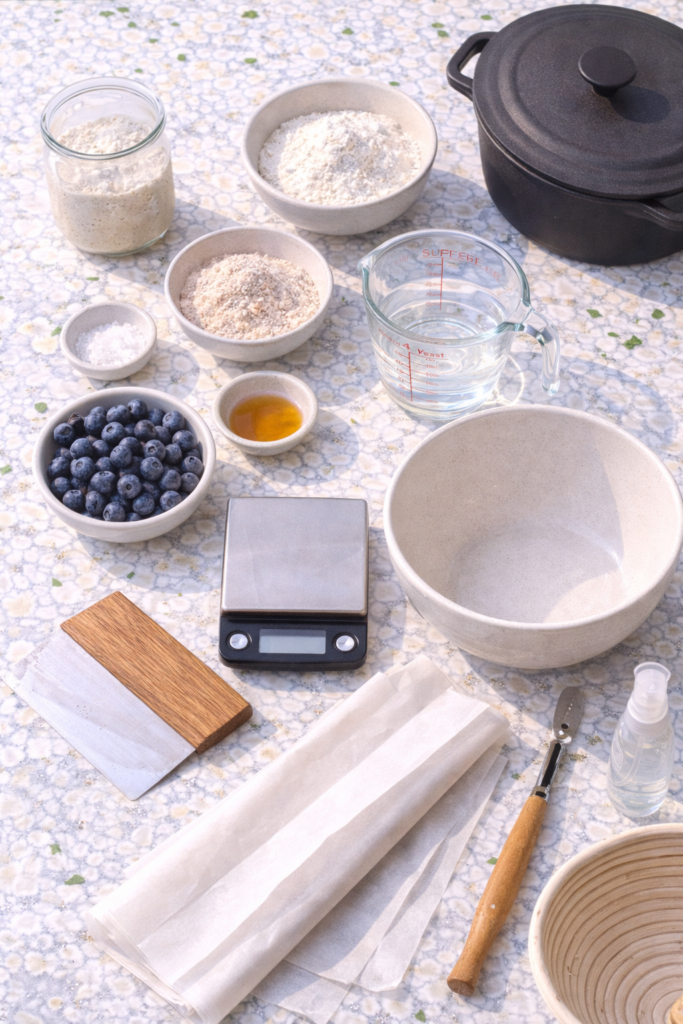
For the dough:
- 100g active sourdough starter (bubbly and doubled)
- 350g bread flour
- 50g whole wheat flour
- 275g water (room temperature)
- 9g salt
- 150g fresh blueberries (plus extra for topping)
- 1 tablespoon honey
Tools:
- Large mixing bowl
- Kitchen scale (super important for sourdough)
- Bench scraper
- Dutch oven with lid
- Banneton basket or bowl lined with a tea towel
- Parchment paper
- Sharp knife or bread lame
- Spray bottle (for misting)
Pro Tips
Don’t skip the float test. Drop a spoonful of your starter in water. If it floats, you’re good to go. If it sinks, feed it and wait longer. This one step will save you from dense, flat bread.
Fold gently when adding blueberries. I learned this the hard way after turning my dough purple three times. Add them during the last stretch and fold, and be gentle. You want whole berries, not blueberry puree.
Your Dutch oven is the secret weapon. It traps steam and creates that bakery-style crust. Don’t have one? A baking stone with a metal bowl covering the dough works too.
Cold dough scores better. After the final proof in the fridge, score it straight from cold. The blade glides through cleanly and you get those gorgeous ear formations.
Watch for juice bubbles. When you see blueberry juice bubbling through the crust in the last 10 minutes of baking, that’s when magic happens. The sugars caramelize and create these sweet spots throughout the loaf.
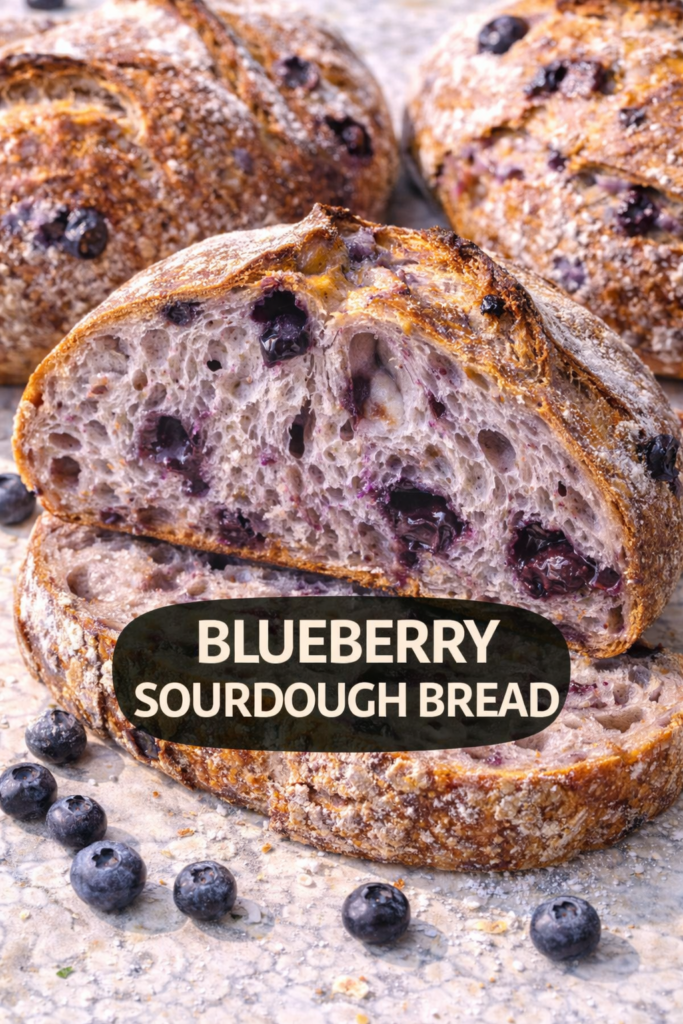
How to Make Blueberry Sourdough Bread
Morning (8:00 AM): Feed your starter
Take 50g of starter, add 50g flour and 50g water. Mix and let it sit at room temperature until bubbly and doubled. This usually takes 4-6 hours depending on your kitchen temperature.
Afternoon (2:00 PM): Mix the dough
In your large bowl, combine the water and active starter. Stir until slightly dissolved.
Add both flours and honey. Mix with your hands until no dry flour remains. It’ll look shaggy and rough. That’s fine.
Cover and let it rest for 30 minutes. This is called autolyse and it helps develop gluten without kneading.
Add the salt
Sprinkle salt over the dough. Wet your hands and pinch it into the dough, squeezing between your fingers. The dough will feel tight at first but will relax.
Bulk fermentation (3-4 hours)
This is where the dough rises and develops flavor.
Every 30 minutes for the first 2 hours, do a stretch and fold. Wet your hands, grab one side of the dough, stretch it up, and fold it over itself. Rotate the bowl 90 degrees and repeat. Do this 4 times per session.
On your final stretch and fold (around hour 2), gently add the blueberries. Don’t overmix. Just fold them in until they’re somewhat distributed.
Let the dough rest undisturbed for the remaining time. You’ll know it’s ready when it’s puffy, increased by about 50%, and you can see bubbles on the surface.
Shape the dough
Lightly flour your work surface. Turn out the dough gently.
With floured hands, shape it into a round. Let it rest for 20 minutes.
Do the final shaping: flip the dough over, fold the edges to the center creating tension, then flip it seam-side down. Cup your hands around it and drag it toward you in short movements. This creates surface tension.
Final proof (overnight)
Place the shaped dough seam-side up in your banneton or towel-lined bowl dusted with flour.
Scatter a few extra blueberries on top if you want them visible on the crust.
Cover tightly with plastic wrap and refrigerate for 8-12 hours.
Next morning: Bake (9:00 AM)
Preheat your oven to 450°F with the Dutch oven inside for 45 minutes.
Remove your dough from the fridge. It should look slightly puffy.
Turn it out onto parchment paper. Score the top with one deep slash or your preferred pattern.
Carefully remove the hot Dutch oven. Lower the dough (on parchment) into it.
Mist the top with water, cover with the lid, and bake for 20 minutes.
Remove the lid and bake for another 25-30 minutes until deep golden brown. You want that dark crust.
The internal temperature should read 205-210°F.
Cool completely
This is the hardest part. Let it cool for at least 2 hours before slicing.
I know it smells incredible. I know you want to cut into it right now. But if you slice it hot, the inside will be gummy.
Trust me on this.
Substitutions and Variations
No fresh blueberries? Frozen works but don’t thaw them first. Add them frozen during the last fold. They’ll release more juice but the bread still tastes amazing.
Try different berries. I’ve done this with raspberries and blackberries. Raspberries are more delicate and break apart easier. Blackberries hold up well but are slightly more tart.
Add lemon zest. A tablespoon of lemon zest added with the blueberries makes this taste like a fancy bakery loaf.
Whole wheat swap. You can use up to 100g whole wheat flour, but add 10-15g more water. Whole wheat absorbs more liquid.
Make it sweeter. Brush the crust with honey butter right when it comes out of the oven. Or add 2 tablespoons of sugar to the dough for a sweeter loaf.
Make Ahead Tips
Prep the starter the night before. Feed it before bed so it’s ready first thing in the morning. This shifts your whole timeline earlier.
Extend the cold proof. I’ve left this in the fridge for up to 16 hours. Just watch that it doesn’t overproof. If you poke it and the indent stays, it’s ready.
Freeze the baked loaf. Slice it first, then freeze in a freezer bag. Toast slices straight from frozen.
Leftovers and Storage
Keep it cut-side down on a cutting board at room temperature for 2-3 days. Don’t put it in a plastic bag or it’ll get soggy.
After day 3, slice and freeze whatever’s left.
Day-old slices make incredible French toast. The tangy sourdough with the sweet blueberries? Unreal.
Or cube it up for bread pudding. The blueberries burst in the custard and it’s ridiculously good.
Stale pieces can be blitzed into breadcrumbs. I use them to top mac and cheese or as a crust for baked chicken.
Nutritional Information
Per slice (based on 12 slices):
- Calories: 165
- Carbohydrates: 33g
- Protein: 5g
- Fat: 1g
- Fiber: 2g
- Sugar: 4g
- Sodium: 295mg
The blueberries add antioxidants and vitamin C. The sourdough fermentation makes it easier to digest than regular bread and lowers the glycemic index.
FAQ
Why did my blueberries sink to the bottom?
Your dough wasn’t developed enough. Make sure you’re doing the stretch and folds to build strength. Also, add the berries later in bulk fermentation when the dough has more structure.
Can I use a stand mixer?
You can, but sourdough really benefits from hand mixing and folding. The gentle handling creates better texture. If you must use a mixer, keep it on low and don’t overmix.
My bread didn’t rise much. What happened?
Either your starter wasn’t active enough or your kitchen was too cold. Sourdough likes 70-75°F. If it’s colder, fermentation slows down. You might need to extend your bulk fermentation time.
How do I know when bulk fermentation is done?
Look for a 50% size increase, bubbles on the surface, and a jiggly texture. Poke the dough. If it springs back slowly and leaves a slight indent, you’re ready to shape.
The crust is too hard.
You might be baking it too long or at too high a temperature. Every oven is different. Start checking at 40 minutes total baking time. Also, storing it in plastic makes the crust softer if you prefer that.
Can I double this recipe?
Absolutely. Just make two separate doughs. Mixing one giant batch makes it harder to manage and develop properly.
My loaf is gummy inside.
You didn’t let it cool long enough. I know it’s tempting but seriously wait at least 2 hours. The inside is still cooking as it cools.
Do I have to use a Dutch oven?
It gives the best results, but you can bake on a stone and cover with a large metal bowl for the first 20 minutes. Or use a covered roasting pan.
Wrapping Up
There’s something deeply satisfying about pulling a loaf like this from the oven.
The smell alone makes the whole process worth it. And when you slice into it and see those purple-blue streaks throughout? That’s when you know you nailed it.
This bread makes regular weekday mornings feel special. Toast it with butter and watch the butter melt into all those nooks and crannies.
Or just tear off a chunk and eat it plain.
I’d love to hear how yours turns out. Did the blueberries stay intact? How was the crust? Any variations you tried?
Drop a comment below and let me know. And if you have questions while you’re making it, ask away. I’m always checking comments and happy to help troubleshoot.