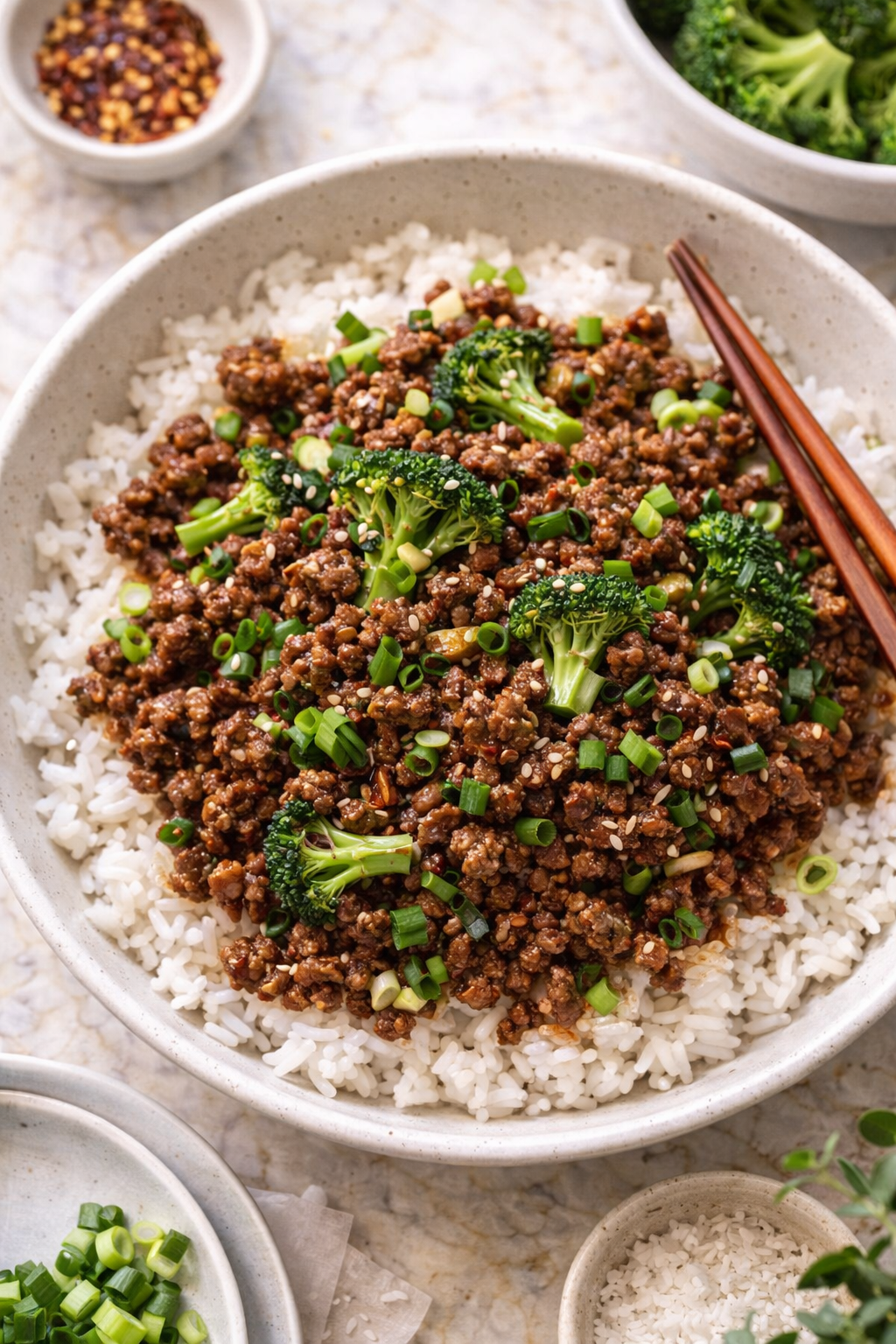
You know that one dish that makes everyone at the table go quiet? 🤫
Not “we’re being polite” quiet. The “I can’t stop eating this long enough to speak” kind of quiet.
This Korean beef recipe does that. Every single time.
It’s sweet, savory, slightly caramelized, and so deeply flavorful you’ll want to put it on everything. Rice? Yes. Lettuce wraps? Absolutely. Eating it straight from the pan at midnight? No judgment here.
And here’s the part that’ll surprise you: the marinade takes five minutes to throw together. The beef does the rest of the work.
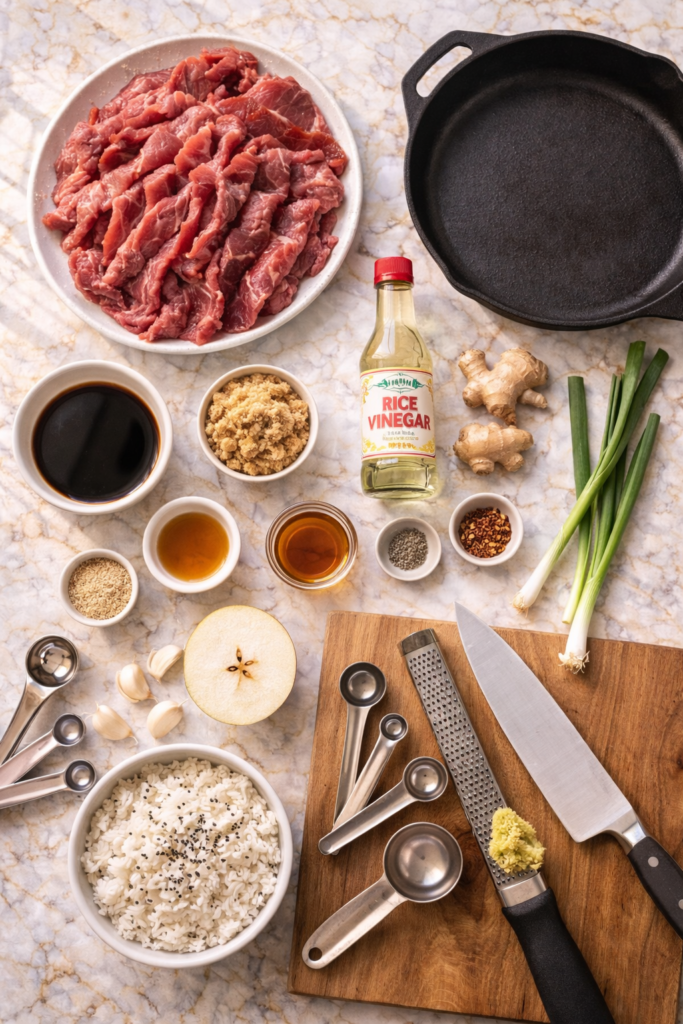
What You’ll Need
For the Marinade
- 1.5 lbs (680g) beef sirloin or ribeye, thinly sliced against the grain
- ¼ cup soy sauce (low-sodium works great)
- 2 tbsp brown sugar, packed
- 1 tbsp sesame oil
- 1 tbsp rice vinegar
- ½ Asian pear (or regular pear), grated (about ¼ cup)
- 5 garlic cloves, minced
- 1 tsp fresh ginger, grated
- ½ tsp black pepper
- ¼ tsp red pepper flakes (optional, for heat)
For Serving
- 2 cups white rice, cooked
- 2 green onions, thinly sliced
- 1 tsp toasted sesame seeds
- Handful of butter lettuce leaves (for wraps, optional)
Tools You’ll Need
- Large skillet or cast iron pan
- Mixing bowl
- Grater or microplane (for pear and ginger)
- Garlic press or knife
- Tongs or wooden spatula
- Measuring cups and spoons
- Sharp knife and cutting board
Pro Tips
This is where I’ll save you from the mistakes most people make the first time around.
1. Freeze the beef for 20 minutes before slicing. Slightly frozen beef slices much thinner and cleaner. Thin slices = more surface area = more caramelization. This is the step most people skip, and it’s the reason their beef turns out chewy instead of tender.
2. The pear is non-negotiable. Asian pear contains natural enzymes (proteases) that break down the beef proteins and make the texture almost melt-in-your-mouth tender. A lot of recipes skip it. Don’t be that person.
3. Don’t crowd the pan. Cook the beef in batches if needed. When you crowd the pan, it steams instead of sears, and you lose all that gorgeous caramelization. Hot pan + small batches = the golden-brown results you want.
4. Pat the beef dry before cooking. Even after marinating, quickly pat the surface dry with a paper towel. Extra moisture in the pan is the enemy of good sear marks.
5. Let it marinate at least 30 minutes. An hour is ideal. Overnight in the fridge is even better. The longer, the more flavor gets into that beef.
How to Make Korean Beef
Step 1: Prep the beef
Place the beef in the freezer for 15-20 minutes. Once it’s slightly firm, slice it as thinly as possible against the grain (about ⅛ inch thick). Transfer to a large mixing bowl.
Step 2: Make the marinade
In a small bowl, combine soy sauce, brown sugar, sesame oil, rice vinegar, grated pear, minced garlic, ginger, black pepper, and red pepper flakes. Whisk until the sugar dissolves. Pour over the beef and toss to coat every piece.
Step 3: Marinate
Cover and refrigerate for at least 30 minutes, up to overnight. If you’re short on time, even 30 minutes at room temperature helps.
Step 4: Cook the beef
Heat a large skillet or cast iron pan over high heat until very hot. Add a thin layer of neutral oil. Working in batches, add beef in a single layer. Cook for 2-3 minutes per side without touching it (this is key for caramelization). Repeat with remaining batches.
Step 5: Serve
Pile it over steamed rice, top with sliced green onions and sesame seeds. Add lettuce leaves on the side for wrapping if you like.
Substitutions and Variations
Not everyone’s working with the same pantry, and that’s completely fine.
| Ingredient | Substitution |
|---|---|
| Beef sirloin | Flank steak, skirt steak, or ground beef |
| Asian pear | Kiwi, apple, or ½ tsp baking soda (enzyme shortcut) |
| Brown sugar | Honey, maple syrup, or coconut sugar |
| Soy sauce | Tamari (gluten-free), coconut aminos |
| Rice vinegar | Apple cider vinegar or lime juice |
| Sesame oil | Toasted sesame oil is best, but avocado oil works in a pinch |
Want more heat? Add 1-2 tbsp gochujang (Korean chili paste) to the marinade. That’s the version that’ll clear your sinuses and make you love every second of it. 🌶️
Lighter option? Swap the beef for thinly sliced chicken thighs. Same marinade, same method, equally good.
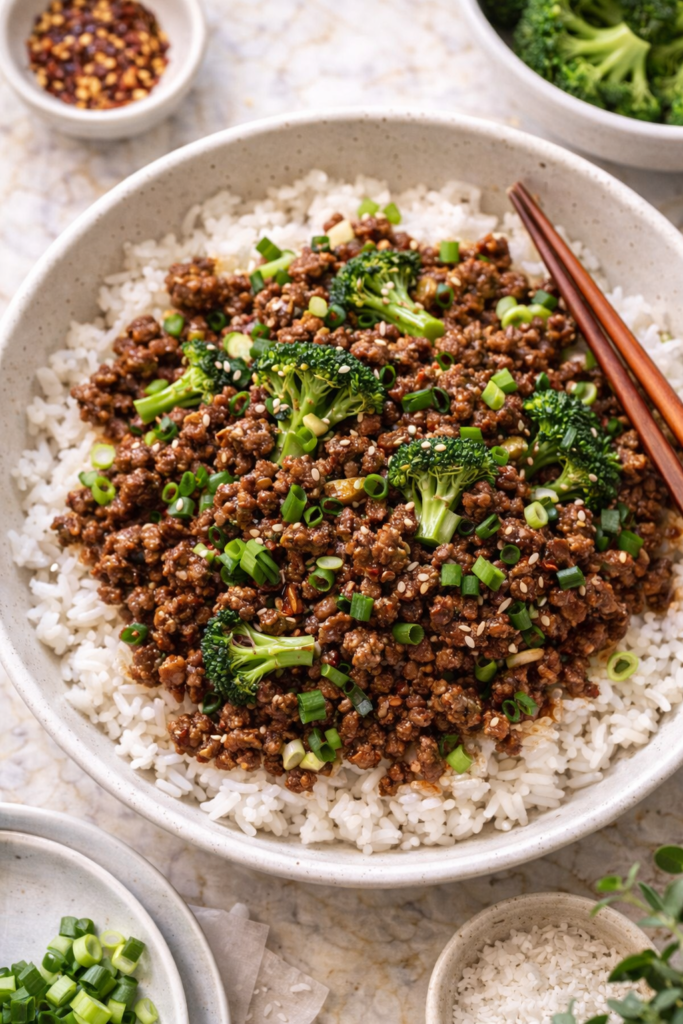
Make Ahead Tips
This recipe is built for meal prep.
- Marinate the night before and store in an airtight container in the fridge. In the morning, it takes literally 10 minutes to get dinner on the table.
- Cook a full batch on Sunday and refrigerate. It reheats beautifully in a pan over medium heat (add a splash of water to loosen it up).
- Freeze the raw marinated beef for up to 2 months. Thaw overnight in the fridge and cook as directed.
Nutritional Info & Meal Pairings
Quick Nutritional Breakdown (per serving, approx.)
| Nutrient | Amount |
|---|---|
| Calories | ~420 kcal |
| Protein | 35g |
| Carbohydrates | 28g |
| Fat | 18g |
| Sodium | 740mg |
| Fiber | 1g |
Based on serving with rice. Values are approximate.
What to Serve It With
This beef goes with a lot. Here are pairings that work really well:
- Steamed jasmine or short-grain white rice (the classic)
- Kimchi on the side for a tangy contrast
- Quick cucumber salad with rice vinegar, sesame oil, and a pinch of sugar
- Steamed broccoli or bok choy for something green
- Glass noodles tossed in sesame oil if you want something different
Leftovers and Storage
Good news: this tastes even better the next day.
| Storage Method | Duration |
|---|---|
| Refrigerator (airtight container) | Up to 4 days |
| Freezer (cooked) | Up to 2 months |
Reheating tip: Use a skillet over medium heat rather than the microwave. It brings back the caramelization and keeps the texture from going rubbery.
Leftover ideas that are genuinely good:
- Korean beef fried rice (use day-old rice)
- Stuffed into tacos with shredded cabbage and sriracha mayo
- On top of a grain bowl with avocado and pickled vegetables
FAQ
Can I use ground beef instead of sliced beef?
Yes! Ground beef Korean bulgogi is actually a super popular weeknight shortcut. Brown 1.5 lbs ground beef in a skillet, drain the fat, then add the same marinade directly to the pan and cook for another 2-3 minutes.
Why is my beef not caramelizing?
Two likely culprits: the pan wasn’t hot enough, or you added too much beef at once. High heat and small batches are everything here.
Is this the same as bulgogi?
Almost. Traditional bulgogi is grilled over charcoal, and the marinade sometimes includes more aromatics like green onion in the marinade itself. This recipe is a simplified stovetop version that gets you about 90% of the way there with a fraction of the effort.
Can I make this without sesame oil?
You can, but you’ll notice the difference. Sesame oil adds that distinct nutty, toasted flavor that’s kind of essential to Korean cooking. If you have it, use it.
How thin should I slice the beef?
Think deli-thin. About ⅛ inch. If your slices are too thick, the beef won’t cook through quickly enough and you’ll lose the caramelized texture.
My marinade tastes too salty. What do I do?
Add a bit more brown sugar or a squeeze of lime juice to balance it. Low-sodium soy sauce also solves this before it even starts.
Wrapping Up
Here’s what I love about this recipe: it’s one of those dishes that sounds more complicated than it is.
Five minutes to mix a marinade. A hot pan. Thirty minutes of waiting while the beef does its thing in the fridge.
And then you’re eating something that tastes like it came from a really good restaurant.
The pear trick alone will change how you think about marinades forever. Once you know what it does to the texture, you’ll start putting it in everything.
So make it this week. Make it on a random Tuesday when you’re tired and the last thing you want is to spend an hour in the kitchen. Take a photo of it. And come back and leave a comment telling me what you thought – I genuinely want to know if the pan got quiet at your table too. 👇