You know that feeling when you order fish at a fancy restaurant and it comes out perfectly crispy on the outside, tender and flaky inside, with that golden-brown crust that makes your mouth water before you even take a bite?
You can totally make that at home. And it’s easier than you think.
Red snapper might sound intimidating, but it’s one of the most forgiving fish to cook. The firm flesh holds up well in the pan, the mild flavor pairs with basically everything, and if you can sear a steak, you can absolutely nail this.
I’m walking you through exactly how to get restaurant-quality pan-seared snapper in your own kitchen. No special equipment needed. Just a good pan, fresh fish, and about 15 minutes.
Let’s get into it.
What You’ll Need
For the Snapper
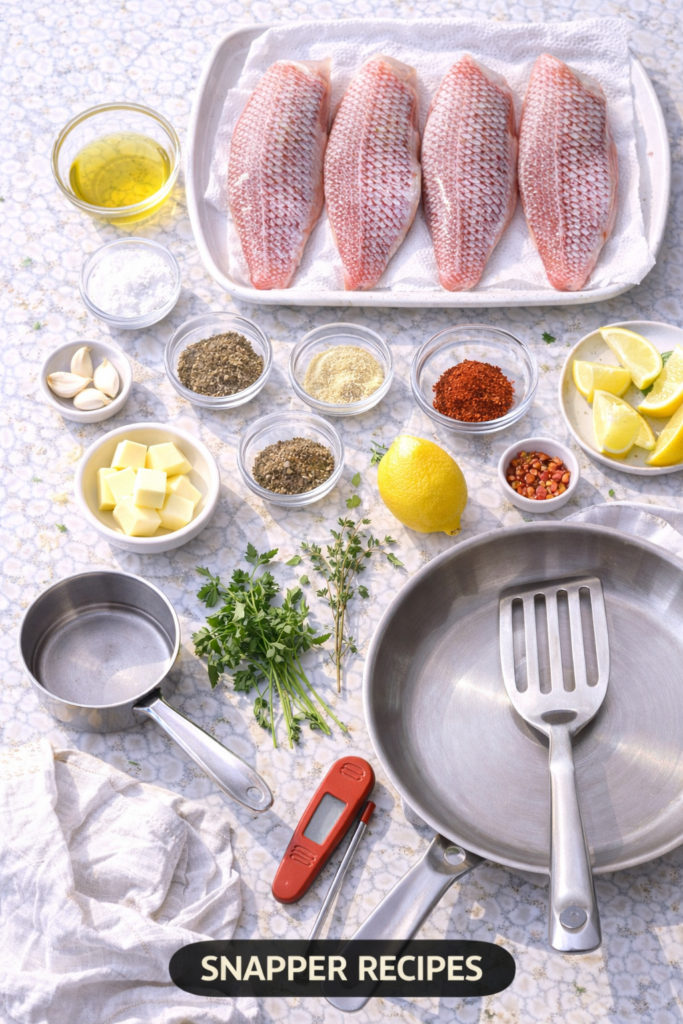
- 4 red snapper fillets (6 oz each, skin-on)
- 2 tablespoons olive oil
- 1 teaspoon sea salt
- ½ teaspoon black pepper
- ½ teaspoon garlic powder
- ¼ teaspoon smoked paprika
For the Lemon Herb Butter
- 4 tablespoons unsalted butter
- 3 cloves garlic, minced
- 2 tablespoons fresh lemon juice
- 1 tablespoon fresh parsley, chopped
- 1 teaspoon fresh thyme leaves
- Zest of 1 lemon
- Pinch of red pepper flakes
For Serving
- Lemon wedges
- Extra fresh herbs for garnish
Tools You’ll Need
Having the right tools makes this so much easier:
- Large stainless steel or cast iron skillet (nonstick works too, but you won’t get the same crispy skin)
- Fish spatula (the thin, slotted kind – lifts fish without breaking it)
- Paper towels (for drying the fish – this is key for crispy skin)
- Small saucepan (for the butter sauce)
- Tongs (for flipping carefully)
- Instant-read thermometer (optional but helpful)
Pro Tips
Dry that skin like your life depends on it. Seriously, this is the difference between soggy fish and that crispy, restaurant-quality skin. Pat it completely dry with paper towels, let it sit for 5 minutes, then pat it again. The drier, the crispier.
Don’t move the fish once it hits the pan. I know it’s tempting to check on it, but resist. Let it sit undisturbed for 3-4 minutes. Moving it around will tear the skin and prevent that golden crust from forming. You’ll know it’s ready to flip when it releases easily from the pan.
Room temperature fish cooks more evenly. Take your snapper out of the fridge 15-20 minutes before cooking. Cold fish hitting a hot pan = uneven cooking and potentially overcooked edges with a raw center.
The butter burns fast, so have everything ready. Once you start the lemon herb butter, things move quickly. Have your garlic minced, herbs chopped, and lemon juiced before you even turn on the heat. This sauce takes less than 2 minutes to make.
Use your nose to know when it’s done. Snapper should smell sweet and slightly oceanic. When it’s perfectly cooked, you’ll get this amazing buttery, slightly nutty aroma. If it starts smelling fishy or strong, you’ve gone too far.
How to Make Pan-Seared Red Snapper
Step 1: Prep Your Fish
Take the snapper fillets out of the fridge and let them come to room temperature for 15-20 minutes.
Pat them completely dry with paper towels. And I mean completely. Both sides, but especially the skin side. Moisture is the enemy of crispy skin.
Score the skin with 3-4 shallow diagonal cuts. This prevents the fillet from curling when it hits the heat.
Season both sides generously with salt, pepper, garlic powder, and smoked paprika. Press the seasonings into the flesh gently so they stick.
Step 2: Get Your Pan Screaming Hot
Heat your skillet over medium-high heat for 3-4 minutes. You want it really hot.
Add the olive oil and let it heat until it shimmers. You should see little ripples on the surface.
Here’s the test: hold your hand about 6 inches above the pan. If you can feel serious heat radiating up, you’re ready.
Step 3: Sear the Fish Skin-Side Down
Place each fillet in the pan skin-side down, laying them away from you so you don’t get splattered with oil.
Press down gently on each fillet with your spatula for about 10 seconds. This ensures full contact between the skin and the pan.
Do not touch them for 3-4 minutes. Just let them sizzle away.
You’ll see the flesh start to turn opaque from the bottom up. When it’s about 70% opaque, the skin is ready to flip.
Step 4: Flip and Finish
Slide your fish spatula under each fillet. If it sticks, give it another 30 seconds.
Flip gently and cook flesh-side down for 2-3 minutes. The fish should reach 135°F internally.
Transfer to a plate and tent loosely with foil while you make the sauce.
Step 5: Make the Lemon Herb Butter
In a small saucepan over medium heat, melt the butter.
Add the minced garlic and cook for 30 seconds, just until fragrant. Don’t let it brown.
Remove from heat and stir in the lemon juice, lemon zest, parsley, thyme, and red pepper flakes.
Taste and adjust with a pinch more salt if needed.
Step 6: Serve
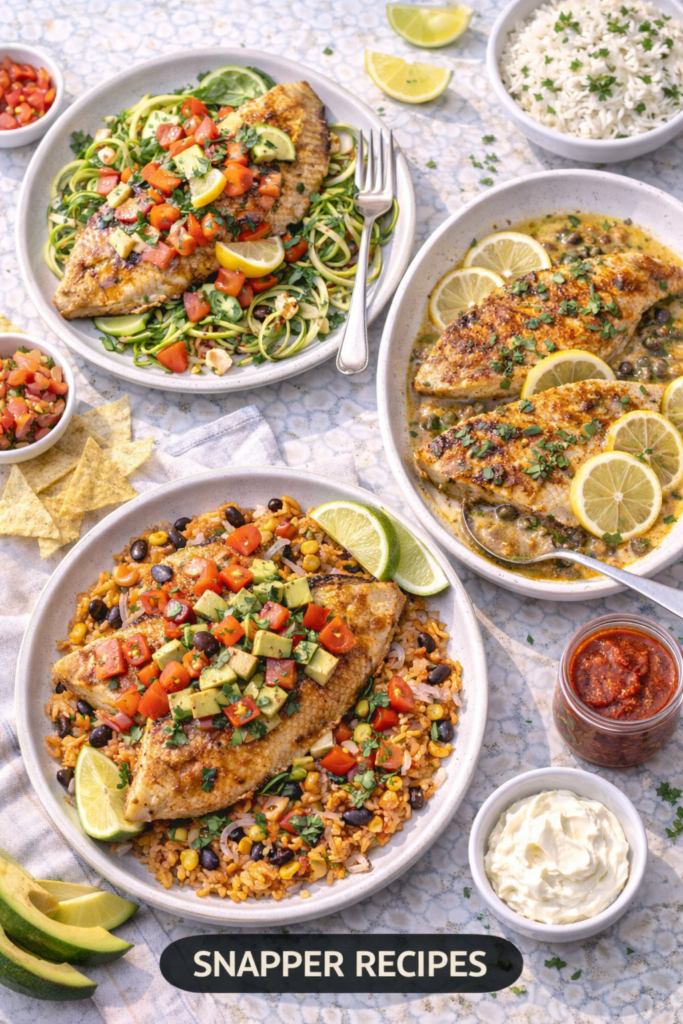
Place each snapper fillet on a plate, crispy skin side up.
Spoon the lemon herb butter generously over the top.
Garnish with extra fresh herbs and serve with lemon wedges on the side.
Substitutions and Variations
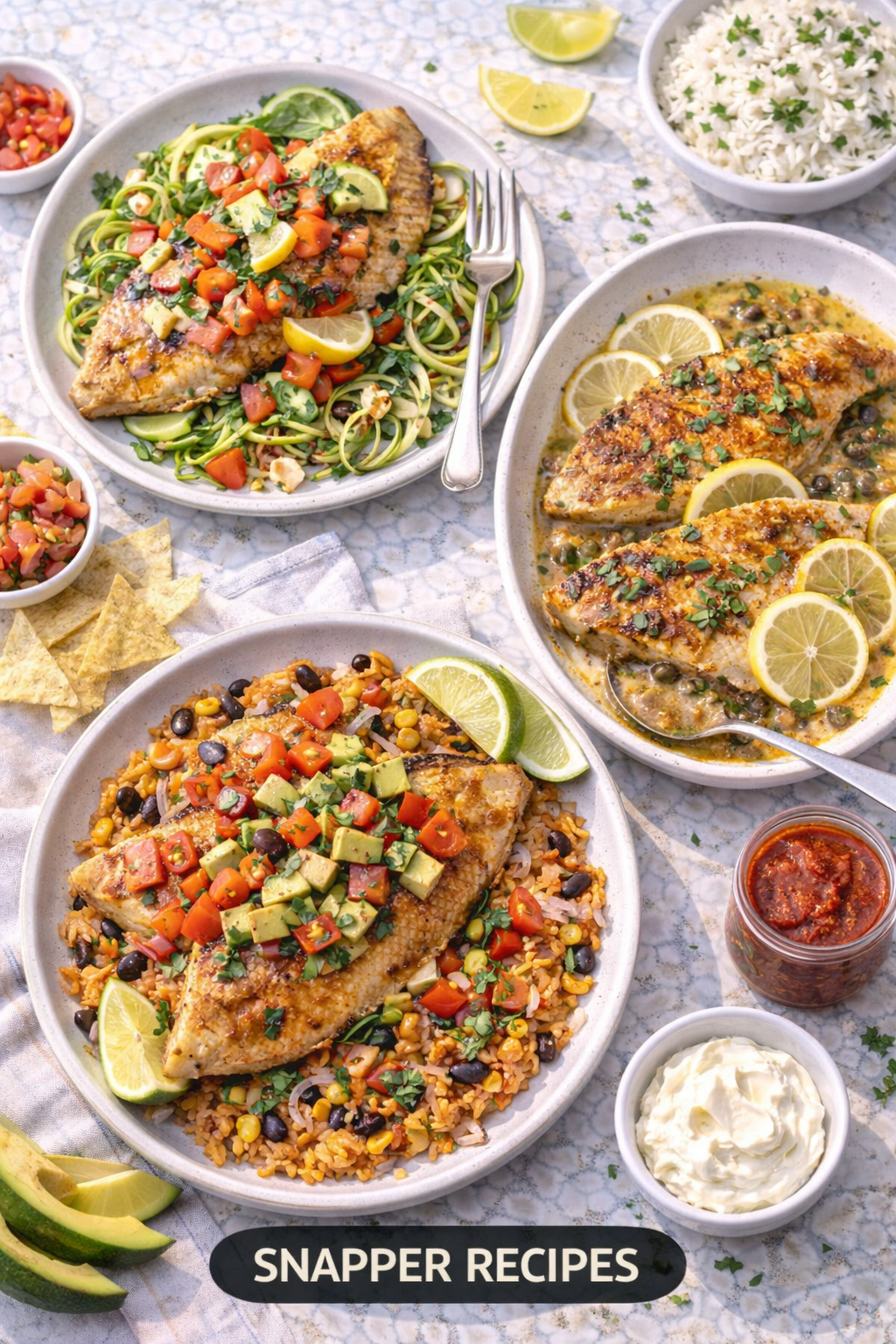
No red snapper? Try sea bass, striped bass, branzino, or even salmon fillets. Cooking times stay the same.
Make it spicy: Add ½ teaspoon cayenne to your seasoning mix and double the red pepper flakes in the butter.
Want a different sauce? Skip the lemon butter and try:
- Brown butter with capers and sage
- Mango salsa (sweet and tangy)
- Garlic-white wine sauce
- Simple chimichurri
No fresh herbs? Use dried, but cut the amounts in half. Fresh is better though, I promise.
Dairy-free version: Replace butter with ghee or use olive oil for the sauce (it won’t be as rich, but still delicious).
Make Ahead Tips
You can prep the seasoning mix and store it in an airtight container for up to a month.
The lemon herb butter can be made a day ahead, stored in the fridge, and gently reheated when you’re ready to serve.
The fish itself? That’s best cooked fresh. But you can have it seasoned and ready to go in the fridge for up to 2 hours before cooking.
What to Serve With Pan-Seared Snapper
This fish is versatile and pairs beautifully with so many sides:
Light and Fresh
- Arugula salad with shaved parmesan
- Roasted asparagus with lemon
- Sautéed green beans with almonds
- Cherry tomato and cucumber salad
Hearty Comfort
- Garlic mashed potatoes
- Creamy polenta
- Risotto (lemon or mushroom)
- Roasted baby potatoes with herbs
Grains and Starches
- Coconut rice
- Quinoa pilaf
- Couscous with dried fruit and nuts
- Wild rice blend
Storage and Leftovers
Leftover snapper keeps in an airtight container in the fridge for up to 2 days.
The skin won’t be crispy anymore (that’s just physics), but the fish itself is still delicious cold or reheated.
To reheat: Use a 300°F oven for about 8-10 minutes. Don’t microwave it – you’ll end up with rubber.
Leftover ideas:
- Flake it over a green salad
- Make fish tacos with cabbage slaw
- Toss with pasta, olive oil, and capers
- Add to a grain bowl with avocado and veggies
The lemon herb butter keeps for about a week in the fridge. Use it on chicken, steak, roasted vegetables, or toss it with pasta.
Nutritional Information
Per serving (1 fillet with sauce):
| Nutrient | Amount |
|---|---|
| Calories | 285 |
| Protein | 35g |
| Fat | 15g |
| Saturated Fat | 6g |
| Carbohydrates | 2g |
| Fiber | 0g |
| Sugar | 0g |
| Sodium | 420mg |
| Potassium | 680mg |
| Omega-3 | 0.6g |
Red snapper is high in protein, low in calories, and packed with B vitamins and selenium. The omega-3 content isn’t as high as salmon, but it’s still a heart-healthy choice.
FAQ
Can I use frozen snapper?
Absolutely. Just make sure to thaw it completely in the fridge overnight (not on the counter). Pat it extra dry before cooking since frozen fish releases more moisture.
Why is my skin not getting crispy?
Three main culprits: the fish wasn’t dry enough, your pan wasn’t hot enough, or you moved it too soon. Make sure you’re checking all three boxes.
Can I make this without the skin?
You can, but you’ll lose that textural contrast that makes this dish so good. If you go skinless, reduce the first cooking time to 2-3 minutes and be extra gentle when flipping.
What if I don’t have a fish spatula?
A regular thin spatula works, but it’s trickier. You might also try two regular spatulas – one to lift, one to support from underneath.
How do I know when the fish is done?
The flesh should be opaque and flake easily when pressed gently with a fork. Internal temp should hit 135°F. If you don’t have a thermometer, the fish will feel firm but not hard when you press the thickest part.
Can I cook all four fillets at once?
Only if your pan is big enough to give each fillet space. Overcrowding drops the pan temperature and you’ll end up steaming instead of searing. Better to work in batches.
Is wild or farm-raised snapper better?
Wild-caught has a slightly firmer texture and more complex flavor, but good farm-raised snapper is perfectly fine. Go with what’s freshest at your market.
This seems too fancy for a weeknight.
It really isn’t. Total active cooking time is about 15 minutes. You’re literally just searing fish and melting butter. If you can cook scrambled eggs, you can do this.
Wrapping Up
Pan-seared snapper with lemon herb butter is one of those dishes that looks way harder than it actually is.
The crispy skin, the tender flesh, that bright, garlicky butter sauce – it all comes together in less time than it takes to order takeout.
And once you nail this technique, you can use it on pretty much any fish fillet. It’s a skill that’ll serve you for years.
So grab some fresh snapper, heat up that pan, and give it a try. You might surprise yourself with how restaurant-worthy your cooking can be.
Made this recipe? Drop a comment below and let me know how it turned out. Did you change anything up? What did you serve it with? I’d love to hear about it. 💛