Stop right there if you’ve ever made a lemon cake that tasted more like candle wax than citrus.
I’m not even exaggerating when I say most lemon cakes are dry, bland, and honestly a waste of good lemons. But this one? It’s moist, tangy, and has this crazy good texture that makes you want to eat the whole thing in one sitting.
I’ve been making this cake for years now, and it’s become my go-to whenever I need something that feels special but doesn’t require a culinary degree to pull off.
The glaze soaks into every little crevice of the cake, and the lemon flavor is actually present. You know, unlike those recipes that promise “bursting with lemon” and deliver approximately one molecule of citrus.
What You’ll Need
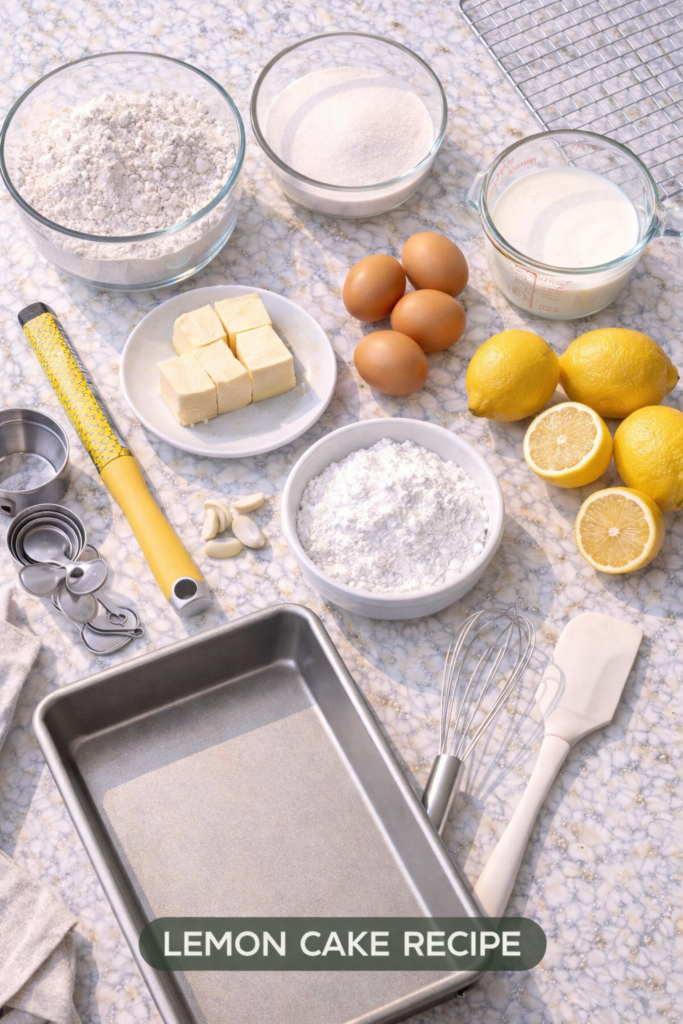
For the Cake:
- 2 ½ cups all-purpose flour
- 2 cups granulated sugar
- 1 cup unsalted butter, softened to room temperature
- 4 large eggs, room temperature
- 1 cup whole milk, room temperature
- ¼ cup fresh lemon juice (about 2 lemons)
- 2 tablespoons lemon zest (from about 3 lemons)
- 2 teaspoons baking powder
- ½ teaspoon baking soda
- ½ teaspoon salt
- 1 teaspoon vanilla extract
For the Lemon Glaze:
- 2 cups powdered sugar
- ¼ cup fresh lemon juice
- 2 tablespoons whole milk
- 1 tablespoon lemon zest
Tools You’ll Need
Getting your tools ready before you start makes everything so much easier.
- 9×13 inch baking pan (or two 9-inch round pans if you want a layer cake)
- Electric mixer (stand or hand mixer both work)
- Large mixing bowl
- Medium mixing bowl
- Measuring cups and spoons
- Zester or microplane
- Wire cooling rack
- Toothpick or cake tester
- Whisk
- Rubber spatula
Pro Tips
1. Room temperature ingredients are non-negotiable
Cold eggs and butter don’t mix properly, and you’ll end up with a dense, uneven cake. Just set everything out about an hour before you start baking.
2. Zest before you juice
Trust me on this one. Trying to zest a lemon after you’ve cut it open is a mess. Zest first, then juice.
3. Don’t skip the glaze while the cake is warm
The magic happens when you pour that glaze over a slightly warm cake. It seeps into all the nooks and creates these little pockets of sweetness that make each bite different.
4. Use fresh lemons only
Bottled lemon juice tastes like regret and disappointment. Fresh lemons give you that bright, zingy flavor that actually makes this cake worth eating.
5. Check for doneness early
Every oven is different, and some run hotter than others. Start checking your cake at the 30-minute mark to avoid overbaking.
How to Make This Lemon Cake

Step 1: Prep Your Pan and Preheat
Preheat your oven to 350°F (175°C).
Grease your 9×13 pan really well with butter or cooking spray, then dust it lightly with flour. This prevents sticking and makes your life easier when it’s time to serve.
Step 2: Mix the Dry Ingredients
In a medium bowl, whisk together the flour, baking powder, baking soda, and salt.
Set this aside. You’ll add it to the wet ingredients later.
Step 3: Cream the Butter and Sugar
In your large mixing bowl, beat the softened butter and sugar together with your electric mixer on medium-high speed.
Keep going for about 3-4 minutes until it’s light and fluffy. This step adds air to your cake and makes it tender.
Step 4: Add the Eggs
Add your eggs one at a time, beating well after each addition.
Scrape down the sides of the bowl between each egg to make sure everything is mixing evenly.
Step 5: Add the Lemon Flavor
Mix in the lemon zest, lemon juice, and vanilla extract.
The batter might look a little curdled at this point. Don’t panic. It’ll come together once you add the flour.
Step 6: Alternate Adding Flour and Milk
Start with about a third of your flour mixture, mix it in on low speed, then add half the milk.
Continue alternating, ending with the flour mixture. Mix just until everything is combined, but don’t overmix or your cake will be tough.
Step 7: Bake
Pour the batter into your prepared pan and spread it evenly.
Bake for 35-40 minutes, or until a toothpick inserted in the center comes out clean or with just a few moist crumbs.
Step 8: Make the Glaze
While your cake is baking, whisk together the powdered sugar, lemon juice, milk, and lemon zest in a medium bowl.
The glaze should be pourable but not too thin. If it’s too thick, add a tiny bit more milk. Too thin? Add more powdered sugar.
Step 9: Glaze the Cake
When your cake comes out of the oven, let it cool for about 10 minutes.
Then poke holes all over the top with a toothpick or skewer. Pour the glaze evenly over the warm cake and let it soak in.
Step 10: Let It Set
Let the cake cool completely before slicing.
I know it’s tempting to dig in right away, but the glaze needs time to set and the flavors need time to develop.
Substitutions and Variations
Can’t have dairy?
Swap the butter for vegan butter (the stick kind, not the tub) and use your favorite plant-based milk. The cake might be slightly less rich, but it’ll still taste good.
Want to make this into cupcakes?
Line a muffin tin with paper liners and fill each about ⅔ full. Bake for 18-22 minutes instead.
Add some berries
Fold in a cup of fresh blueberries or raspberries to the batter before baking. The tartness pairs really well with the lemon.
Make it a layer cake
Divide the batter between two 9-inch round pans and bake for 25-30 minutes. Stack them with lemon curd or cream cheese frosting in between.
Reduce the sugar
You can cut the sugar in the cake down to 1 ¾ cups if you’re not a huge fan of super sweet desserts.
Make Ahead Tips
This cake actually tastes better the next day once all the flavors have had time to meld together.
You can bake the cake, let it cool completely, wrap it tightly in plastic wrap, and store it at room temperature for up to 2 days before glazing.
Want to freeze it? Wrap the unglazed cake in plastic wrap and then aluminum foil. It’ll keep in the freezer for up to 3 months. Thaw it overnight in the fridge before glazing.
The glaze can be made a day ahead and stored in an airtight container in the fridge. Just give it a good whisk before using.
Leftovers and Storage
Store any leftover cake covered at room temperature for up to 3 days.
After that, it starts to dry out a bit. You can also refrigerate it for up to 5 days if your kitchen is really warm.
Freeze individual slices wrapped in plastic wrap and stored in a freezer bag for up to 2 months. Let them thaw at room temperature for about an hour before eating.
Honestly though, this cake never lasts that long in my house. It’s usually gone within 48 hours.
Nutritional Information
Per slice (based on 12 servings):
- Calories: 425
- Total Fat: 18g
- Saturated Fat: 11g
- Cholesterol: 105mg
- Sodium: 245mg
- Total Carbohydrates: 63g
- Dietary Fiber: 1g
- Sugars: 45g
- Protein: 5g
Keep in mind this is an estimate and can vary based on specific ingredients you use.
Serving Suggestions
This cake is perfect on its own, but if you want to get fancy, here are some ideas:
Serve it with a dollop of fresh whipped cream and some berries on the side. The cream cuts through the sweetness nicely.
A scoop of vanilla ice cream never hurt anyone either. The cold ice cream against the tender cake is pretty amazing.
Pair it with a hot cup of Earl Grey tea or a strong coffee. The citrus in the cake complements the tea really well.
For a brunch spread, slice it up and serve it alongside fresh fruit and yogurt.
FAQ
Can I use bottled lemon juice?
You can, but please don’t. Fresh lemon juice makes all the difference in this recipe. The bottled stuff has a weird aftertaste that’ll come through in your cake.
Why is my cake dense?
This usually happens when you overmix the batter or your ingredients weren’t at room temperature. Mix just until combined, and make sure everything is the right temp before you start.
Can I make this without a mixer?
Yes, but your arm is going to get tired. You need to really cream that butter and sugar well, which takes some serious elbow grease by hand.
How do I know when it’s done?
Insert a toothpick into the center of the cake. It should come out clean or with just a few moist crumbs. If it comes out with wet batter, keep baking and check every 5 minutes.
Can I add food coloring to the glaze?
Sure, if you want to. A few drops of yellow food coloring will make it more vibrant. Just don’t go overboard.
What if my glaze is too thick?
Add milk one teaspoon at a time until it reaches the consistency you want. It should be pourable but not watery.
Can I use a different size pan?
You can use two 9-inch round pans for a layer cake, or even a bundt pan. Just adjust your baking time accordingly. Round pans will take about 25-30 minutes, and a bundt pan will take about 45-50 minutes.
Do I have to poke holes in the cake?
No, but it helps the glaze soak in and creates those pockets of sweetness I mentioned earlier. Totally worth the extra 30 seconds.
Wrapping Up
This lemon cake is one of those recipes you’ll make over and over again once you nail it.
It’s simple enough for a Tuesday night but impressive enough to bring to a potluck or serve at a birthday party. Plus, it fills your kitchen with the most amazing citrus smell while it’s baking.
I’d love to hear how yours turns out. Drop a comment below and let me know if you made any fun variations or if you have any questions before you get started.