You know what’s funny about salmon? People act like it’s this intimidating fish that requires a culinary degree to cook properly.
It doesn’t.
I’ve been making baked salmon for years, and honestly, it’s one of the easiest proteins you can throw in the oven. No flipping, no babysitting, no stress. Just pure, flaky, omega-3 goodness that takes about 20 minutes from start to finish.
Here’s what makes this recipe different: we’re not drowning the fish in complicated marinades or covering up that natural buttery flavor. We’re keeping it simple, letting the salmon shine, and adding just enough seasoning to make every bite feel like you ordered it at a fancy restaurant.
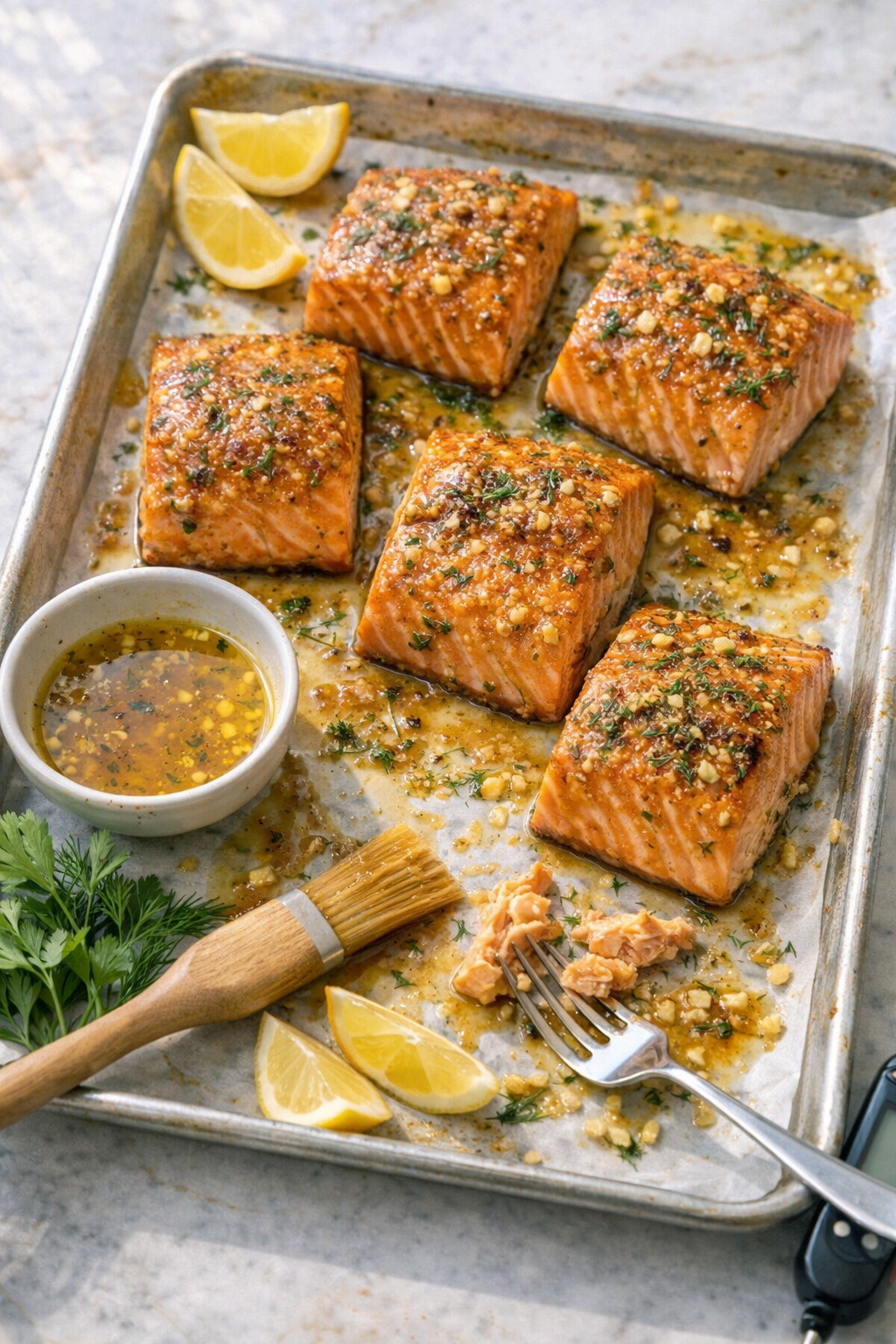
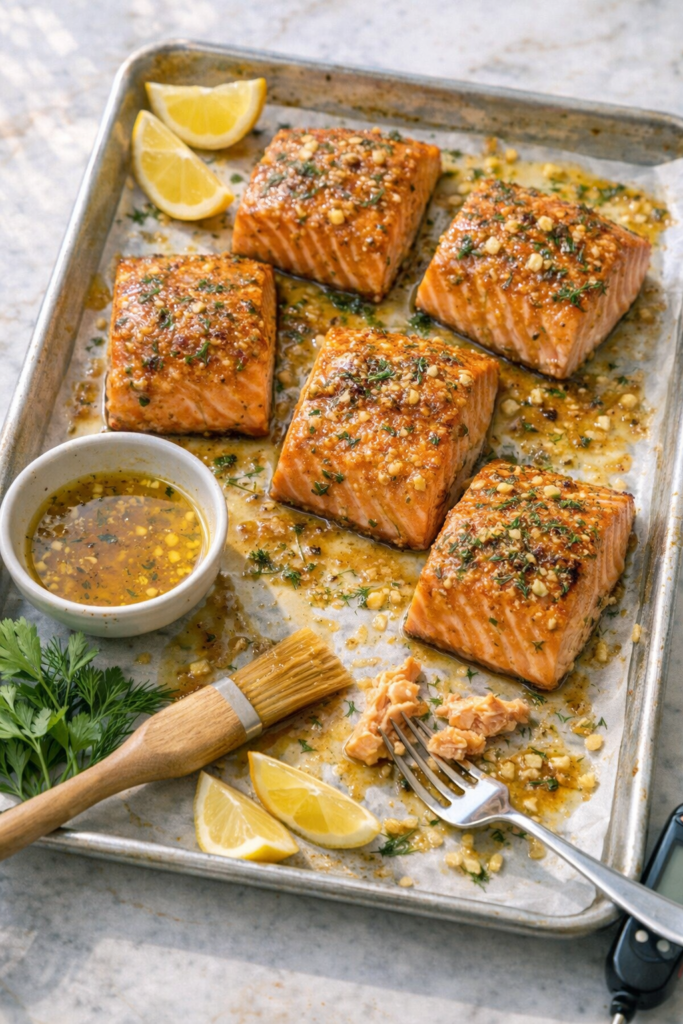
And the color? That golden-brown top with the slight char on the edges? 😍
Trust me, once you nail this method, you’ll stop ordering salmon when you eat out because you’ll realize yours tastes better. And costs like a third of the price.
What You’ll Need
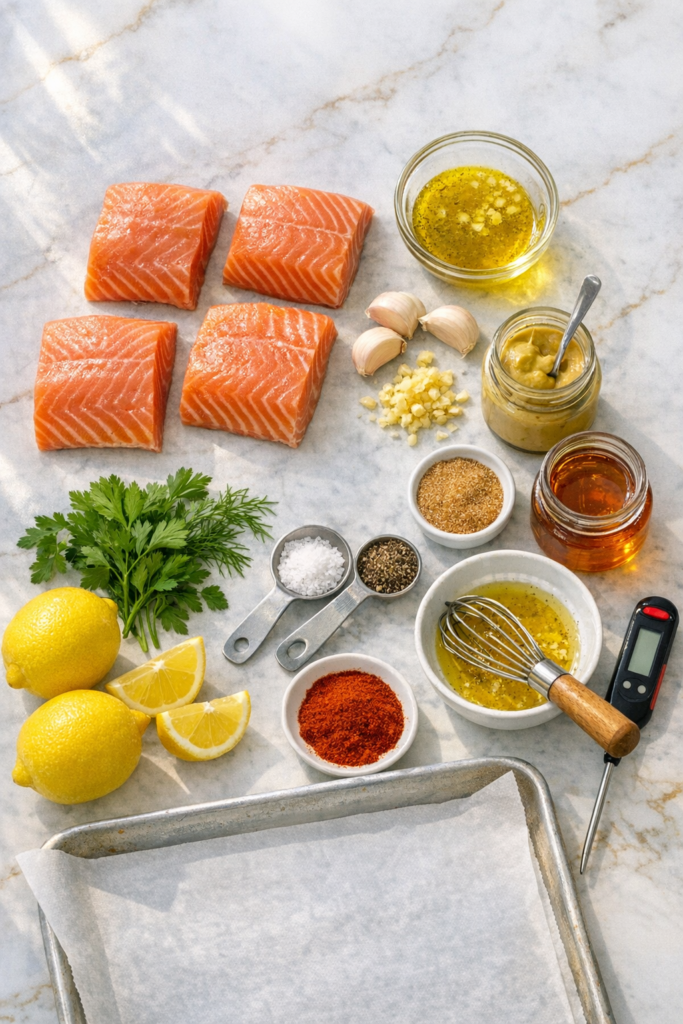
For the Salmon:
- 4 salmon fillets (6 oz each, skin-on or skinless)
- 2 tablespoons olive oil
- 2 tablespoons fresh lemon juice
- 3 garlic cloves, minced
- 1 teaspoon Dijon mustard
- 1 teaspoon honey
- ¾ teaspoon salt
- ½ teaspoon black pepper
- ½ teaspoon paprika
- ¼ teaspoon cayenne pepper (optional, for a kick)
- Fresh dill or parsley for garnish
- Lemon wedges for serving
Tools You’ll Need
- Baking sheet
- Parchment paper or aluminum foil
- Small mixing bowl
- Whisk or fork
- Pastry brush (or just use a spoon)
- Instant-read thermometer (optional but helpful)
Pro Tips
1. Room Temperature is Key
Take your salmon out of the fridge 15-20 minutes before cooking. Cold fish straight from the fridge won’t cook evenly and you’ll end up with that weird texture where the outside is done but the inside is still cold.
2. Pat It Dry
This is the secret to getting that beautiful golden crust. Use paper towels to pat your salmon completely dry before adding any oil or seasoning. Moisture is the enemy of crispiness.
3. Don’t Overcook It
Salmon is done at 125°F internal temperature if you like it medium-rare (my preference), or 145°F if you want it fully cooked through. At 145°F, it’ll flake easily with a fork. Anything past that and you’re eating salmon jerky.
4. Check the Thickness
Thicker fillets need more time, thinner ones need less. If your fillets are wildly different sizes, check the thinnest one first to avoid overcooking.
5. Let It Rest
Give your salmon 3-5 minutes to rest after it comes out of the oven. The internal temperature will continue to rise slightly, and all those delicious juices will redistribute instead of running all over your plate.
How to Make It
Step 1: Prep Your Oven and Pan
Preheat your oven to 400°F. Line a baking sheet with parchment paper or foil (makes cleanup so much easier).
Step 2: Make the Glaze
In a small bowl, whisk together the olive oil, lemon juice, minced garlic, Dijon mustard, honey, salt, pepper, paprika, and cayenne if using. It should look like a slightly thick golden liquid.
Step 3: Prep the Salmon
Pat your salmon fillets completely dry with paper towels. Place them on your prepared baking sheet, leaving a couple inches between each fillet so they cook evenly.
Step 4: Brush On the Glaze
Use a pastry brush (or the back of a spoon) to coat the top and sides of each fillet with your glaze mixture. Be generous. That’s where all the flavor lives.
Step 5: Bake
Pop the baking sheet in your preheated oven. For 1-inch thick fillets, bake for 12-15 minutes. You’re looking for the salmon to be opaque and flake easily with a fork. If you have a thermometer, aim for 125-145°F depending on how you like it cooked.
Step 6: Broil for Extra Color (Optional)
Want that restaurant-quality golden top? Switch your oven to broil for the last 2-3 minutes. Watch it closely because the line between perfectly caramelized and burnt is about 30 seconds.
Step 7: Rest and Serve
Pull your salmon out and let it rest for 3-5 minutes. Garnish with fresh dill or parsley and serve with lemon wedges on the side.
That’s it. You just made restaurant-quality salmon in your own kitchen.
Substitutions and Variations
Fish Swaps: If salmon isn’t your thing or you can’t find it, this method works beautifully with arctic char, trout, or even thick cod fillets. Just adjust the cooking time based on thickness.
Herb Variations: Swap the dill for fresh thyme, rosemary, or basil. Each brings a completely different vibe to the dish.
Asian-Inspired Version: Replace the Dijon and honey with 1 tablespoon soy sauce and 1 tablespoon maple syrup. Add a splash of sesame oil and top with sesame seeds before baking.
Spicy Cajun Style: Skip the paprika and cayenne. Instead, coat the salmon with 1-2 tablespoons of Cajun seasoning before adding the glaze.
Mediterranean Twist: Add 1 teaspoon dried oregano to your glaze and top with sliced cherry tomatoes and kalamata olives before baking.
Dairy-Free: This recipe is already dairy-free! If you want to add butter flavor, use ghee or vegan butter in place of half the olive oil.
Make Ahead Tips
You can prep the glaze mixture up to 3 days in advance and store it in an airtight container in the fridge. Just give it a good stir before using because the oil might separate.
I don’t recommend glazing the salmon ahead of time because the acid from the lemon juice can start to “cook” the fish (like ceviche) and you’ll end up with a weird texture.
If you want to meal prep, cook the salmon fully, let it cool, and store it in the fridge for up to 3 days. Reheat gently in a 275°F oven for about 8-10 minutes.
Nutrition Information (Per Fillet)
- Calories: 340
- Protein: 34g
- Fat: 21g (mostly healthy omega-3s)
- Carbohydrates: 3g
- Fiber: 0g
- Sugar: 2g
- Sodium: 520mg
Salmon is loaded with omega-3 fatty acids, which are great for your heart and brain. It’s also packed with B vitamins, potassium, and selenium.
What to Serve With Baked Salmon
This salmon pairs beautifully with pretty much anything, but here are my go-to sides:
Light and Fresh: Arugula salad with lemon vinaigrette, roasted asparagus, or steamed green beans with garlic
Comfort Food Vibes: Mashed potatoes, roasted baby potatoes with rosemary, or creamy risotto
Grain Bowls: Quinoa, brown rice, or farro with roasted vegetables
Low-Carb Options: Cauliflower rice, zucchini noodles, or a simple cucumber salad
My personal favorite? Roasted Brussels sprouts and sweet potato wedges. The sweetness of the potato balances the richness of the salmon perfectly.
Leftovers and Storage
Store leftover salmon in an airtight container in the fridge for up to 3 days. It’s delicious cold in salads or reheated gently.
Reheating: The oven is your friend here. Reheat at 275°F for 8-10 minutes or until just warmed through. The microwave works too, but use 50% power and heat in 30-second intervals to avoid that rubbery texture.
Freezing: Cooked salmon freezes surprisingly well. Wrap each fillet tightly in plastic wrap, then place in a freezer bag. It’ll keep for up to 3 months. Thaw overnight in the fridge before reheating.
Creative Leftover Ideas:
- Flake it over pasta with cream sauce
- Add it to scrambled eggs for breakfast
- Make salmon cakes or patties
- Toss it with mixed greens and a lemony dressing
- Use it as a protein topper for grain bowls
Frequently Asked Questions
How do I know when salmon is done?
The flesh should be opaque and flake easily with a fork. If you have a thermometer, 125°F gives you medium-rare (my favorite), 135°F is medium, and 145°F is fully cooked. The FDA recommends 145°F, but many chefs prefer it slightly under.
Should I use skin-on or skinless salmon?
Totally up to you! Skin-on helps protect the flesh from drying out and some people love crispy salmon skin. Skinless is easier to serve and eat. This recipe works perfectly with both.
Can I use frozen salmon?
Yes, but thaw it completely first. Put it in the fridge overnight or use the cold water method (sealed in a bag, submerged in cold water for 30-60 minutes). Never cook salmon from frozen for this recipe.
Why is my salmon dry?
Overcooking is the number one culprit. Salmon continues cooking after you pull it from the oven, so take it out when it’s just barely done. Also, make sure you’re not using super thin fillets which cook too fast.
Can I make this for a crowd?
Absolutely! This recipe scales beautifully. Just use multiple baking sheets if needed and rotate them halfway through cooking for even results.
What’s that white stuff that comes out of salmon?
That’s albumin, a protein that’s totally safe to eat. It shows up more when salmon is cooked at high heat or overcooked. Brining your salmon for 10 minutes in 1 tablespoon salt per cup of water before cooking reduces it significantly.
Do I need to remove the pin bones?
Most store-bought salmon has them removed, but run your fingers along the fillet to check. If you feel any, use tweezers or needle-nose pliers to pull them out at an angle.
Wrapping Up
This baked salmon recipe has been my go-to for years because it’s foolproof, fast, and tastes like you spent way more effort on it than you actually did.
The glaze gives you that perfect balance of savory, tangy, and slightly sweet, and the high heat creates those crispy, caramelized edges that make every bite feel special. Plus, cleanup is basically nonexistent if you use parchment paper.
Make this once and I promise it’ll become your default weeknight dinner when you want something healthy but don’t want to spend an hour in the kitchen.
Now I want to hear from you. Did you try this recipe? How did it turn out? Did you add your own spin to it? Drop a comment below and let me know what you think!