You know that feeling when you make something for the first time and it’s so good you kind of can’t believe it came out of your kitchen?
That’s shrimp pasta.
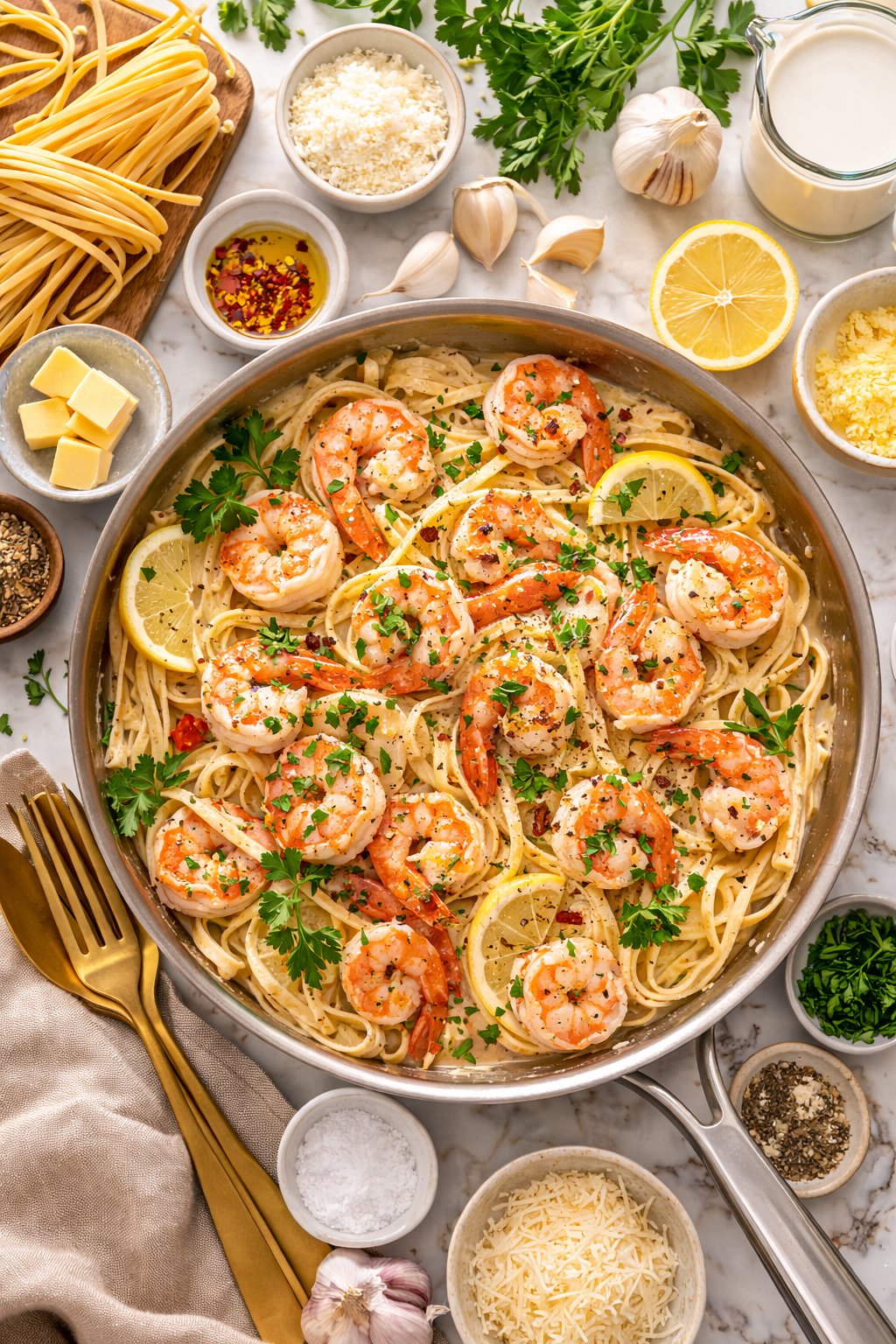
It’s got this restaurant-level flavor that feels way too fancy for a Tuesday night. Garlicky butter sauce, plump juicy shrimp, al dente pasta — all ready in under 30 minutes.
And once you know the formula, you’ll find yourself making it on repeat. Trust me on this one.
What You’ll Need
For the Pasta
- 12 oz linguine or spaghetti
- 1 lb large shrimp, peeled and deveined (fresh or thawed from frozen)
- 4 tablespoons unsalted butter
- 3 tablespoons olive oil
- 6 garlic cloves, minced
- 1/2 teaspoon red pepper flakes (adjust to your heat preference)
- 1/2 cup dry white wine (Pinot Grigio works great)
- 1/2 cup pasta water (reserved before draining)
- Juice of 1 lemon
- Zest of 1 lemon
- 1/4 cup fresh parsley, chopped
- 1/2 cup freshly grated Parmesan cheese
- Salt and black pepper to taste
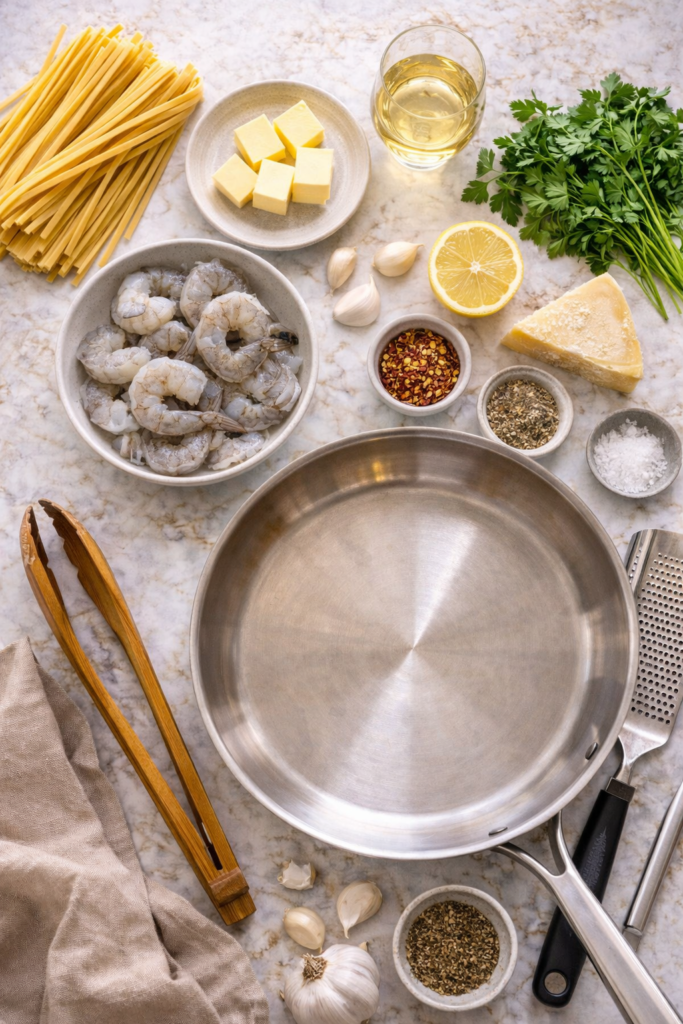
Tools You’ll Need
- Large pot (for boiling pasta)
- Large skillet or sauté pan (12-inch recommended)
- Colander
- Wooden spoon or tongs
- Microplane or zester
- Measuring cups and spoons
- Knife and cutting board
Pro Tips
A few things that make a big difference here, especially if you’re making this for the first time:
- Salt your pasta water like the ocean. Seriously. This is the one step most people skip and wonder why their pasta tastes bland. A full tablespoon of salt in a big pot of water makes a noticeable difference.
- Don’t skip the pasta water. That starchy water is what turns your butter and white wine into an actual sauce that clings to every strand. Reserve it before you drain — you’ll thank yourself later.
- Pat your shrimp dry before cooking. Wet shrimp steam instead of sear. Dry shrimp get that gorgeous golden color and a slightly crispy edge. Game-changer.
- Pull your shrimp off the heat the second they curl into a C shape. An O-shape means overcooked. C = cooked, O = over. That little trick will save your shrimp every time.
- Use freshly grated Parmesan. The pre-shredded stuff in the green can has anti-caking agents that prevent it from melting properly into the sauce. Freshly grated is worth the extra two minutes.
Substitutions and Variations
Not everyone has the same pantry (or diet), so here’s what you can swap:
| Original | Substitution |
|---|---|
| Dry white wine | Chicken broth + squeeze of lemon |
| Linguine | Fettuccine, spaghetti, bucatini, or gluten-free pasta |
| Parmesan | Pecorino Romano or nutritional yeast (dairy-free) |
| Butter | Vegan butter or extra olive oil |
| Fresh shrimp | Frozen shrimp (thawed overnight in the fridge) |
| Red pepper flakes | Smoked paprika for a milder, smokier version |
Want to mix it up? Try these variations:
- Creamy shrimp pasta: Add 1/4 cup heavy cream after the wine reduces
- Cherry tomato version: Toss in a cup of halved cherry tomatoes and let them blister in the pan before adding the shrimp
- Tuscan-style: Add sun-dried tomatoes, fresh spinach, and a splash of cream for a richer, heartier version
- Spicy arrabbiata shrimp: Double the red pepper flakes and add a tablespoon of tomato paste
Make Ahead Tips
Shrimp pasta is genuinely at its best fresh, but if you want to prep ahead:
- Peel and devein your shrimp the night before and store in an airtight container in the fridge
- Mince your garlic and store covered in the fridge
- Zest and juice your lemon ahead of time and keep it in a small jar
- Chop your parsley and store loosely covered with a damp paper towel
You’ll cut your active cooking time down to about 15 minutes flat.
Nutritional Breakdown
Here’s a general breakdown per serving (serves 4):
| Nutrient | Amount (approx.) |
|---|---|
| Calories | ~520 kcal |
| Protein | ~32g |
| Carbohydrates | ~48g |
| Fat | ~18g |
| Fiber | ~2g |
| Sodium | ~620mg |
For a lower-calorie version: Use half the butter and serve over zucchini noodles instead of pasta.
For a high-protein version: Double the shrimp and use a lentil-based pasta.
For a low-carb version: Serve over cauliflower rice or shirataki noodles.
Meal Pairing Suggestions
This pasta is rich enough to stand alone, but if you want to build out a full dinner:
- A simple arugula salad with lemon vinaigrette cuts through the richness beautifully
- Garlic bread (obviously)
- Roasted asparagus or broccolini on the side
- A light white wine like Sauvignon Blanc or Pinot Grigio pairs perfectly with the lemon and garlic
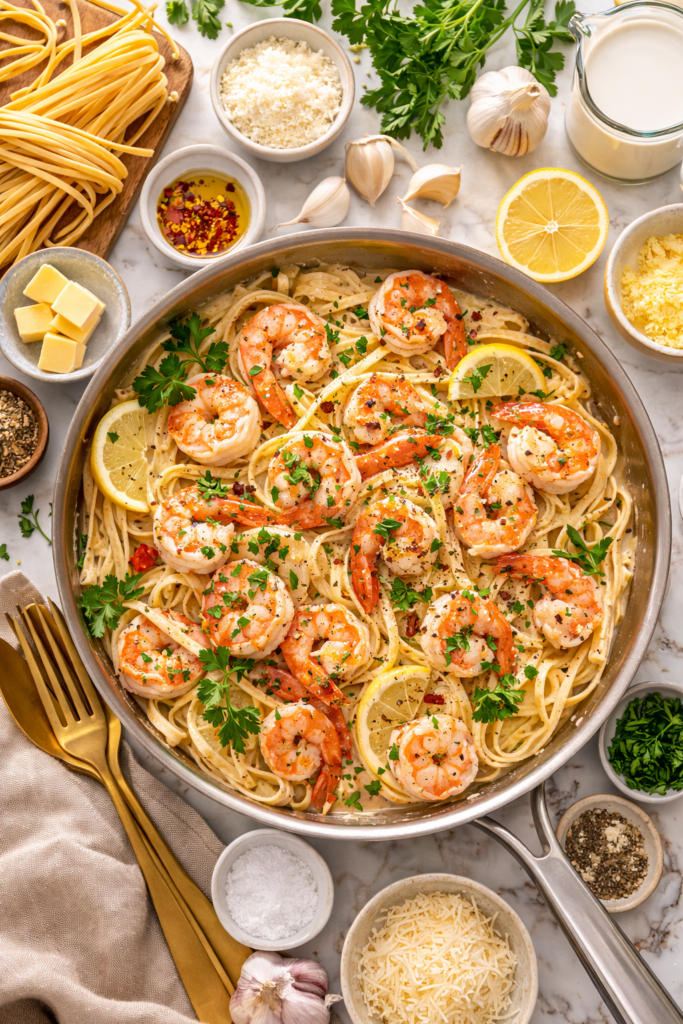
How to Make It
- Bring a large pot of heavily salted water to a boil. Cook pasta according to package instructions until al dente. Before draining, scoop out 1/2 cup of pasta water and set aside. Drain and set pasta aside.
- While the pasta cooks, prep your shrimp. Pat them dry with paper towels. Season both sides lightly with salt and black pepper.
- Heat 1 tablespoon of olive oil in a large skillet over medium-high heat. Once the oil is shimmering, add the shrimp in a single layer. Cook for 1-2 minutes per side until pink and just curled. Remove from the pan and set aside.
- Reduce heat to medium. Add the remaining olive oil and 2 tablespoons of butter to the same pan. Once melted, add the minced garlic and red pepper flakes. Sauté for about 60 seconds until fragrant — just enough to soften the garlic without burning it.
- Pour in the white wine. Let it simmer for 2-3 minutes, scraping up any bits from the bottom of the pan, until reduced by about half.
- Add the reserved pasta water. Stir in the remaining butter and let everything melt together into a glossy sauce.
- Add the cooked pasta to the skillet. Toss it in the sauce until fully coated. Add the lemon juice and lemon zest and toss again.
- Return the shrimp to the pan. Toss everything together gently for about 30 seconds just to warm the shrimp back through.
- Remove from heat. Stir in the fresh parsley and half the Parmesan. Taste, and adjust salt and pepper.
- Serve immediately. Top with remaining Parmesan and an extra pinch of red pepper flakes if you like heat.
Total time: 25-30 minutes. Serves 4.
Leftovers and Storage
Shrimp pasta is one of those dishes that tastes best immediately, but leftovers are still really good if stored properly:
- Refrigerator: Store in an airtight container for up to 2 days
- To reheat: Add a splash of water or broth to the pan and heat on low, stirring gently — this brings the sauce back to life without drying out the pasta
- Microwave: Works fine, but add a small splash of water and cover loosely before heating
- Freezing: Skip it for this one. Cooked shrimp turns rubbery after freezing and thawing, and the pasta texture suffers
FAQ
Can I use frozen shrimp? Yes, 100%. Just thaw them overnight in the fridge or run them under cold water for 10-15 minutes. Pat them very dry before cooking.
What if I don’t want to use wine? Replace it with low-sodium chicken broth and an extra squeeze of lemon. You’ll still get that depth of flavor and acidity without the alcohol.
Can I make this dairy-free? Absolutely. Swap the butter for vegan butter or extra olive oil, and skip the Parmesan (or use a dairy-free alternative). It still tastes great — just a little lighter.
What size shrimp should I use? Large or extra-large shrimp work best here (look for 16/20 or 21/25 count on the bag). Smaller shrimp cook too fast and can easily get rubbery.
My sauce seems thin. What do I do? Let it reduce a bit longer, or add slightly less pasta water. You can also toss in an extra tablespoon of butter off the heat — it emulsifies beautifully and thickens the sauce right up.
Can I add vegetables? Definitely. Baby spinach wilts in beautifully at the end. Cherry tomatoes can blister in the pan before the garlic. Zucchini, asparagus, or peas are all great additions.
How do I know if my shrimp are overcooked? Overcooked shrimp curl into a tight O-shape and feel rubbery when you bite into them. Perfectly cooked shrimp curl into a loose C-shape and have a slight snap but still feel tender.
Wrapping Up
This shrimp pasta is genuinely one of those recipes that sounds impressive and tastes like you spent way more time on it than you did.
30 minutes. One pan (mostly). Ingredients you can grab from any grocery store.
It’s the kind of dinner that makes a regular weeknight feel like a little event. 🍋
Now it’s your turn. Go make it, and come back and tell me how it went in the comments below. What variation did you try? Did you go creamy, or keep it classic? I love hearing how these recipes turn out in your kitchen.