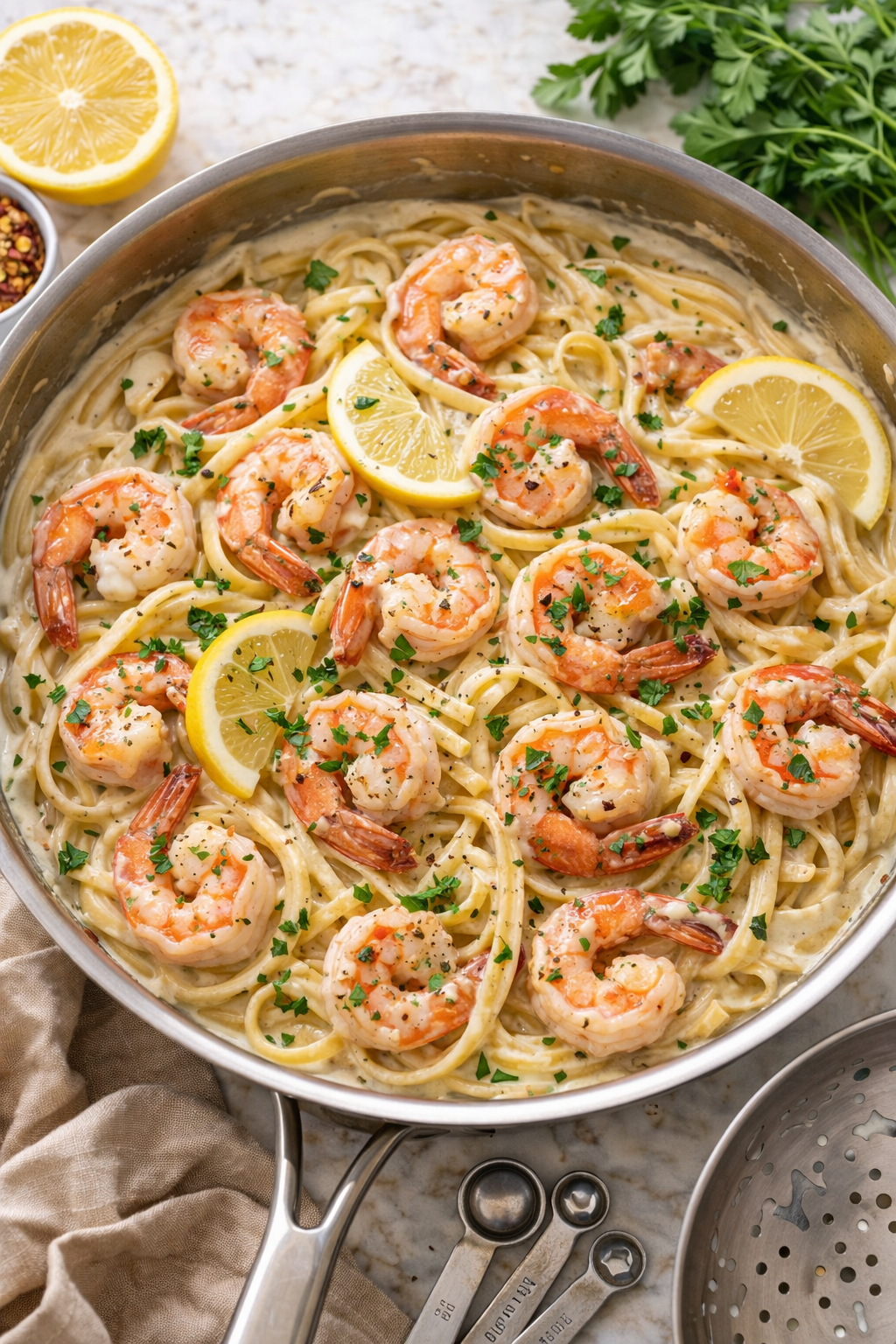
You know that pasta dish you get at a nice Italian restaurant that makes you close your eyes after the first bite?
This is that dish. Except you’re making it at home in under 30 minutes, in one pan, without reservations.
Creamy shrimp pasta is one of those recipes that sounds impressive, looks impressive, and somehow still comes together on a random Tuesday night. The sauce is rich, garlicky, and coats every single noodle perfectly. The shrimp? Juicy and tender.
And if you’ve ever overcooked shrimp before (we’ve all been there 😬), I’ve got a tip in the Pro Tips section that’ll fix that forever.
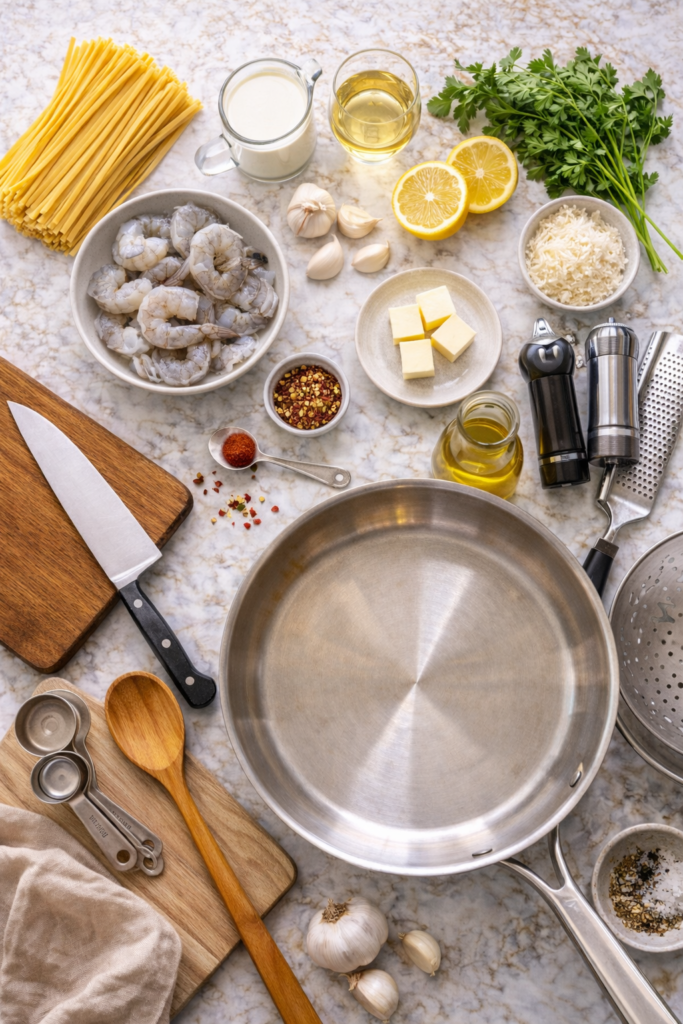
What You’ll Need
For the Pasta
- 12 oz (340g) linguine or fettuccine
- 1 lb (450g) large shrimp, peeled and deveined
- 3 tablespoons unsalted butter
- 4 garlic cloves, minced
- 1 cup heavy cream
- ½ cup dry white wine (or chicken broth)
- ½ cup freshly grated Parmesan cheese
- 1 teaspoon smoked paprika
- ½ teaspoon red pepper flakes (adjust to taste)
- Salt and black pepper, to taste
- 2 tablespoons olive oil
- 1 tablespoon lemon juice
- Fresh parsley, chopped (for garnish)
- Lemon wedges, for serving
Tools You’ll Need
- Large pot (for boiling pasta)
- Large skillet or sauté pan (12-inch)
- Colander
- Wooden spoon or silicone spatula
- Microplane or box grater (for Parmesan)
- Tongs
- Measuring cups and spoons
- Knife and cutting board
Pro Tips
These are the things nobody tells you the first time around.
1. Don’t overcook the shrimp. This is the #1 mistake. Shrimp cook in 2 minutes per side. The moment they curl into a C and turn pink, pull them out. If they curl into an O shape, they’re overdone. That visual alone will save you every single time.
2. Salt your pasta water generously. It should taste like the sea. Seriously. Under-salted pasta water is one of the most common reasons a pasta dish falls flat, and no amount of sauce can fix it after the fact.
3. Save your pasta water. Before you drain the pasta, scoop out at least ½ cup of that starchy pasta water. It’s liquid gold for loosening up the sauce and helping it cling to the noodles.
4. Use freshly grated Parmesan only. Pre-shredded Parmesan has anti-caking agents that prevent it from melting smoothly. Freshly grated melts into the sauce like a dream.
5. Add the shrimp back at the very end. Cook your shrimp first, set them aside, build the sauce, and only fold the shrimp back in at the last minute. This keeps them perfectly tender and not rubbery.
Substitutions and Variations
Not everyone has the same pantry or dietary needs, so here’s how to work with what you’ve got.
Shrimp swaps:
- Scallops work beautifully here (same cook time)
- Chicken breast, sliced thin, is a great alternative
- For a vegetarian version, use mushrooms and sun-dried tomatoes
Cream alternatives:
- Half-and-half works if you want something lighter (sauce will be thinner)
- Full-fat coconut cream for a dairy-free version (it adds a very subtle sweetness)
Wine swap:
- Chicken broth is a direct 1:1 replacement if you’re skipping the wine
- A small squeeze of extra lemon juice will give you a similar brightness
Pasta swaps:
- Fettuccine, spaghetti, pappardelle, or even penne all work
- For gluten-free, use your favorite GF pasta (cook it a minute less than instructed)
Spice level:
- Skip the red pepper flakes entirely for a milder dish
- Double them if you love heat
Make-Ahead Tips
This dish is best fresh, but here’s how to prep ahead and cut down your cook time.
- Peel and devein the shrimp up to 24 hours ahead. Store in the fridge in an airtight container.
- Mince the garlic and store it covered in the fridge.
- Grate the Parmesan and keep it in a small container.
When it’s time to cook, everything is already prepped and you’re looking at a 15-minute dinner max.
Nutritional Breakdown (Per Serving, Approx. 4 Servings)
| Nutrient | Amount |
|---|---|
| Calories | ~620 kcal |
| Protein | 38g |
| Carbohydrates | 52g |
| Fat | 27g |
| Saturated Fat | 14g |
| Sodium | ~680mg |
| Fiber | 2g |
Note: Values will vary based on exact ingredients and portions used.
Lighter swaps if needed:
- Use half-and-half instead of heavy cream to cut fat significantly
- Use whole wheat or chickpea pasta to boost fiber and protein
- Reduce butter to 1 tablespoon and increase olive oil
Pairs well with:
- A crisp green salad with lemon vinaigrette
- Garlic bread or crusty sourdough for sauce-scooping
- A glass of chilled Pinot Grigio or Sauvignon Blanc
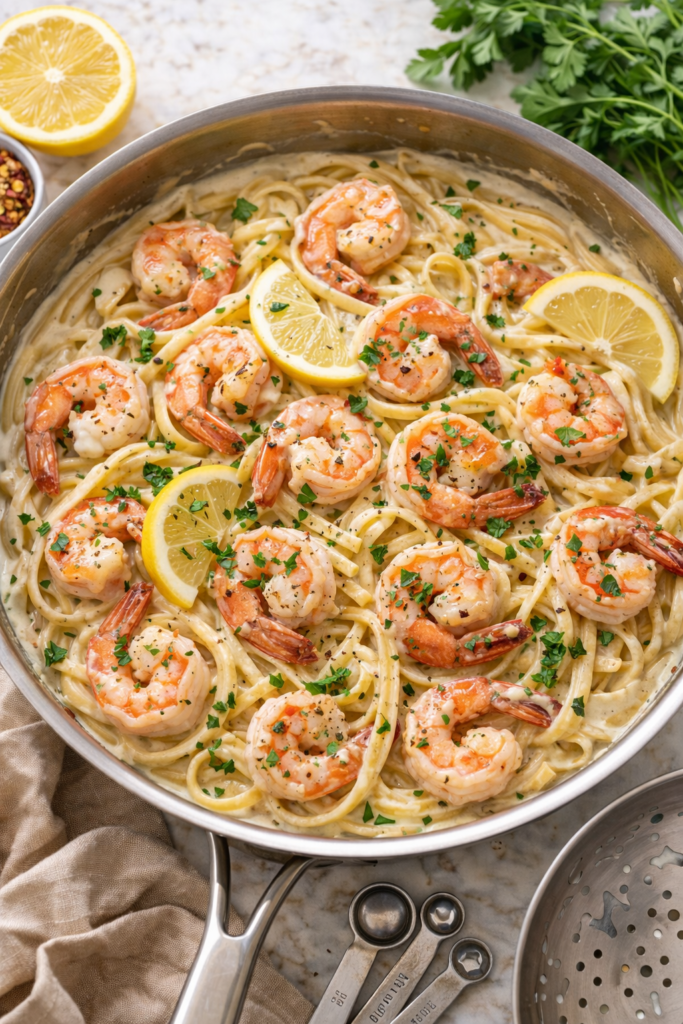
How to Make Creamy Shrimp Pasta
Step 1: Cook the Pasta
Bring a large pot of well-salted water to a boil. Cook the linguine according to package directions until al dente.
Before draining, scoop out ½ cup of pasta water and set it aside. Drain the pasta and set aside.
Step 2: Season and Cook the Shrimp
Pat the shrimp dry with paper towels. This step matters more than you think — dry shrimp sear, wet shrimp steam.
Season with smoked paprika, salt, and pepper.
Heat 1 tablespoon of olive oil and 1 tablespoon of butter in a large skillet over medium-high heat. Add the shrimp in a single layer and cook 1-2 minutes per side until pink and just cooked through.
Remove the shrimp from the pan and set aside on a plate.
Step 3: Build the Sauce
In the same skillet, reduce heat to medium. Add the remaining butter and olive oil.
Add the minced garlic and sauté for about 60 seconds, just until fragrant. Don’t walk away here — garlic burns fast.
Pour in the white wine and let it cook down for about 2 minutes, scraping up any bits from the bottom of the pan.
Step 4: Make It Creamy
Pour in the heavy cream and stir to combine. Let it simmer gently for 3-4 minutes until it starts to thicken slightly.
Add the red pepper flakes and lemon juice. Stir.
Remove from heat and stir in the Parmesan until fully melted and smooth. If the sauce feels too thick, add a splash of that reserved pasta water.
Step 5: Bring It All Together
Add the cooked pasta directly into the sauce and toss to coat every strand.
Fold in the shrimp and give everything one final gentle toss.
Taste. Adjust salt, pepper, or lemon to your liking.
Step 6: Plate and Serve
Divide into bowls. Finish with fresh parsley and a lemon wedge on the side.
Serve immediately. This dish does not wait well on the stove.
Leftovers and Storage
Storing: Transfer leftovers to an airtight container and refrigerate for up to 2 days. The sauce will thicken considerably in the fridge.
Reheating: Reheat in a skillet over low heat with a splash of chicken broth, water, or cream to loosen the sauce. Avoid the microwave if you can — it tends to make the shrimp rubbery.
Freezing: Not recommended. Cream-based sauces don’t freeze well and the shrimp texture suffers significantly after thawing.
FAQ
Can I use frozen shrimp? Yes. Thaw them completely first by placing them in a colander under cold running water for about 10 minutes. Pat them dry before cooking.
What if I don’t have white wine? Chicken broth is the best substitute. A tiny bit of extra lemon juice adds that same brightness the wine would give.
My sauce is too thin. What do I do? Let it simmer a bit longer before adding the pasta. Or stir in a touch more Parmesan. Both work.
My sauce is too thick. Help. Add pasta water, a splash at a time, until it reaches the consistency you want. That starchy water is exactly what the sauce needs.
Can I add vegetables? Absolutely. Baby spinach wilts beautifully into the sauce at the very end. Cherry tomatoes, asparagus, or roasted red peppers are all great here too.
Do I have to use linguine? Nope. Fettuccine is probably the most classic pairing with a cream sauce, but spaghetti, pappardelle, or penne all work fine.
How do I know when the shrimp are done? They turn from grey-translucent to pink and opaque. The tail curls slightly into a loose C shape. That’s your cue. The moment they look like a tight O, they’ve gone too far.
Wrapping Up
If you’ve been wanting a go-to pasta recipe that feels a little elevated but doesn’t ask too much of you on a weeknight, this is it.
It’s the kind of dinner you make once and then it quietly becomes part of the regular rotation. The garlic cream sauce alone is worth every minute. The shrimp make it feel special. And the whole thing takes less time than ordering delivery.
Make it this week and come back and tell me how it went. I genuinely want to know how yours turned out, what you swapped, what you’d do differently, and whether it earned a spot in your recipe lineup. Drop a comment below. 👇