You’ve probably heard that salmon is good for you a hundred times. But knowing something is healthy and actually wanting to eat it? That’s a different story.
This recipe fixes that.
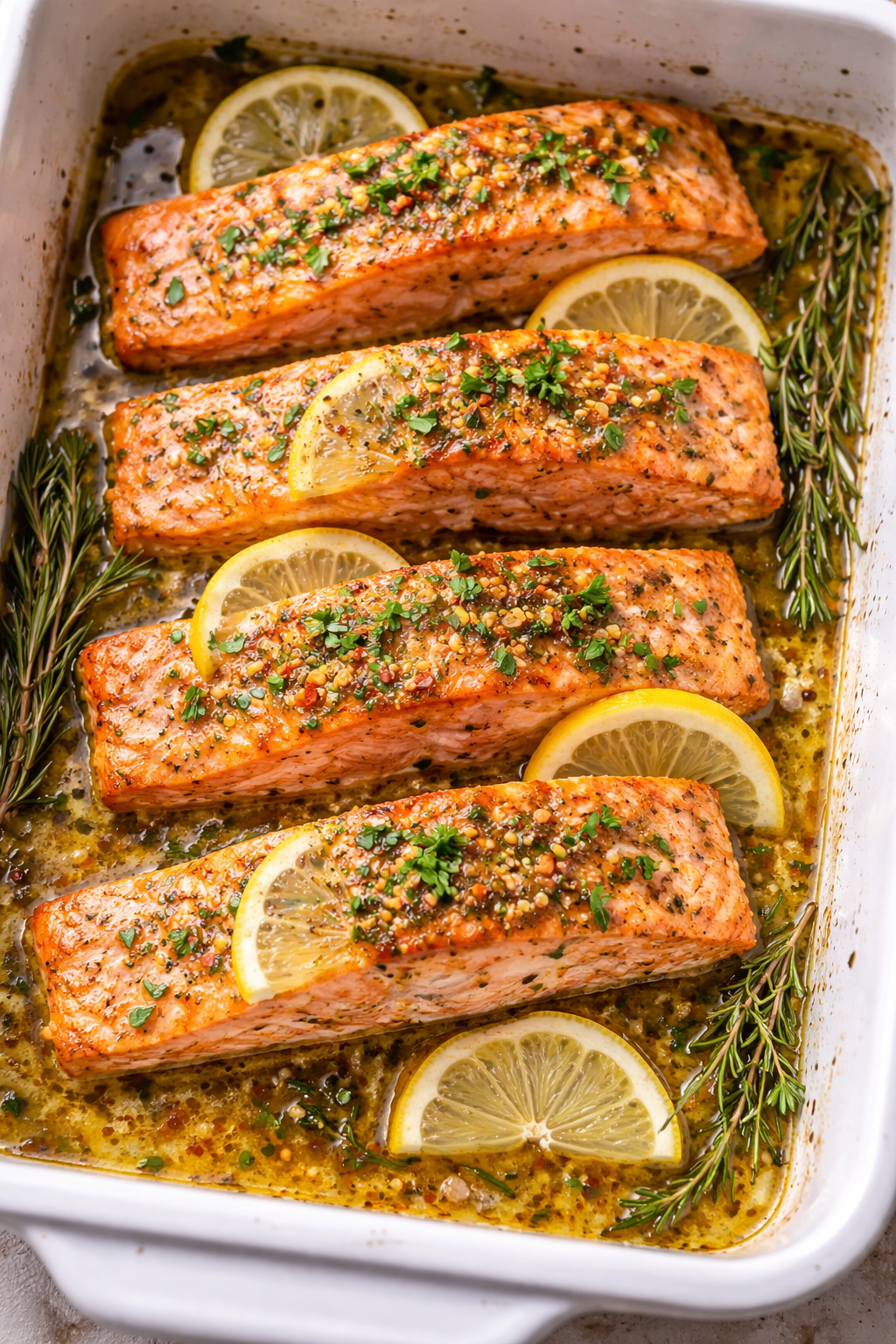
It’s a simple baked salmon with lemon, garlic, and fresh herbs that’s ready in under 30 minutes, genuinely delicious, and does real things for your cardiovascular health. No complicated techniques. No fancy equipment. No sad, dry fish.
And here’s the part that surprises most people: one serving of salmon gives you more omega-3 fatty acids than most people get in an entire week. A single fillet can deliver up to 2.5 grams of EPA and DHA combined — the American Heart Association recommends eating fatty fish at least twice a week for exactly this reason.
So if eating well has ever felt like a chore, this is the recipe that changes that.
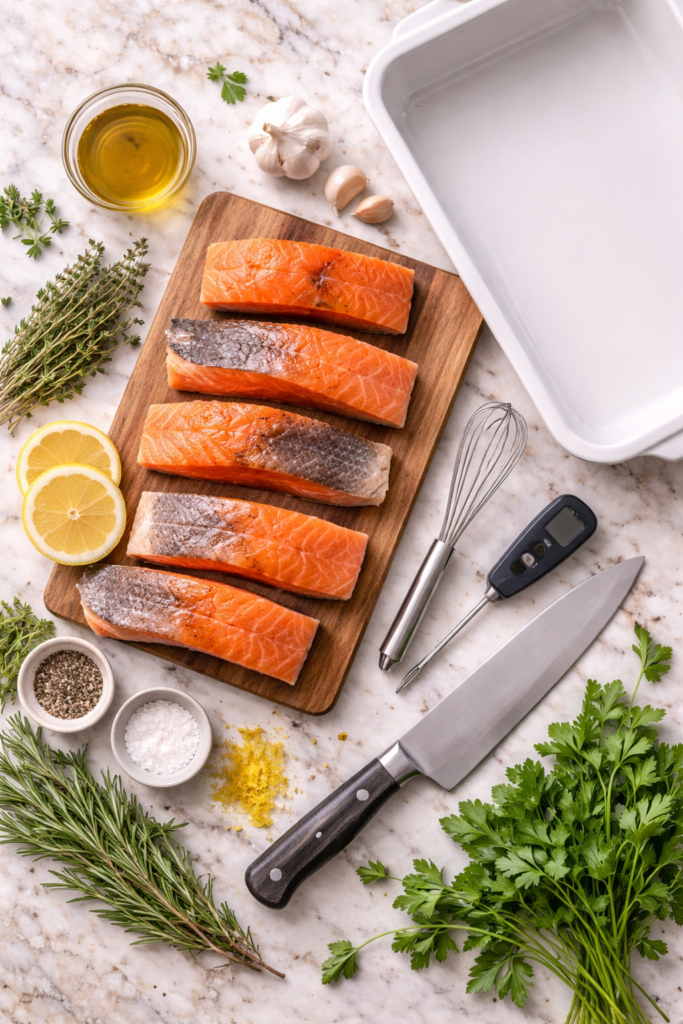
What You’ll Need
For the Salmon
- 4 salmon fillets (about 6 oz each), skin-on
- 3 tablespoons olive oil (extra virgin)
- 4 cloves garlic, minced
- 2 tablespoons fresh lemon juice (about 1 large lemon)
- 1 teaspoon lemon zest
- 1 teaspoon fresh thyme leaves (or ½ tsp dried)
- 1 tablespoon fresh rosemary, finely chopped
- 2 tablespoons fresh flat-leaf parsley, chopped
- ½ teaspoon black pepper, freshly ground
- ¼ teaspoon sea salt (optional — see Pro Tips)
- Lemon slices, for topping
For Serving (Optional but Recommended)
- Steamed broccoli or asparagus
- Cooked quinoa or brown rice
- A handful of cherry tomatoes, halved
Tools You’ll Need
- Baking dish (9×13 inch) or sheet pan
- Small mixing bowl
- Whisk or fork
- Microplane or zester (for lemon zest)
- Meat thermometer (highly recommend — more on this below)
- Aluminum foil or parchment paper
- Sharp knife and cutting board
Pro Tips
These are the things nobody tells you until after you’ve already made a mistake.
- Don’t skip the skin. Baking salmon skin-side down protects the delicate flesh from direct heat and keeps it from drying out. It peels right off after cooking if you don’t want to eat it.
- Room temperature fish cooks more evenly. Pull the salmon out of the fridge 15-20 minutes before cooking. Cold fish going straight into a hot oven = unevenly cooked centers.
- Use a thermometer. The internal temperature you’re aiming for is 125°F (52°C) for medium — this is when salmon is still slightly translucent in the center and incredibly moist. If you go to 145°F like most food safety charts suggest, it’ll be overcooked. Pull it just before it reaches 125°F because it keeps cooking out of the oven.
- Low sodium matters here. If you’re making this specifically for heart health, go easy on or skip the added salt. The lemon juice, garlic, and herbs carry so much flavor that you honestly won’t miss it.
- Fresh herbs beat dried every time. The oils in fresh parsley, thyme, and rosemary make a noticeably brighter flavor. If you only have dried, halve the quantities.
Instructions
Prep time: 10 minutes Cook time: 15–18 minutes Total time: ~28 minutes Servings: 4
Step 1: Preheat your oven to 400°F (200°C). Line your baking dish or sheet pan with parchment paper or lightly greased foil.
Step 2: Make the herb marinade. In a small bowl, whisk together olive oil, minced garlic, lemon juice, lemon zest, thyme, rosemary, and black pepper. Taste it — it should smell incredible.
Step 3: Prep the salmon. Pat the fillets dry with a paper towel (this helps the marinade stick and gives you a slightly better crust). Place them skin-side down in your prepared baking dish.
Step 4: Coat generously. Spoon or brush the herb mixture over each fillet, making sure to get it into all the nooks. Add a few thin lemon slices on top of each piece.
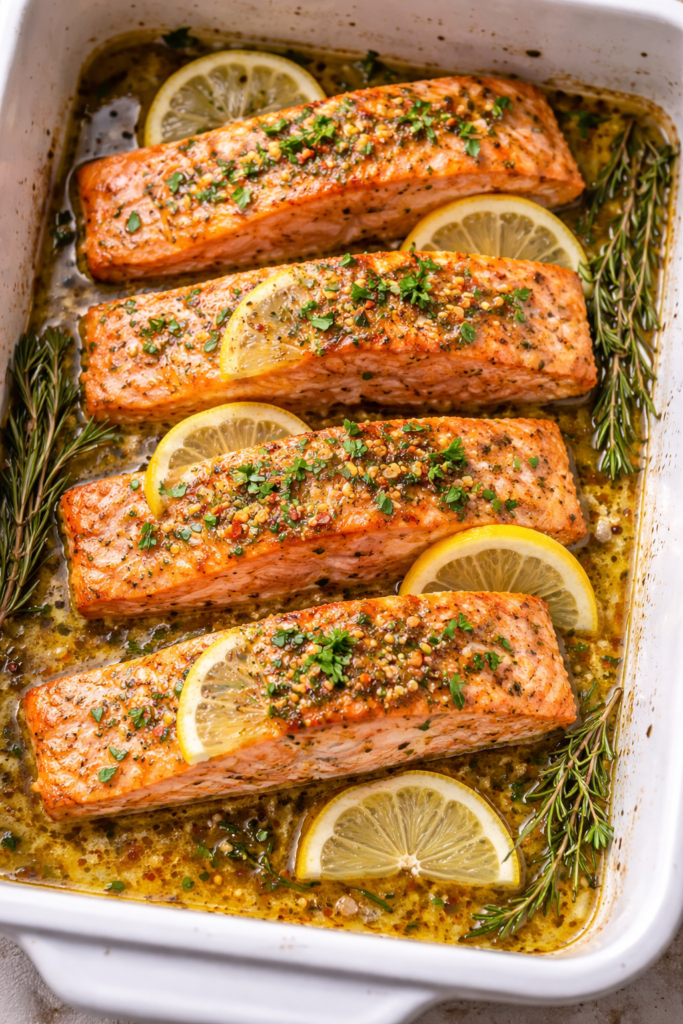
Step 5: Bake for 15–18 minutes. Check for doneness at 15 minutes. The salmon should flake easily with a fork at the thickest part, and the internal temperature should read 125–130°F for medium. If you prefer it fully cooked through, aim for 135–140°F.
Step 6: Rest for 2 minutes before serving. This lets the juices redistribute so the fish stays moist on the plate.
Serve immediately with your choice of sides.
Substitutions and Variations
Not everyone has the same pantry, the same dietary needs, or the same taste preferences. Here’s how to make this recipe yours:
Swap the fish:
- Trout works beautifully here and has a similar omega-3 profile
- Arctic char is another great heart-healthy swap with a milder flavor
- Mahi-mahi is lower in fat but still a solid lean protein option
Swap the herbs:
- Dill + capers give it a more Scandinavian profile
- Basil + cherry tomatoes make it taste like summer
- Cilantro + lime instead of lemon gives it a completely different direction
For a dairy-free, low-sodium marinade: This recipe is already both — no changes needed.
For a gluten-free version: Also already done. No adjustments required.
Add a crust (optional): Mix 2 tablespoons of ground flaxseed or finely chopped walnuts into the herb mixture before coating. It adds a slight crunch and an extra hit of heart-healthy omega-3s.
Make-Ahead Tips
- The marinade can be made up to 3 days ahead and stored in an airtight jar in the fridge.
- Marinate the salmon overnight if you want a deeper, more infused flavor. Cover tightly and refrigerate up to 24 hours before baking.
- Prep your sides in advance. Cooked quinoa and roasted vegetables reheat well — cook a batch on Sunday, and this whole meal comes together in under 20 minutes on a weeknight.
Nutritional Breakdown (Per Serving)
Based on a 6 oz fillet with olive oil and herbs — no added sides
| Nutrient | Amount |
|---|---|
| Calories | ~380 kcal |
| Protein | ~40g |
| Total Fat | ~22g |
| Saturated Fat | ~4g |
| Omega-3 Fatty Acids | ~2.2–2.5g |
| Sodium | ~95mg (without added salt) |
| Cholesterol | ~95mg |
| Carbohydrates | ~2g |
Why this matters for your heart:
Omega-3 fatty acids (EPA and DHA) have been shown in multiple clinical studies to reduce triglyceride levels, lower blood pressure, and reduce inflammation — all major risk factors for cardiovascular disease. Salmon is one of the richest natural sources of both.
The olive oil adds monounsaturated fats, which help raise HDL (the “good” cholesterol) while lowering LDL (the “bad” kind).
And unlike a lot of heart-healthy recipes, this one actually has enough fat to be satisfying — which matters, because the biggest enemy of healthy eating isn’t the food, it’s the feeling that you’re missing out.
Meal Pairing Suggestions
What you eat alongside the salmon matters as much as the salmon itself.
For maximum heart benefits, pair with:
- Steamed or roasted broccoli — rich in fiber, vitamin K, and antioxidants
- Quinoa — a complete protein with no saturated fat, high in magnesium
- A simple arugula salad with olive oil and lemon — peppery, bitter greens support liver health
- Roasted sweet potato — potassium helps counteract sodium and supports blood pressure
Avoid pairing with:
- Heavy cream sauces or butter-loaded mashed potatoes — they undo a lot of the cardiovascular benefits
- High-sodium sides like canned soups or packaged rice mixes
Leftovers and Storage
Refrigerator: Store leftover salmon in an airtight container for up to 3 days. It reheats well at a low temperature (275°F for 10 minutes) or flaked cold over a salad.
Freezer: You can freeze cooked salmon for up to 3 months. Wrap each fillet individually in plastic wrap, then place in a freezer-safe bag.
Cold leftover ideas:
- Flake over mixed greens with capers and red onion
- Mix into scrambled eggs for a high-protein breakfast
- Toss with cooked pasta, lemon, and olive oil for a quick next-day lunch
- Use as a filling for lettuce wraps with avocado and cucumber
FAQ
Can I use frozen salmon? Absolutely. Thaw it completely in the fridge overnight, then pat it very dry before cooking. Frozen salmon releases more moisture as it cooks, so drying it well makes a noticeable difference in texture.
Is wild-caught salmon healthier than farmed? Wild-caught salmon (like Sockeye or Coho) tends to have a slightly higher omega-3 to omega-6 ratio and lower saturated fat. Atlantic farmed salmon still has excellent omega-3 levels though, and is widely available year-round. Both are genuinely good choices — don’t stress too much about this one.
Can I make this on the stovetop instead? Yes. Heat a little olive oil in a non-stick or cast iron skillet over medium-high heat. Cook the salmon skin-side up for 4 minutes, flip, and cook another 3–4 minutes depending on thickness. Spoon the herb marinade over while it cooks.
My salmon always comes out dry. What am I doing wrong? Almost always, it’s overcooking. Pull it out at 125–130°F internal temperature and let it rest. If you don’t have a thermometer, the moment the flesh just starts to flake when you press it gently with a fork is the sweet spot.
Can I make this for one person? Of course — just scale down the marinade proportionally. One fillet, 1 tablespoon olive oil, 1 clove garlic, a squeeze of lemon, and whatever herbs you have. Same oven temperature, same cook time.
Is this recipe safe during pregnancy? Salmon is one of the approved fish during pregnancy due to its low mercury content and high nutrient density. The FDA recommends 2–3 servings of low-mercury fish per week for pregnant women. That said, always check with your doctor for personalized guidance.
Wrapping Up
Here’s the thing about eating for your heart: it doesn’t have to feel like a compromise.
This recipe proves that. It’s weeknight-easy, genuinely satisfying, and the kind of thing you’ll make on rotation not because you have to eat healthy, but because you actually look forward to it.
The lemon and herb marinade is fresh and punchy. The salmon stays tender every single time if you pull it at the right temperature. And the whole thing is on the table faster than most takeout.
Give it a try this week — and when you do, come back and leave a comment below. Tell me how it went, what sides you paired it with, or any tweaks you made that worked. I love hearing how recipes play out in real kitchens.