You roll out of bed at 6 AM, hair looking like you fought a pillow all night, and remember: you’ve got 10 people showing up for brunch in three hours.
Panic mode? Not anymore.
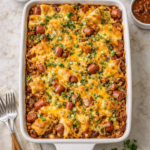
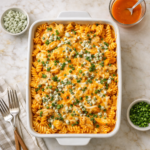
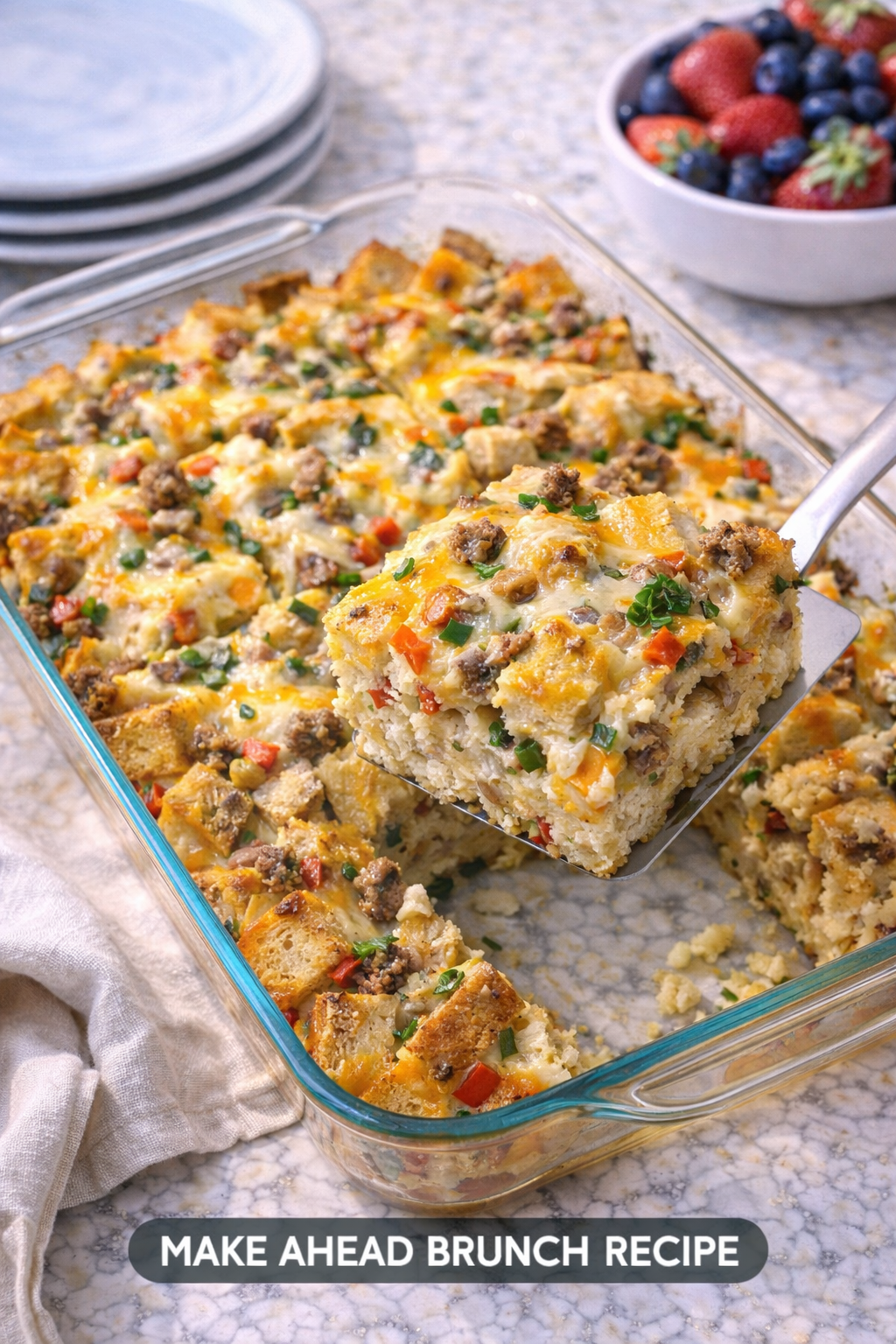
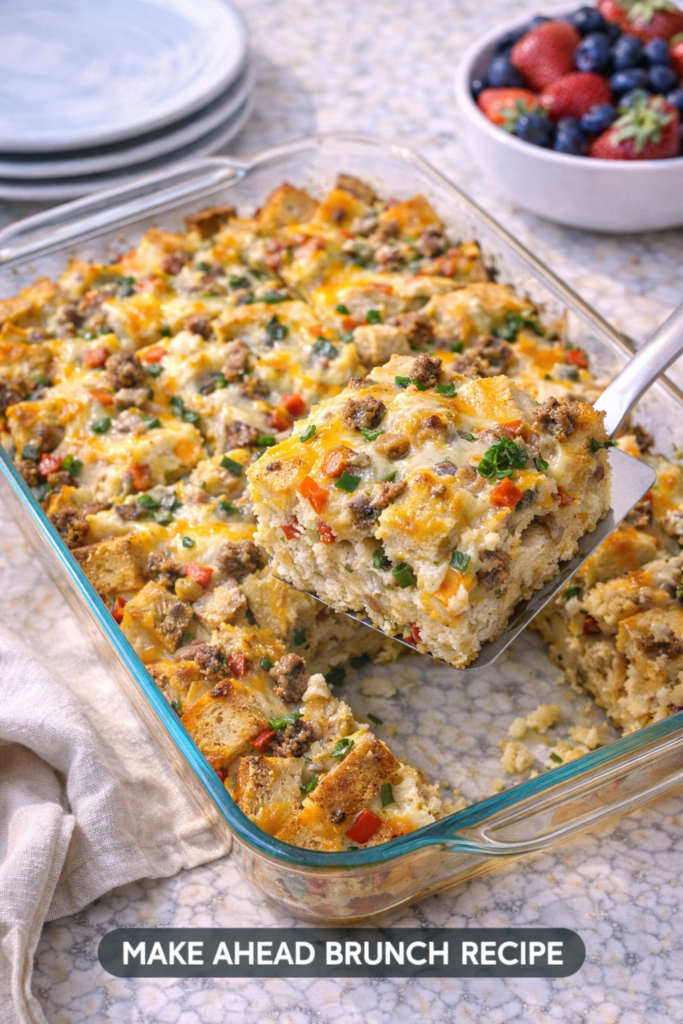
This make-ahead breakfast casserole is your new secret weapon. You prep it the night before, sleep like a baby, and pop it in the oven while you shower. By the time your guests arrive, your kitchen smells like a five-star hotel breakfast buffet.
No stress. No last-minute scrambling. Just you, looking effortlessly put together, serving the fluffiest, most flavorful breakfast casserole that’ll have everyone asking for the recipe.
Here’s everything you need to know.
What You’ll Need
For the casserole:
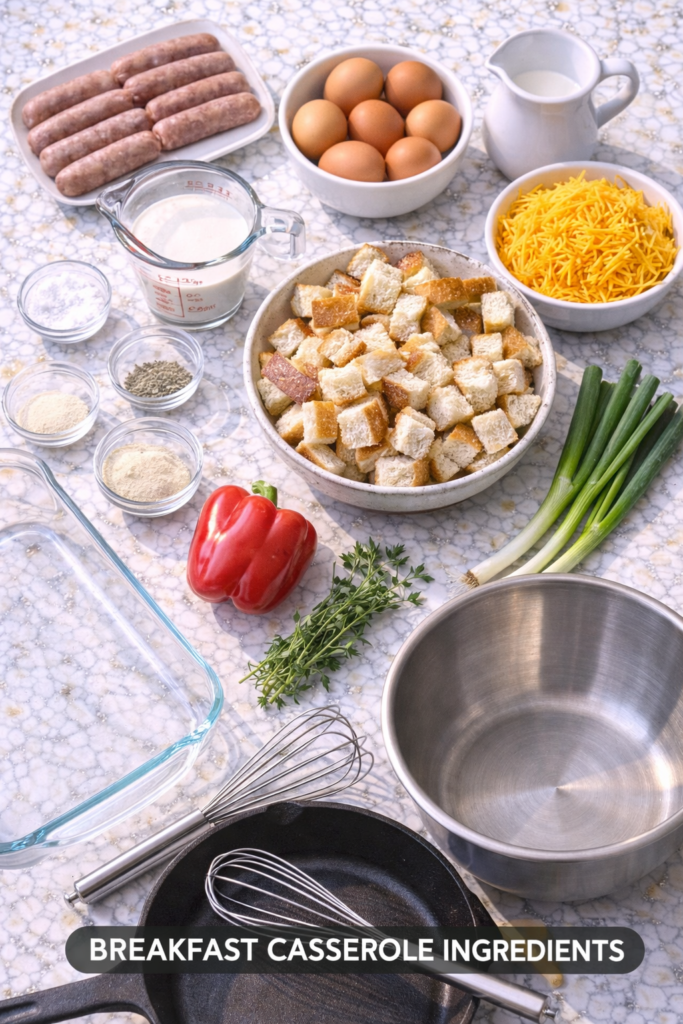
- 1 pound breakfast sausage (I use Jimmy Dean sage flavor)
- 8 large eggs
- 2 cups whole milk
- 1 teaspoon salt
- ½ teaspoon black pepper
- ½ teaspoon garlic powder
- ½ teaspoon onion powder
- 8 cups cubed French bread (about 1 large loaf, cut into 1-inch cubes)
- 2 cups shredded sharp cheddar cheese
- 1 cup shredded mozzarella cheese
- 1 red bell pepper, diced
- 4 green onions, sliced
- ½ cup heavy cream
Optional toppings:
- Fresh parsley, chopped
- Hot sauce
- Sour cream
- Sliced avocado
Tools You’ll Need
- 9×13 inch baking dish
- Large skillet
- Large mixing bowl
- Whisk
- Cutting board
- Sharp knife
- Aluminum foil or plastic wrap
Pro Tips
Let your bread go stale. Fresh bread turns into mush in this casserole. Day-old or slightly stale bread cubes soak up the egg mixture without getting soggy. If your bread is fresh, cube it and leave it out overnight or toast it lightly in the oven at 250°F for 10 minutes.
Don’t skip the overnight soak. The magic happens when the bread sits in that egg mixture for 8-12 hours. The cubes absorb all those flavors and get perfectly creamy inside while staying slightly crispy on top. I tried making this without the overnight soak once and it just wasn’t the same.
Bring it to room temp before baking. Pull your casserole out of the fridge 30 minutes before it goes in the oven. This helps it bake evenly and prevents the edges from overcooking while the center stays cold.
Use real cheese, not pre-shredded. I know pre-shredded is easier, but it’s coated with anti-caking agents that make your casserole grainy. Shred your own cheese and you’ll get that perfect melty, creamy texture.
Double the batch and freeze one. This casserole freezes beautifully. Make two at once, bake one now, and freeze the other unbaked for next month’s brunch emergency. Just thaw it overnight and bake as directed.
How to Make It
Step 1: Cook the sausage
Heat your skillet over medium-high heat and brown the sausage, breaking it into small crumbles as it cooks. This should take about 8-10 minutes. You want it nicely browned, not just cooked through, because that caramelization adds so much flavor.
Drain off the excess grease (leave just a tiny bit for flavor) and set aside to cool.
Step 2: Prep your bread
While the sausage cools, cube your French bread. I like to tear some of the pieces by hand because those irregular edges get extra crispy when they bake.
Toss the bread cubes into your greased 9×13 baking dish and spread them out evenly.
Step 3: Mix the egg base
In your large mixing bowl, crack those eggs and whisk them until they’re completely blended. No streaks of white should be visible.
Add the milk, heavy cream, salt, pepper, garlic powder, and onion powder. Whisk until everything is completely combined and slightly frothy.
Step 4: Layer everything
Sprinkle the cooked sausage over the bread cubes. Add the diced bell pepper and sliced green onions. Then add both cheeses, but hold back about ½ cup of the cheddar for topping later.
Pour the egg mixture evenly over everything. Use a spatula to press down gently on the bread so it soaks up the liquid. You want every cube getting some love.
Step 5: The overnight rest
Cover your dish tightly with plastic wrap or aluminum foil and stick it in the fridge. Let it hang out for at least 8 hours, but up to 24 hours is fine.
This is when you get to sleep while your breakfast does all the work. 🛌
Step 6: Bake day
Pull your casserole out of the fridge 30 minutes before you want to bake it. Preheat your oven to 350°F.
Remove the covering and sprinkle that reserved ½ cup of cheddar on top.
Bake uncovered for 45-55 minutes. You’ll know it’s done when the center is set (it shouldn’t jiggle when you shake the pan), the edges are golden brown, and a knife inserted in the center comes out clean.
Step 7: Let it rest
This is the hardest part. Let your casserole sit for 10 minutes before cutting into it. I know it smells incredible and you want to dive in, but this resting time lets everything set up properly so you get clean slices instead of a soupy mess.
Cut into squares, garnish with fresh parsley if you’re feeling fancy, and serve hot.
Substitutions and Variations
Make it vegetarian: Skip the sausage and add sautéed mushrooms, spinach, and extra veggies. You could also use plant-based sausage if you want that savory, meaty flavor.
Different proteins: Swap the breakfast sausage for bacon, ham, or even chorizo. Just make sure whatever you use is fully cooked before adding it to the casserole.
Veggie lovers: Add whatever vegetables you like. Sautéed mushrooms, spinach, roasted red peppers, or even broccoli all work great. Just make sure to cook them first to release excess moisture.
Cheese options: Use whatever cheese you have. Gruyere makes it fancy, pepper jack adds heat, or go full comfort with all cheddar.
Gluten-free: Use gluten-free bread cubes. The texture is slightly different but still delicious.
Dairy-free: Swap the milk and cream for oat milk or almond milk, and use dairy-free cheese. The texture won’t be quite as rich but it’s still really good.
Make Ahead Tips
This entire casserole is designed to be made ahead, but here are some extra time-saving tricks:
Prep the components: You can brown your sausage, dice your veggies, shred your cheese, and cube your bread up to 2 days in advance. Store everything separately in the fridge, then assemble the night before you want to bake.
Freeze it unbaked: Assemble the entire casserole, cover it tightly with plastic wrap and then aluminum foil, and freeze for up to 3 months. Thaw in the fridge overnight before baking. Add an extra 10-15 minutes to the baking time if it’s still slightly cold.
Bake and reheat: You can bake this completely, let it cool, and refrigerate for up to 3 days. Reheat individual portions in the microwave or warm the whole thing in a 325°F oven for 20 minutes.
Leftovers and Storage
Store any leftover casserole in an airtight container in the fridge for up to 4 days.
To reheat, microwave individual portions for 1-2 minutes, or reheat in a 350°F oven for 15 minutes if you’re warming multiple servings.
This casserole actually tastes even better the next day because the flavors have had more time to meld together. I’ve eaten it cold straight from the fridge more times than I’d like to admit. 😋
You can also freeze baked portions. Cut the casserole into individual servings, wrap each one in plastic wrap and then foil, and freeze for up to 2 months. Microwave from frozen for 3-4 minutes or thaw overnight and reheat.
Nutritional Information
Per serving (based on 12 servings):
- Calories: 385
- Protein: 22g
- Carbohydrates: 18g
- Fat: 25g
- Saturated Fat: 11g
- Cholesterol: 195mg
- Sodium: 780mg
- Fiber: 1g
- Sugar: 3g
What to Serve With This Casserole
This breakfast casserole is pretty much a complete meal, but if you want to round out your brunch spread, here are some ideas:
Fresh fruit: A simple fruit salad or bowl of berries adds brightness and helps cut through the richness.
Simple green salad: Arugula with a light lemon vinaigrette balances the heaviness.
Pastries: Croissants, muffins, or cinnamon rolls for those with a sweet tooth.
Drinks: Mimosas, bloody marys, fresh orange juice, or strong coffee.
Breakfast potatoes: If you want to go full carb-fest, crispy breakfast potatoes are always a hit.
Frequently Asked Questions
Can I use skim milk instead of whole milk?
You can, but your casserole won’t be as creamy and rich. Whole milk and heavy cream are what make this casserole luxurious and restaurant-quality. If you want to lighten it up, use 2% milk and skip the heavy cream, but add an extra ½ cup of milk.
Why is my casserole watery?
Usually this happens because your bread didn’t soak up enough egg mixture, or you used fresh bread that released moisture while baking. Make sure to use day-old bread and press it down into the egg mixture before refrigerating. Also, if you added raw vegetables, they can release water as they cook. Always sauté veggies first.
Can I make this in a different size pan?
You can use an 8×8 pan for a thicker casserole (feeds 6-8), but you’ll need to increase the baking time by about 10-15 minutes. For a larger crowd, use two 9×13 pans or a large roasting pan.
My casserole is brown on top but raw in the middle. What happened?
Your oven was probably too hot. Lower the temperature to 325°F and cover the top with foil if it’s browning too quickly. Also, make sure you let it sit at room temp for 30 minutes before baking.
Can I use a different type of bread?
Absolutely. Sourdough, challah, brioche, or even croissants all work beautifully. Each gives a slightly different flavor and texture. I’ve even used leftover dinner rolls in a pinch.
How do I know when it’s done?
The center should be set and not jiggle when you gently shake the pan. A knife inserted in the center should come out mostly clean (a tiny bit of moisture is fine, but not raw egg). The internal temperature should reach 160°F.
Can I add more eggs?
This recipe is already pretty egg-forward with 8 eggs for a 9×13 pan. Adding more might make it too dense. If you want a fluffier texture, stick with this ratio but beat the eggs really well to incorporate air.
Wrapping Up
This make-ahead breakfast casserole is the kind of recipe you’ll make on repeat once you try it. It’s saved me countless times when hosting brunch, bringing breakfast to new parents, or just wanting something hot and delicious waiting for me when I wake up.
The fact that you can prep it the night before means you’re not standing in the kitchen cooking while everyone else is laughing and having mimosas. You get to actually enjoy your own brunch party.
Plus, it’s one of those recipes that looks way more impressive than the effort you put in. People think you’re some kind of brunch wizard when really you just followed a simple recipe and went to bed.
Give it a try this weekend and drop a comment below letting me know how it turned out. Did you add any fun variations? Did your guests devour it? I love hearing how these recipes work out in your kitchen.