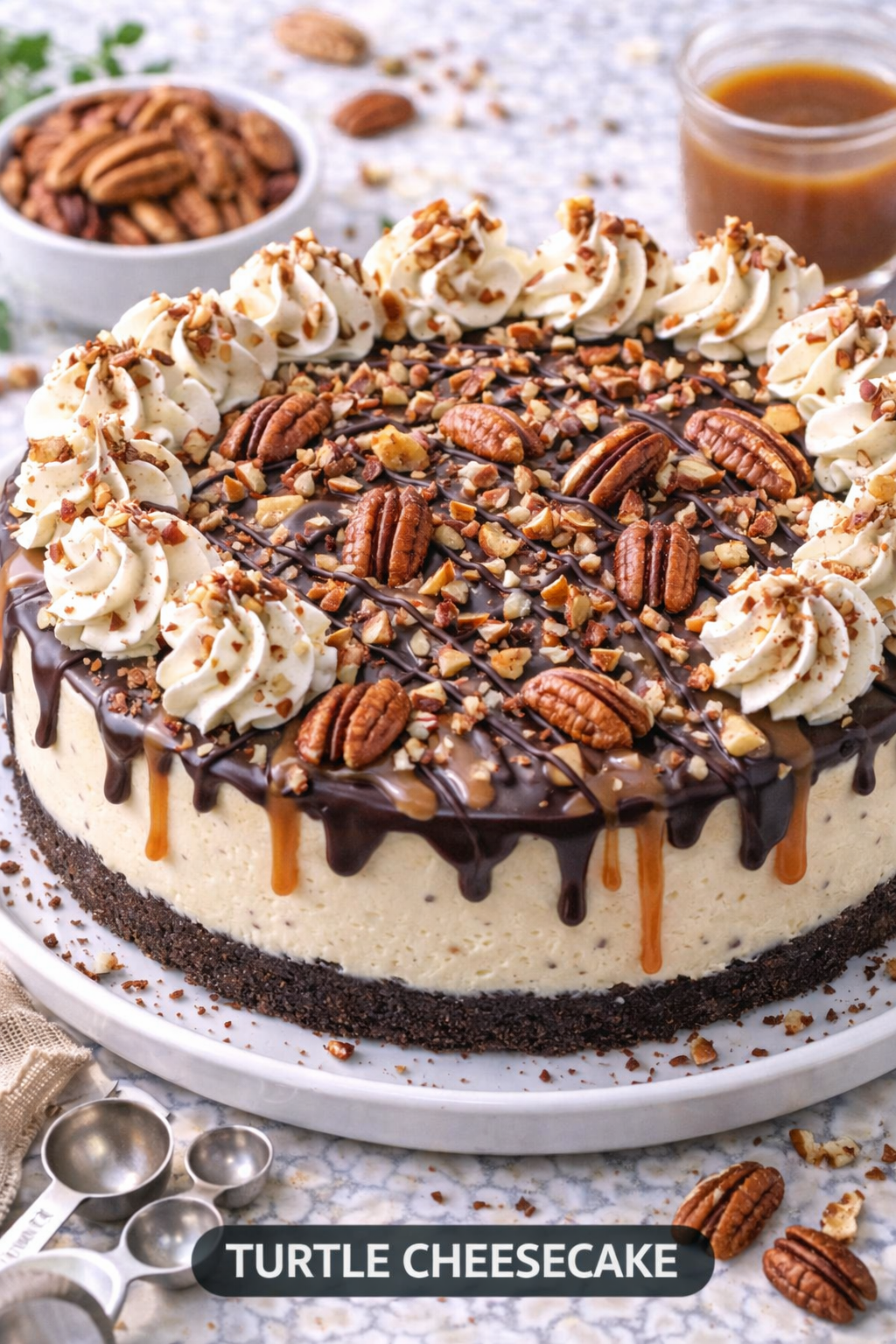
Ever cut into a cheesecake and found layers of caramel, pecans, and chocolate staring back at you?
That’s turtle cheesecake. And if you’ve never made one, you’re missing out on one of the most ridiculously good desserts you can pull off at home.
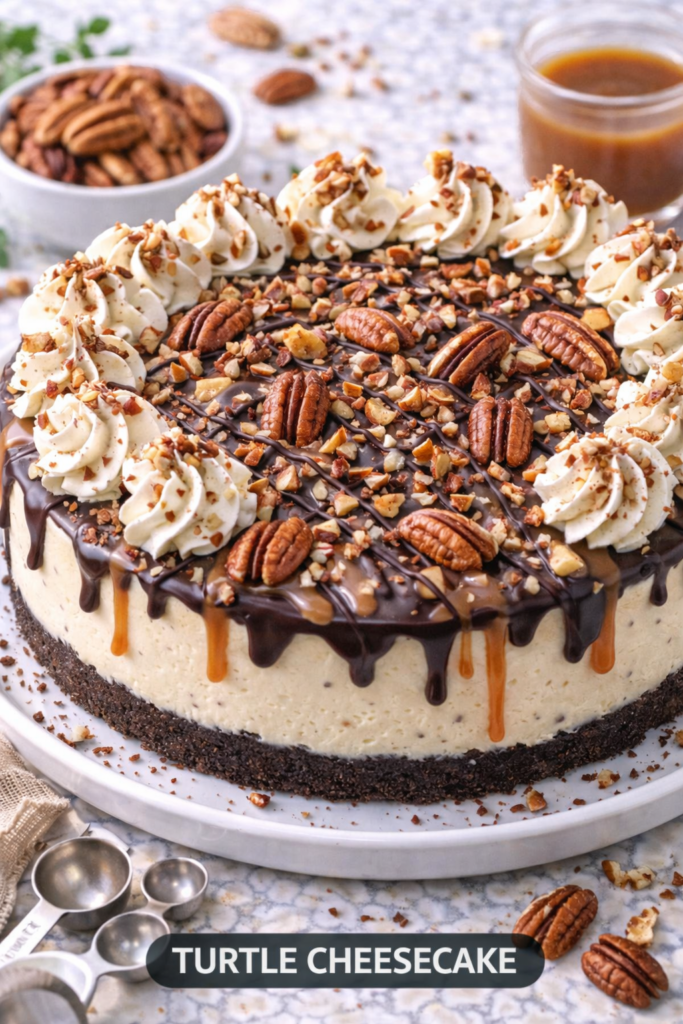
I’m talking rich, creamy cheesecake sitting on a chocolate cookie crust, topped with gooey caramel, crunchy pecans, and melted chocolate. It’s the kind of dessert that makes people go quiet for a few seconds after their first bite.
And here’s the thing: it looks fancy, but it’s actually pretty straightforward to make. You don’t need special equipment or pastry school training. Just a springform pan, some patience while it bakes, and the willingness to drizzle things on top.
The name comes from turtle candies (you know, those caramel-pecan-chocolate clusters). This cheesecake takes all those flavors and turns them into something you can slice and serve to people you want to impress.
I made this for a dinner party last month and had three people ask for the recipe before they left. One friend even texted me the next day asking if I had leftovers. (I didn’t. We ate it all.)
What You’ll Need
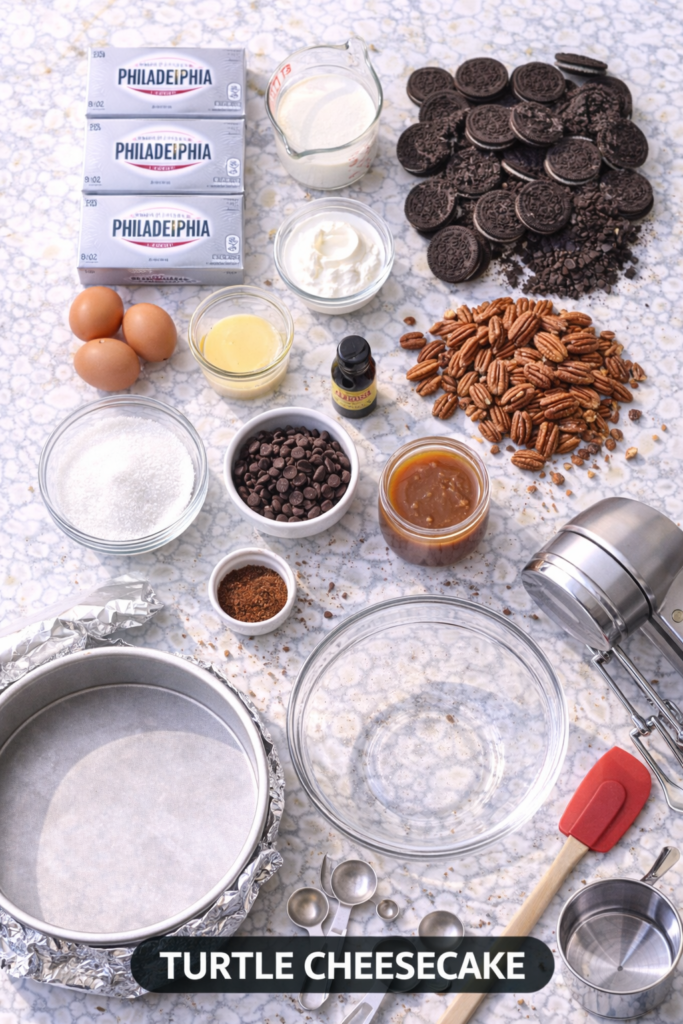
For the crust:
- 2 cups chocolate cookie crumbs (about 24 Oreos, filling removed)
- 1/4 cup granulated sugar
- 6 tablespoons unsalted butter, melted
For the cheesecake filling:
- 24 oz (three 8-oz blocks) cream cheese, room temperature
- 1 cup granulated sugar
- 3 large eggs, room temperature
- 1/2 cup sour cream, room temperature
- 2 teaspoons vanilla extract
- 1/4 cup heavy cream
For the topping:
- 1 cup caramel sauce (store-bought or homemade)
- 1 cup chopped pecans, toasted
- 1/2 cup semi-sweet chocolate chips
- 2 tablespoons heavy cream (for melting chocolate)
Tools You’ll Need
- 9-inch springform pan
- Aluminum foil
- Large roasting pan (for water bath)
- Electric mixer (hand or stand)
- Mixing bowls
- Rubber spatula
- Measuring cups and spoons
- Small saucepan (for melting chocolate)
Pro Tips
Let everything come to room temperature. I know this seems like extra work, but cold ingredients make lumpy cheesecake. Set your cream cheese, eggs, and sour cream out about an hour before you start. Your filling will be smoother and you’ll thank yourself later.
Don’t skip the water bath. This is what keeps your cheesecake from cracking. Wrap your springform pan tightly in aluminum foil (like, really tight), place it in a roasting pan, and pour hot water around it before baking. The steam creates gentle, even heat.
Toast those pecans. Five minutes in a 350°F oven transforms them from okay to amazing. They get nutty and fragrant and add so much more flavor to the final cheesecake.
Cool it slowly. After baking, turn off the oven and crack the door open. Let the cheesecake sit in there for an hour. This gradual temperature change prevents cracks and keeps the texture perfect.
Wait before adding toppings. The cheesecake needs to be completely cool (and chilled) before you add caramel and chocolate. If it’s even slightly warm, everything will melt and slide off. Trust me on this one. 😅
Instructions
Make the crust:
Preheat your oven to 325°F.
Remove the filling from your Oreos (you can eat it, no judgment) and pulse the cookies in a food processor until they’re fine crumbs. Mix with sugar and melted butter in a bowl until it looks like wet sand.
Press this mixture firmly into the bottom of your springform pan. Use the bottom of a glass to really pack it down.
Bake for 10 minutes, then set aside to cool while you make the filling.
Prepare the filling:
Beat the cream cheese on medium speed until it’s completely smooth and creamy (about 2 minutes). Scrape down the sides of the bowl.
Add sugar and beat until combined. Then add eggs one at a time, mixing just until each one disappears into the batter. Don’t overmix here.
Add sour cream, vanilla, and heavy cream. Mix on low speed until everything is just combined and the batter is smooth.
Assemble and bake:
Wrap the outside of your springform pan in two layers of heavy-duty aluminum foil, making sure it goes up the sides. This keeps water from seeping in.
Pour the filling over your cooled crust. Tap the pan gently on the counter a few times to release air bubbles.
Place the wrapped pan in a large roasting pan. Pour hot water into the roasting pan until it comes about halfway up the sides of the springform pan.
Bake for 55-65 minutes. The edges should be set, but the center should still jiggle slightly when you shake the pan. It’ll look underdone, but it’s not.
Turn off the oven and crack the door open. Leave the cheesecake inside for 1 hour.
After an hour, remove it from the oven and water bath. Run a knife around the edge (this prevents cracking as it cools). Let it cool completely at room temperature, then refrigerate for at least 4 hours (overnight is even better).
Add the toppings:
Once your cheesecake is completely chilled, remove it from the springform pan and place it on a serving plate.
Toast your pecans in a 350°F oven for 5 minutes until fragrant. Let them cool.
Drizzle half the caramel sauce over the top of the cheesecake. Sprinkle the toasted pecans on top.
Melt the chocolate chips with 2 tablespoons heavy cream in a small saucepan over low heat (or microwave in 15-second bursts). Drizzle this over the pecans.
Finish with the remaining caramel sauce in a decorative drizzle pattern.
Refrigerate for at least 30 minutes before slicing so the toppings can set.
Substitutions and Variations
Swap the crust: Use graham cracker crumbs instead of chocolate cookies for a more traditional cheesecake base. Or try vanilla wafers if you want something a bit lighter.
Make it extra chocolatey: Add 1/2 cup melted chocolate to the cheesecake filling for a chocolate-chocolate turtle situation.
Different nuts: Walnuts work great if you’re not a pecan person. So do chopped almonds.
Homemade caramel: Make your own by heating 1 cup sugar with 1/4 cup water until amber, then whisking in 3/4 cup heavy cream and 4 tablespoons butter. Way better than store-bought (but store-bought works fine too).
Mini versions: Make individual cheesecakes in a muffin tin lined with cupcake liners. Reduce baking time to 20-25 minutes.
Make Ahead Tips
The whole cheesecake can be made up to 3 days in advance. Just keep it covered in the fridge and add the toppings the day you plan to serve it.
You can also freeze the plain cheesecake (without toppings) for up to 2 months. Wrap it tightly in plastic wrap, then aluminum foil. Thaw overnight in the fridge before adding toppings.
The crust can be pressed into the pan and kept in the fridge overnight if you want to break up the process.
Nutritional Information
Per slice (12 slices total):
- Calories: 520
- Fat: 35g
- Saturated Fat: 18g
- Carbohydrates: 48g
- Sugar: 38g
- Protein: 7g
- Sodium: 280mg
Keep in mind this is a special occasion dessert. Not exactly health food, but absolutely worth it.
Pairing Suggestions
This cheesecake is rich, so I like serving it with coffee or espresso. The bitterness cuts through all that sweetness perfectly.
A glass of dessert wine (like port or moscato) also works really well. So does a dark stout beer if you’re into that.
For a meal before this dessert, keep things lighter. A simple salad with grilled chicken or fish is perfect. You want to save room.
Leftovers and Storage
Cover the cheesecake with plastic wrap or keep it in an airtight container in the fridge. It’ll last 5-7 days (if you have that kind of willpower).
For longer storage, freeze individual slices wrapped in plastic wrap and placed in a freezer bag. They’ll keep for up to 2 months. Thaw in the fridge for a few hours before eating.
The texture might change slightly after freezing, but honestly, it still tastes incredible.
FAQ
Why did my cheesecake crack?
Usually from temperature shock. Make sure you’re using a water bath and letting it cool slowly in the oven. Also, don’t overbake it. The center should still jiggle slightly when you take it out.
Can I make this without a water bath?
You can, but you’re more likely to get cracks and a drier texture. If you really don’t want to deal with it, bake at 300°F for about the same time and place a pan of water on the rack below the cheesecake.
My cheesecake is too soft in the center. What happened?
It’s probably underbaked. The center should jiggle slightly (like Jello), but not look liquid. If it’s too soft after chilling, bake it 10-15 minutes longer next time.
Can I use low-fat cream cheese?
I wouldn’t recommend it. The texture won’t be as creamy and rich. Full-fat cream cheese is really what makes cheesecake amazing.
How do I get clean slices?
Use a sharp knife and run it under hot water between each cut. Wipe the knife clean with a towel after each slice. It takes an extra minute but makes your slices look professional.
What if I don’t have a springform pan?
You can use a regular 9-inch cake pan, but you’ll need to serve it directly from the pan (scooping it out) instead of removing it. Line the pan with parchment paper for easier removal of slices.
Is it normal for the cheesecake to sink in the middle after cooling?
A tiny bit of settling is normal, especially in the center. A big collapse usually means it was overbaked or the oven temperature was too high.
Wrapping Up
Turtle cheesecake is one of those desserts that feels like a huge accomplishment when you pull it off, but it’s actually pretty forgiving.
The combination of creamy cheesecake, crunchy pecans, smooth caramel, and chocolate is just unbeatable. Every bite has all these different textures and flavors happening at once.
If you make this, I’d love to know how it turns out. Did you add extra pecans? Try a different crust? Eat half of it in one sitting? Drop a comment below and let me know.
And if you have questions while you’re making it, ask away. I’m here for it. 🍰