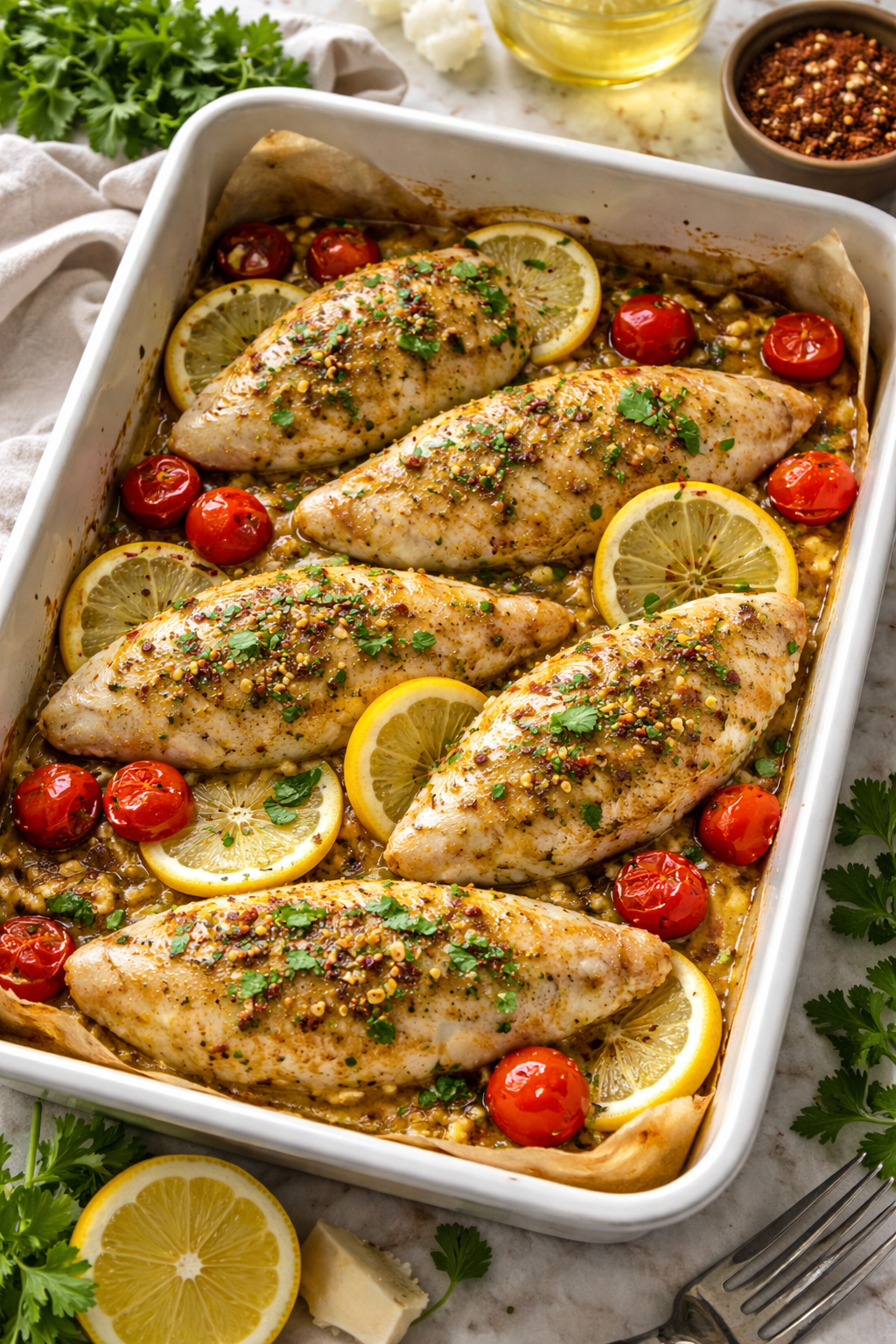
You think you need a fancy restaurant to eat really good fish. You don’t.
This baked fish recipe is one of those meals that looks like you tried harder than you did. It’s flaky, juicy, loaded with flavor, and it takes under 30 minutes from fridge to table.
No frying. No complicated sauces. No babysitting a pan.
Just incredibly good fish that tastes like something you’d order at a seaside restaurant — except you made it at home, in your pajamas, on a Tuesday.
And here’s something most people don’t know: fish is actually one of the most forgiving proteins you can cook. Get the temperature right, don’t overcook it, and it’s almost impossible to mess up.
Stick around — there’s a pro tip in here that will completely change how your fish turns out. 🙌
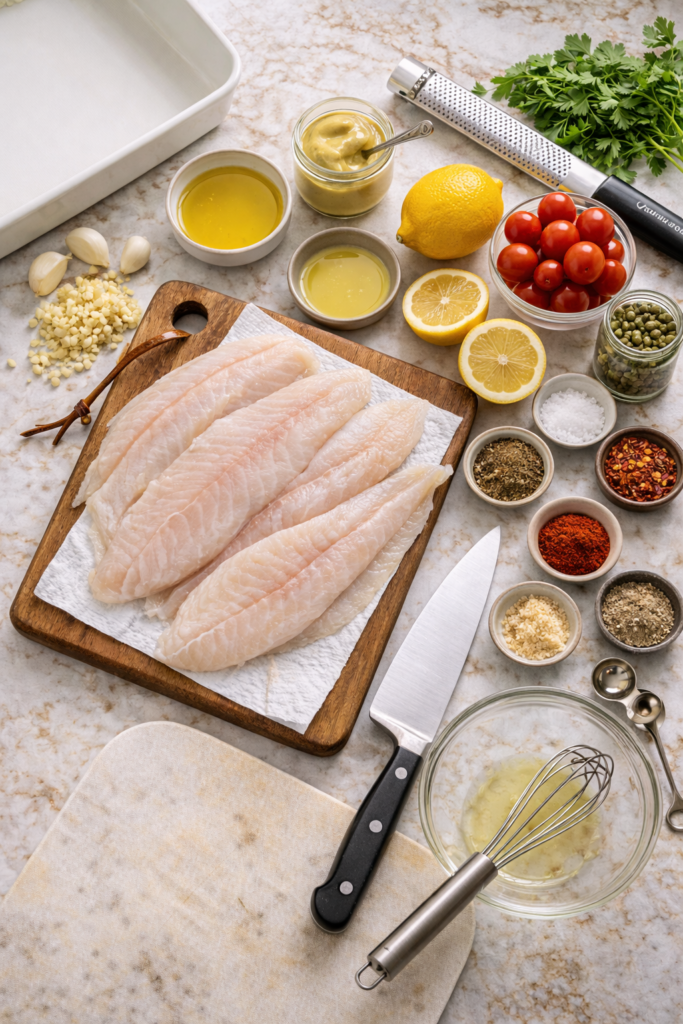
What You’ll Need
For the Fish
| Ingredient | Amount |
|---|---|
| White fish fillets (cod, tilapia, or halibut) | 4 fillets (about 6 oz each) |
| Olive oil | 3 tablespoons |
| Garlic cloves, minced | 4 cloves |
| Fresh lemon juice | 3 tablespoons |
| Lemon zest | 1 teaspoon |
| Dijon mustard | 1 tablespoon |
| Smoked paprika | 1 teaspoon |
| Dried oregano | 1 teaspoon |
| Salt | 1 teaspoon |
| Black pepper | ½ teaspoon |
| Red pepper flakes (optional) | ¼ teaspoon |
| Fresh parsley, chopped | 2 tablespoons (for topping) |
| Lemon slices | For serving |
| Cherry tomatoes (optional) | 1 cup |
| Capers (optional) | 2 tablespoons |
Tools You’ll Need
- Baking dish (9×13 inch)
- Small mixing bowl
- Whisk or fork
- Knife and cutting board
- Measuring spoons
- Zester or microplane
- Aluminum foil (optional, for easy cleanup)
- Fish spatula or wide spatula for serving
Pro Tips
These are the things I wish someone had told me the first time I made baked fish.
1. Pat the fish completely dry before seasoning. This is the step most people skip, and it’s a game changer. Moisture on the surface of the fish prevents the seasoning from sticking and creates steam instead of that nice golden crust. Use paper towels and really dry it.
2. Don’t skip the lemon zest. Lemon juice adds brightness, but the zest is where all the flavor oils live. Using both gives you that deep citrusy punch that makes the whole dish pop.
3. Pull it out of the oven slightly before it looks done. Fish keeps cooking from residual heat after you take it out. If you wait until it looks completely done in the oven, it’ll be overcooked by the time it hits the plate. Aim for just barely opaque in the center.
4. Room temperature fish bakes more evenly. Take the fish out of the fridge 15 minutes before baking. Cold fish straight into a hot oven = uneven cooking. The outside overcooks while the inside is still catching up.
5. Bake at high heat, not low. A lot of people bake fish at 350°F. Don’t. 400°F to 425°F is your sweet spot. High heat gives you that slightly golden exterior and keeps the inside moist and flaky.
Substitutions and Variations
This recipe is super flexible. Here’s what works:
Fish swaps:
- Cod — the most classic choice, mild and flaky
- Tilapia — budget-friendly, cooks fast
- Halibut — firmer texture, slightly richer
- Salmon — richer flavor, pairs beautifully with the lemon garlic sauce
- Sea bass — more indulgent, great for date nights
- Mahi-mahi — slightly sweet, holds up well to high heat
Diet swaps:
- Swap Dijon mustard for whole grain mustard if you want more texture
- Use avocado oil instead of olive oil for a higher smoke point
- Add a tablespoon of honey for a sweet-savory glaze
- Use coconut aminos instead of salt for a slightly umami-forward version
Flavor variations:
- Mediterranean: Add olives, cherry tomatoes, and capers to the baking dish
- Herb butter: Swap olive oil for melted butter + fresh dill + chives
- Spicy: Double the red pepper flakes and add a dash of cayenne
- Asian-inspired: Replace the Dijon with white miso, add grated ginger, and finish with sesame oil
Make Ahead Tips
- The marinade can be made 2 days ahead. Store it in a sealed jar in the fridge. Give it a quick stir before using.
- Season the fish up to 2 hours in advance. Let it sit in the marinade in the fridge, covered. Any longer and the lemon juice starts breaking down the fish texture.
- Prep your sides in advance so all you’re doing at dinnertime is throwing the fish in the oven.
Nutritional Info (Per Serving, approx.)
| Nutrient | Amount |
|---|---|
| Calories | ~290 kcal |
| Protein | 35g |
| Fat | 13g |
| Carbohydrates | 3g |
| Fiber | 0.5g |
| Sodium | ~480mg |
Based on cod fillets. Values vary by fish type.
Great for: Low-carb, gluten-free, dairy-free, Mediterranean, high-protein diets.
Meal pairing ideas:
- Roasted garlic mashed potatoes
- Steamed jasmine rice
- Crispy roasted asparagus
- Simple arugula salad with shaved parmesan
- Crusty sourdough bread to soak up the pan juices (trust me on this one)
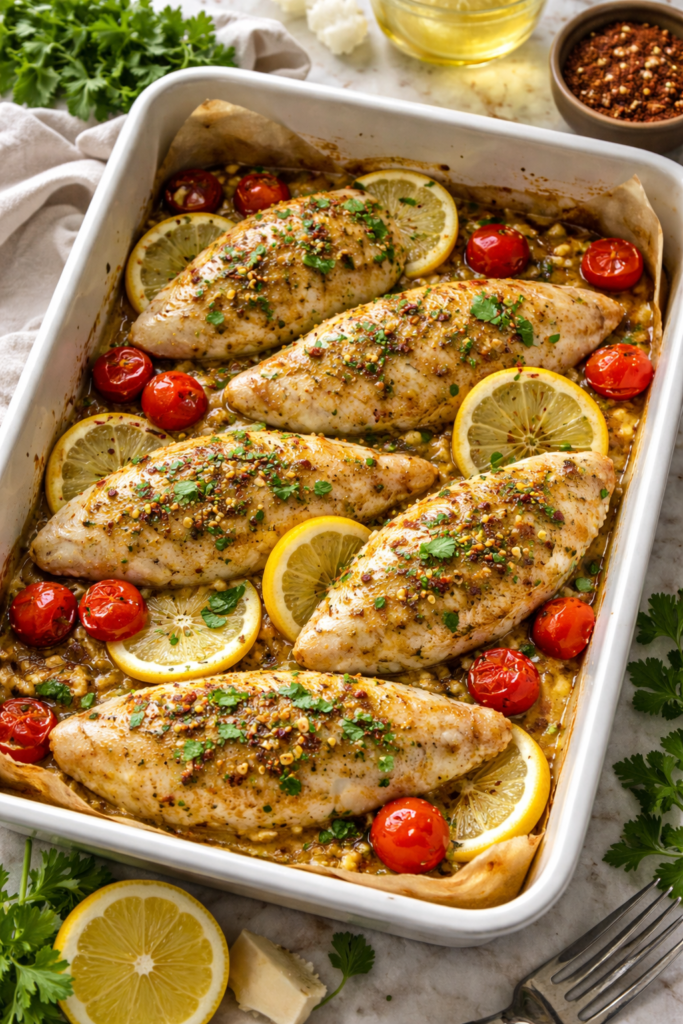
How to Make It
Prep time: 10 minutes Cook time: 15-18 minutes Total time: ~28 minutes Serves: 4
Step 1: Preheat and Prep
Preheat your oven to 400°F (200°C).
Pat the fish fillets completely dry with paper towels. This takes 30 seconds and makes a big difference. Set aside and let them sit at room temperature while you make the marinade.
Lightly grease your baking dish with a drizzle of olive oil or line it with foil for easy cleanup.
Step 2: Make the Lemon Garlic Sauce
In a small bowl, whisk together:
- 3 tablespoons olive oil
- 4 minced garlic cloves
- 3 tablespoons fresh lemon juice
- 1 teaspoon lemon zest
- 1 tablespoon Dijon mustard
- 1 teaspoon smoked paprika
- 1 teaspoon dried oregano
- 1 teaspoon salt
- ½ teaspoon black pepper
- ¼ teaspoon red pepper flakes (if using)
Taste it. It should be punchy, garlicky, and bright. Adjust salt or lemon juice to your liking.
Step 3: Assemble
Place the fish fillets in the baking dish in a single layer.
If you’re adding cherry tomatoes or capers, scatter them around the fish now.
Spoon the lemon garlic sauce generously over each fillet. Make sure every inch is coated.
Lay a couple of thin lemon slices on top of each fillet.
Step 4: Bake
Slide the dish into the preheated oven and bake for 15 to 18 minutes, depending on the thickness of your fillets.
How to know it’s done: The fish should flake easily when pressed with a fork, and the center should be just opaque (not translucent). An internal temperature of 145°F (63°C) is the safe and perfect mark.
Thicker fillets like halibut may need up to 20 minutes. Thin tilapia fillets can be done in 12.
Step 5: Finish and Serve
Pull it out of the oven. Spoon the pan juices back over the fish (that’s where all the flavor is).
Scatter fresh chopped parsley over the top.
Serve immediately with lemon wedges on the side.
Leftovers and Storage
Fridge: Store leftover baked fish in an airtight container for up to 2 days. It’s best eaten the next day — after that, the texture starts to decline.
Reheat: Warm it gently in the oven at 275°F for about 10 minutes. Microwaving fish is technically fine but the texture takes a hit.
Freezing: Not ideal. Baked fish freezes okay but turns watery when thawed. If you know you’ll have leftovers, freeze the raw seasoned fillets instead and bake them fresh.
Leftover ideas:
- Flake it over a salad with avocado and cucumbers
- Stuff it into warm tortillas for fish tacos
- Mix with cream cheese and make a quick fish dip
- Toss with pasta, olive oil, and capers
FAQ
What fish works best for baking? White, mild fish like cod, tilapia, and halibut are the most popular. They bake evenly and absorb flavor well. Salmon also works great and is more forgiving if you slightly overbake it.
Do I need to cover the fish while baking? For this recipe, no. Baking uncovered gives you a slightly more golden, flavorful exterior. Covering with foil traps steam and keeps it more moist — great if you’re worried about drying it out.
My fish is always dry. What am I doing wrong? Overcooking is the #1 culprit. Fish needs way less time in the oven than most people think. Use a thermometer, pull it at 145°F, and don’t go over. Also check that your oven temperature is accurate — a lot of ovens run hot.
Can I use frozen fish? Yes, just make sure it’s fully thawed and patted dry before you start. Cooking fish from frozen leads to uneven results and watery texture.
Can I marinate overnight? Keep it to 2 hours max. The acidity from the lemon juice starts breaking down the fish proteins if you go longer, and the texture gets mushy. Not the vibe.
What if I don’t have Dijon mustard? Whole grain mustard, yellow mustard, or even a tiny bit of mayo work as substitutes. The mustard acts as an emulsifier to hold the sauce together and adds depth — so don’t skip it entirely.
Is this recipe keto/low-carb? Yes! It’s naturally low-carb, gluten-free, and dairy-free as written.
Wrapping Up
This baked fish recipe is one of those things you’ll make once and immediately put on your weekly rotation.
It’s fast. It tastes like you spent way more effort than you did. And it makes your kitchen smell absolutely incredible.
The lemon garlic sauce alone is worth making just to drizzle on everything.
Give it a try this week — and then come back and tell me which fish you used, how it turned out, and any tweaks you made. I love hearing what people do with recipes, because honestly, some of the best ideas come from the comments. 👇