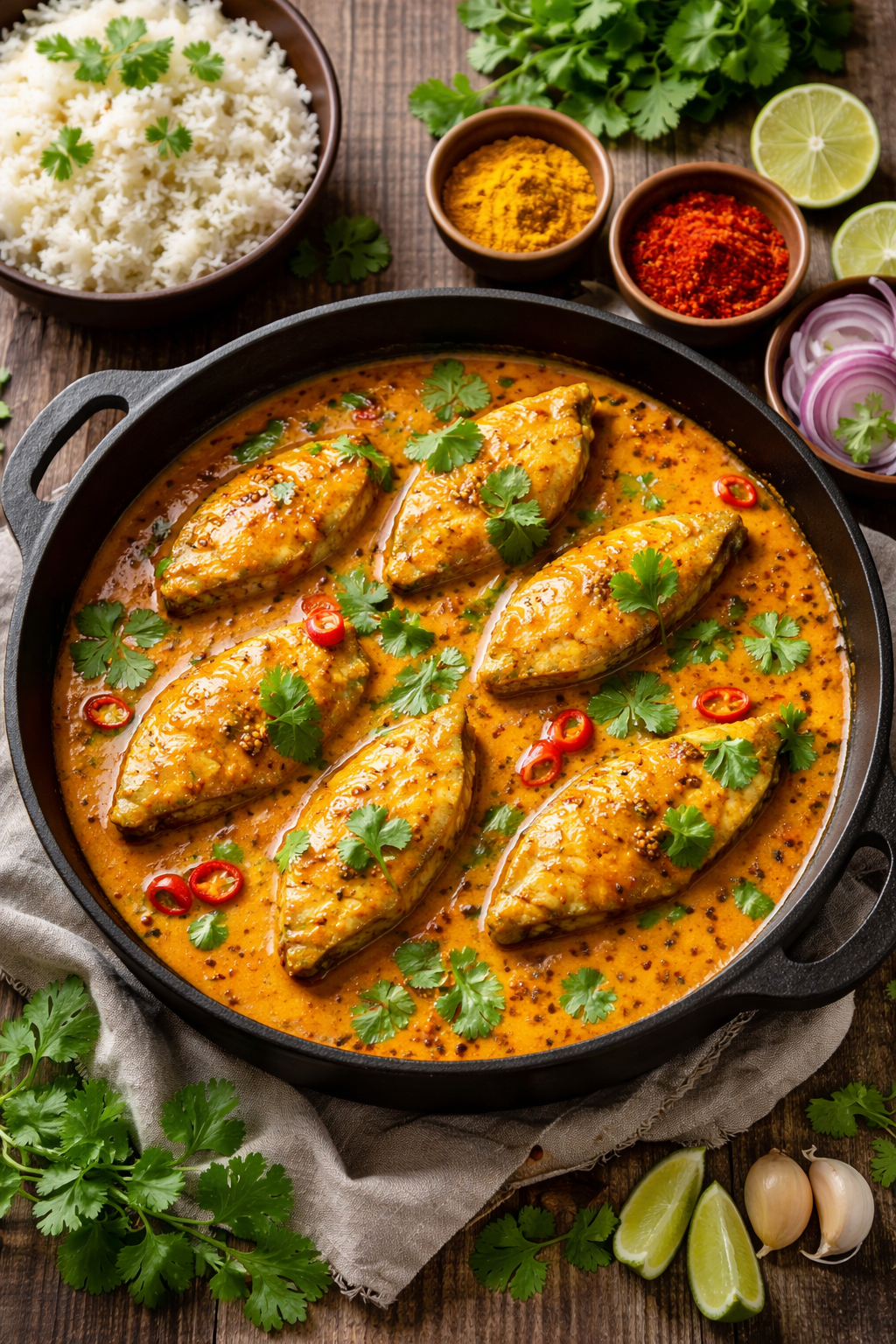
You thought fish curry was complicated. It’s not.
One pot, 30 minutes, and you’ve got a dinner so good it genuinely feels like you ordered it from somewhere.
This isn’t the kind of curry that tastes flat or needs a dozen ingredients you’ll never use again. It’s rich, deeply spiced, a little creamy from the coconut milk, and the kind of thing you’ll find yourself making on repeat.
And once you’ve made it yourself? Takeout just won’t hit the same.
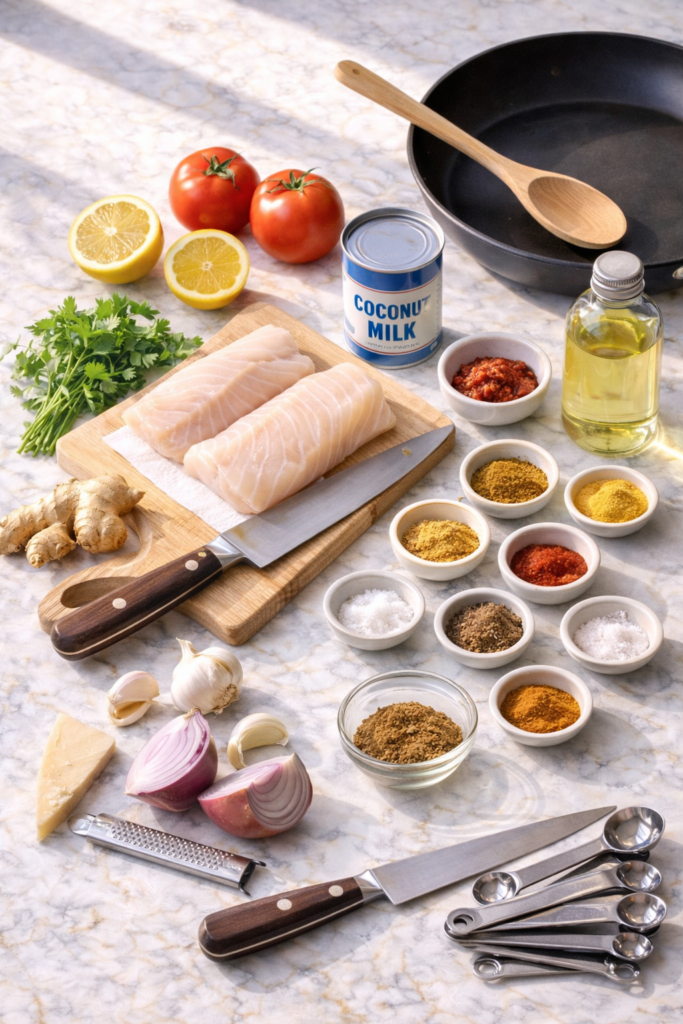
What You’ll Need
For the Curry Base
- 500g (1.1 lbs) firm white fish fillets (cod, tilapia, or halibut work great)
- 1 can (400ml) full-fat coconut milk
- 2 medium tomatoes, finely chopped
- 1 large onion, finely diced
- 4 garlic cloves, minced
- 1-inch piece of fresh ginger, grated
- 2 tbsp tomato paste
- 1 tbsp fresh lemon juice
- 2 tbsp neutral cooking oil (vegetable or avocado oil)
- Fresh cilantro, for garnish
The Spice Mix
- 1½ tsp ground cumin
- 1½ tsp ground coriander
- 1 tsp turmeric powder
- 1 tsp paprika (smoked or sweet)
- ½ to 1 tsp cayenne pepper (adjust to your heat preference)
- 1 tsp garam masala
- Salt to taste
Tools You’ll Need
- Large, deep skillet or sauté pan (at least 10-12 inches)
- Wooden spoon or silicone spatula
- Sharp chef’s knife
- Cutting board
- Microplane or box grater (for the ginger)
- Measuring spoons
- Ladle
Pro Tips
1. Pat your fish completely dry before it goes in.
Any moisture left on the fish will make it steam instead of sear, and you lose that gorgeous texture. A quick 30-second pat with paper towels makes a real difference.
2. Add garam masala at the very end.
Garam masala loses its punch when it cooks too long. Stir it in during the final 2 minutes and you’ll taste a completely different depth of flavor.
3. Don’t stir the fish around too much.
Fish is delicate. Once it’s in the curry sauce, resist the urge to stir constantly. Gently spoon sauce over it instead, or just let it simmer undisturbed. Otherwise it’ll break apart into pieces.
4. Let your onion base cook properly.
Rushing the onion step is the most common mistake. Give it a full 8 to 10 minutes on medium heat until it’s soft and golden. This is where the flavor of your entire curry is built.
5. Taste before you add salt.
Coconut milk and tomato paste both carry sodium. Always do a final taste before reaching for the salt.
Substitutions and Variations
Fish swaps:
- Salmon works beautifully here for a richer, fattier version
- Shrimp is a great quick-cook option (add it in the last 5 minutes only)
- Tofu (extra firm, pressed) turns this into a solid vegan meal
Coconut milk alternatives:
- Light coconut milk works but gives a thinner sauce
- Plain yogurt can replace half the coconut milk for a tangier, less sweet profile
- Cashew cream is a great dairy-free swap that’s equally creamy
Spice adjustments:
- Skip the cayenne entirely for a mild family-friendly version
- Add a green chili for more fresh heat
- A pinch of saffron takes this in a completely different (and more luxurious) direction
Vegetable add-ins:
- Spinach, baby kale, or sliced zucchini all work well stirred in at the end
- Frozen peas take 2 minutes and add a nice pop of color
Make-Ahead Tips
The curry base (everything except the fish) can be made up to 3 days in advance and stored in the fridge. The flavors actually deepen overnight.
When you’re ready to eat, just bring the sauce back to a simmer and add fresh fish. This is genuinely one of those meals that gets better the next day.
You can also freeze the curry base for up to 2 months. Thaw overnight in the fridge before reheating.
Nutritional Info (Per Serving, Serves 4)
| Nutrient | Amount |
|---|---|
| Calories | ~380 kcal |
| Protein | 32g |
| Carbohydrates | 12g |
| Fat | 24g |
| Fiber | 3g |
| Sodium | ~480mg |
Fish curry is genuinely one of the more nutritious weeknight meals you can make. White fish is high in lean protein, and turmeric contains curcumin, which has been widely studied for its anti-inflammatory properties.
Meal pairing ideas:
- Steamed basmati or jasmine rice (classic)
- Warm naan or roti for scooping
- A simple cucumber raita on the side to cool things down if you went heavy on the cayenne
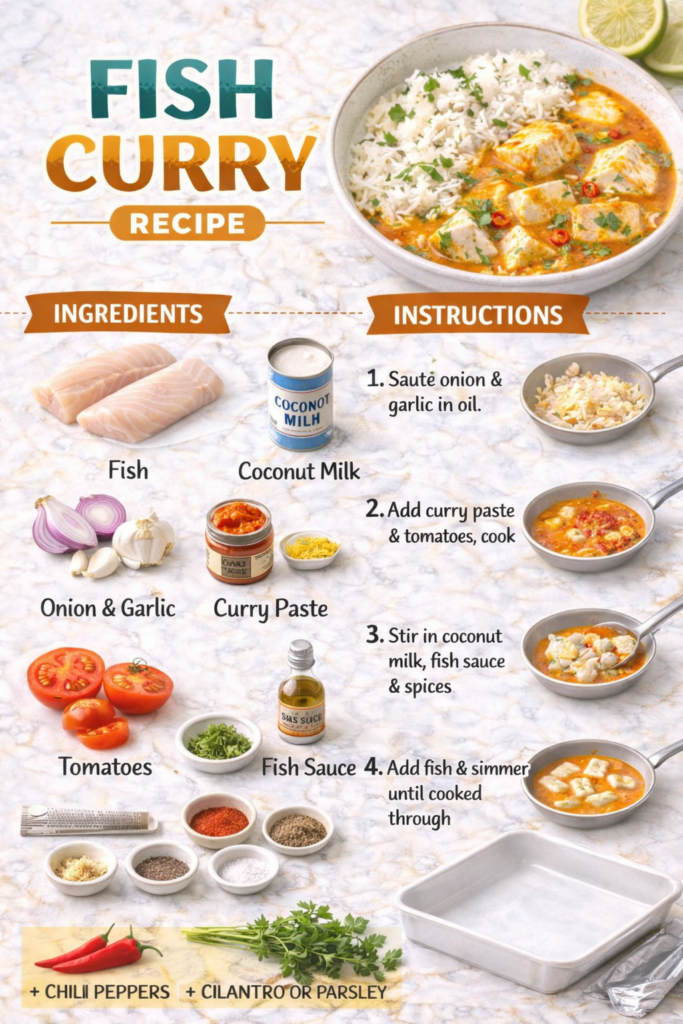
How to Make Fish Curry
Step 1: Prep your fish
Cut fillets into roughly 2-inch chunks. Pat them completely dry with paper towels. Season lightly with salt and a pinch of turmeric. Set aside.
Step 2: Build the base
Heat 2 tbsp of oil in your skillet over medium heat. Add the diced onion and cook for 8 to 10 minutes, stirring occasionally, until soft and golden at the edges. Don’t rush this.
Step 3: Add aromatics
Add the minced garlic and grated ginger. Stir constantly for 60 to 90 seconds until fragrant. It’ll smell incredible at this point.
Step 4: Spice it up
Add cumin, coriander, turmeric, paprika, and cayenne directly to the pan. Stir continuously for about 1 minute to toast the spices in the oil. Then add the tomato paste and stir for another minute.
Step 5: Add tomatoes and coconut milk
Stir in the chopped tomatoes and let them break down for about 5 minutes. Then pour in the coconut milk, stir everything together, and bring to a gentle simmer. Taste and adjust salt.
Step 6: Add the fish
Nestle the fish pieces into the sauce. Spoon sauce over the top. Cover and let it gently simmer for 8 to 10 minutes, depending on the thickness of your fillets. The fish is done when it flakes easily with a fork.
Step 7: Finish and serve
Stir in the garam masala and fresh lemon juice. Scatter cilantro on top. Serve immediately over rice or with warm naan.
Leftovers and Storage
Refrigerator: Store in an airtight container for up to 2 days. The sauce holds up beautifully. The fish gets a little softer but still tastes great.
Reheating: Warm gently over low heat on the stove. Add a splash of water or coconut milk if the sauce has thickened too much. Avoid the microwave if you can since it tends to make the fish rubbery.
Freezing: Freeze the sauce without the fish for best results. Add fresh fish when you reheat it.
FAQ
Can I use frozen fish?
Yes, just make sure it’s fully thawed and patted dry before cooking. Frozen fish releases more water, so that step matters even more here.
My curry sauce is too thin. How do I fix it?
Let it simmer uncovered for a few extra minutes. It’ll reduce and thicken on its own without adding anything else.
Can I make this without coconut milk?
You can use a combination of vegetable broth and heavy cream if you prefer, though the flavor profile changes significantly. Coconut milk really is the heart of this recipe.
How spicy is this?
With ½ tsp of cayenne, it’s mild to medium. Most families will be comfortable there. Go up to 1 tsp if you like heat, or skip it entirely for young kids.
What’s the best fish to use?
Firm white fish holds up the best, specifically cod, tilapia, halibut, or sea bass. Avoid anything too flaky like sole or flounder since it’ll fall apart in the sauce.
Can I add vegetables?
Absolutely. Spinach and frozen peas are the easiest additions. Just stir them in during the last 2 to 3 minutes of cooking.
Wrapping Up
Here’s the thing about fish curry: it sounds like a production until you’ve actually made it once.
After that, it becomes one of those reliable, crowd-pleasing weeknight dinners that you pull out whenever you want something that actually tastes like it took effort, but really didn’t.
It’s warming, satisfying, and genuinely delicious over a bowl of fluffy rice after a long day.
Give it a go this week 🙌 and when you do, drop a comment below. Tell me what fish you used, if you swapped anything, and how it turned out. Questions are always welcome too.