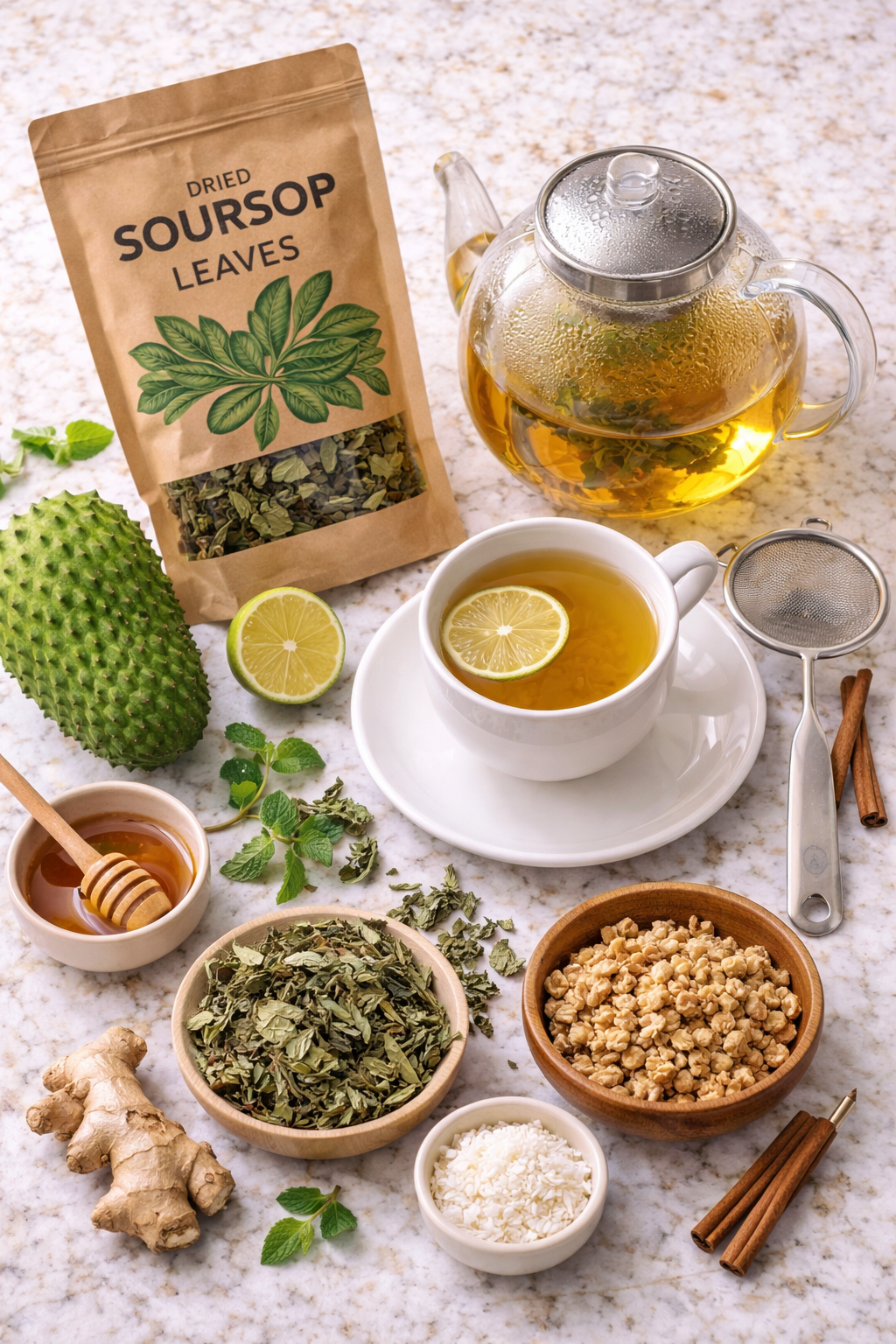
You’ve probably walked right past this fruit your whole life and had no idea it could change your evening routine.
Soursop tea is quietly one of the most talked-about herbal teas in the Caribbean and Latin America — and for good reason. It’s earthy, slightly tart, naturally calming, and honestly? A little addictive once you get into it.
The cool part is that the magic isn’t even in the fruit itself. It’s in the leaves.
Whether you’re making this hot before bed or chilling it over ice on a warm afternoon, this recipe is going to become a regular in your rotation. Let’s get into it.
What Even Is Soursop Tea?
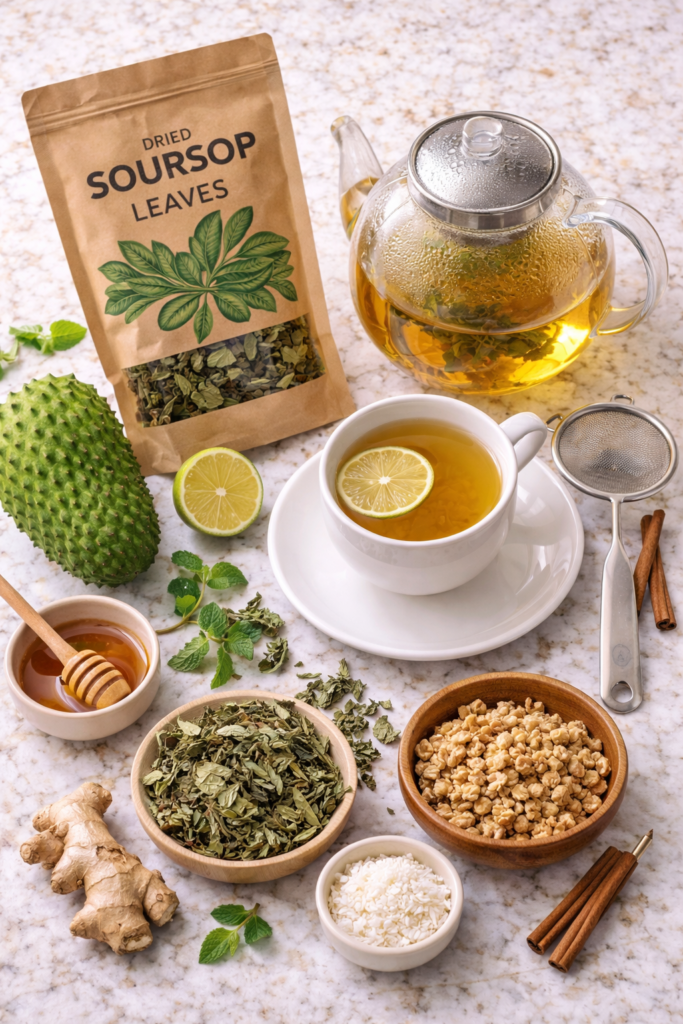
Soursop (also called graviola or guanabana) is a tropical fruit native to South America and the Caribbean. It’s large, spiky on the outside, and the inside is creamy white with a flavor that tastes like strawberry crossed with apple, with a citrusy kick.
But the leaves — that’s where this tea comes from.
The leaves of the soursop tree (Annona muricata) have been used in traditional herbal medicine for generations across Jamaica, Trinidad, Puerto Rico, and beyond. People have been brewing them long before wellness culture made it trendy.
A few things soursop tea is known for:
- Rich in antioxidants and flavonoids that help protect cells from oxidative stress
- Contains Vitamin C, potassium, magnesium, and B-vitamins
- Traditionally used to support digestion, relaxation, and immune function
- Naturally caffeine-free, making it perfect for evening use
One important note: Soursop tea is a herbal beverage, not a medical treatment. If you’re pregnant, breastfeeding, or on medication for blood pressure or diabetes, check with your doctor before drinking it regularly. It’s powerful stuff.
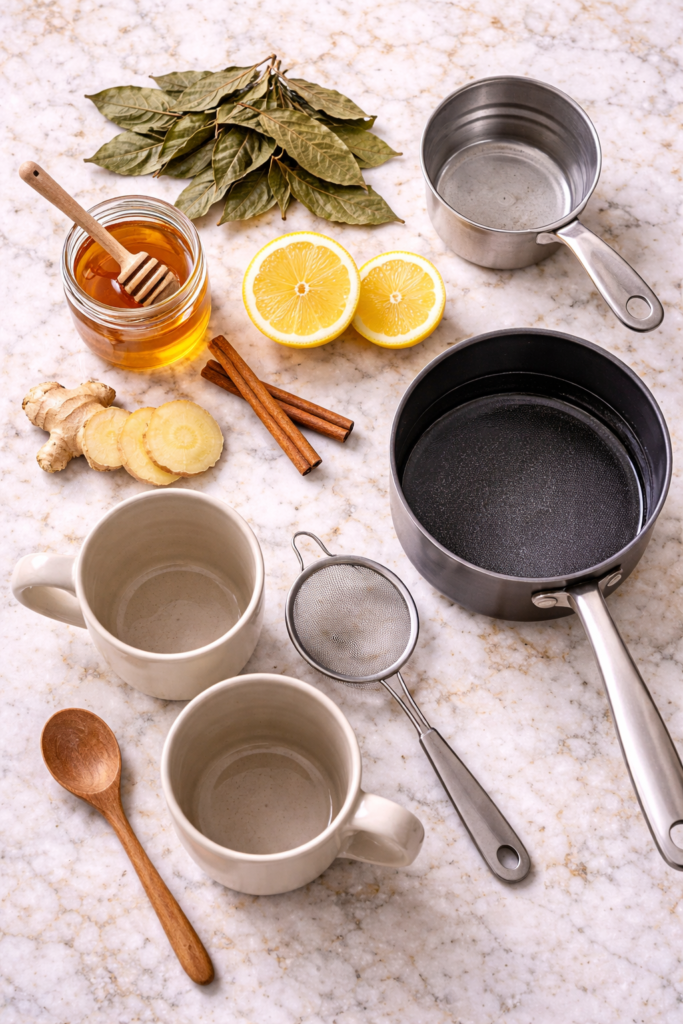
What You’ll Need
Makes: 2 cups Prep time: 2 minutes Brew time: 15 minutes Total time: ~17 minutes
Ingredients
| Ingredient | Amount |
|---|---|
| Dried soursop leaves (whole or broken) | 5–7 leaves (approx. 10g) |
| Filtered water | 2 cups (500ml) |
| Raw honey or sugar | 1–2 tsp (to taste) |
| Fresh lemon juice (optional) | 1/4 lemon |
| Fresh ginger slices (optional) | 2–3 thin slices |
| Cinnamon stick (optional) | 1 stick |
Note on leaves: Dried leaves make a more potent, concentrated tea and are easier to source. Fresh leaves work too — use 8–10 fresh leaves instead since they’re less concentrated. If you can’t find leaves locally, they’re widely available at Caribbean grocery stores and online.
Tools You’ll Need
- Small saucepan or pot
- Fine mesh strainer or tea strainer
- Measuring cups
- 2 mugs or heat-safe glasses
- Spoon for stirring
That’s it. No fancy equipment required.
Pro Tips
1. Don’t skip the lid while it simmers. Covering the pot keeps the beneficial compounds from escaping with the steam. A lot of the goodness literally floats away if you leave it uncovered.
2. Dried leaves give you a stronger, more consistent brew. Fresh leaves have more nutrients, but dried are easier to control. Store dried leaves in an airtight container away from sunlight — they’ll stay potent for months.
3. Boil, then steep. There’s a difference. Boil the leaves briefly (3–5 minutes), then turn off the heat and let them steep for another 10 minutes. This decoction method pulls out more of the active compounds than a simple hot-water infusion.
4. Honey beats sugar here. The slight tartness of soursop tea pairs really naturally with honey. Sugar works in a pinch, but raw honey adds a depth that makes the whole cup feel more intentional.
5. Batch it for the week. This tea keeps well in the fridge for 2–3 days. Make a bigger batch (20–30 leaves per liter of water), let it cool, and refrigerate. Morning or evening, it’s ready when you are.
How to Make Soursop Tea
Step 1: Prep your leaves
Rinse your dried soursop leaves under cool running water to remove any dust or debris. If the leaves are whole and large, break or cut them into smaller pieces — this helps release more of their compounds during brewing.
Step 2: Bring water to a boil
Pour 2 cups of filtered water into your saucepan and bring it to a full boil over medium-high heat.
Step 3: Add the leaves
Add 5–7 dried soursop leaves to the boiling water. If you’re adding ginger or cinnamon, throw those in now too.
Step 4: Reduce and simmer
Lower the heat to medium-low and let the leaves simmer, covered, for 3–5 minutes. The water will turn a warm golden-green color.
Step 5: Steep off heat
Turn off the heat and let the leaves steep in the covered pot for 10 more minutes. This is where the tea really develops its flavor and potency.
Step 6: Strain and sweeten
Use a fine mesh strainer to pour the tea into your mugs, leaving the leaves behind. Add honey, a squeeze of lemon, or enjoy it plain. Serve hot or let it cool and pour over ice.
Substitutions and Variations
No dried leaves? Use fresh soursop leaves (8–10 leaves) or soursop tea bags (steep for 5–7 minutes in hot water). The flavor will be slightly milder.
Want it iced? Brew double strength (use the same water, double the leaves), then pour over a full glass of ice. It dilutes perfectly.
Lemon honey version: Add 1/4 lemon squeezed in plus 1 tsp raw honey. Brightens the whole cup and gives you a Vitamin C boost on top.
Relaxation blend: Add a cinnamon stick during simmering and a small pinch of nutmeg. Drink warm before bed.
Ginger digestion version: Add 2–3 thin slices of fresh ginger while the leaves simmer. Great after heavy meals.
Mint variation: Drop 3–4 fresh mint leaves into the cup after straining for a cooling, refreshing finish.
Make-Ahead Tips
This tea is excellent made ahead — honestly, batching it saves so much time during the week.
For a week’s worth: Use 20–25 dried leaves in 1 liter of water. Simmer for 5 minutes, steep 10–15 minutes, then strain and refrigerate in a sealed glass jar or pitcher.
It keeps fresh for 2–3 days in the fridge.
For longer storage, freeze in an ice cube tray and pop 2–3 cubes into hot water whenever you want a cup. It holds well for up to 1–2 months in the freezer.
Nutrition and Diet Notes
Soursop tea is naturally low calorie — about 5 calories per cup before any sweetener. Here’s a quick breakdown:
| Nutrient | Per cup (unsweetened) |
|---|---|
| Calories | ~5 kcal |
| Carbohydrates | ~1g |
| Protein | ~0.3g |
| Vitamin C | Present |
| Potassium | ~40mg |
| Calcium | ~17mg |
| Iron | ~0.4mg |
Dietary notes:
- Vegan (use agave or maple syrup instead of honey)
- Gluten-free
- Caffeine-free
- Sugar-free if left unsweetened
Meal pairings: This tea works beautifully after a heavy dinner, alongside a light breakfast, or as a replacement for your evening chamomile.
How much is safe? Most guidance suggests 1–2 cups daily. General recommendation for ongoing herbal tea use is to drink it for three months, then take a month off. And as mentioned above — if you’re on any medication, loop in your doctor first.
Leftovers and Storage
- Fridge: Store brewed tea in a sealed glass container for up to 3 days. Give it a quick shake before serving.
- Freezer: Freeze in ice cube trays, then transfer to a freezer bag. Good for 1–2 months.
- Don’t reheat repeatedly. Brew fresh portions rather than reheating the same batch multiple times.
- Leaves: Store dried soursop leaves in an airtight glass jar, away from direct sunlight. They stay potent for 6–12 months if stored properly.
FAQ
Can I use fresh soursop leaves instead of dried? Yes! Use 8–10 fresh leaves in place of 5–7 dried ones. Fresh leaves give a milder flavor but slightly higher nutrient content. Just make sure they’re vibrant green — not brown or wilted.
Where do I find soursop leaves? Caribbean grocery stores, Latin markets, health food stores, and online retailers (search “dried soursop leaves” or “graviola leaves”). They’re more accessible than you’d think.
Does soursop tea taste like the fruit? Not exactly. The fruit tastes sweet and tropical; the tea is more earthy and herbal, with a gentle tartness. Think green tea meets a mild herbal blend.
Can kids drink soursop tea? There isn’t enough scientific evidence to confirm it’s safe for children. Skip it for kids and breastfeeding moms until more research is out.
Can I drink it every day? 1–2 cups daily is considered safe for most healthy adults. High amounts over long periods aren’t recommended — moderation is the move here.
Hot or cold — does it matter? Pure preference. Hot feels more soothing and traditional; cold over ice is refreshing and great in warm weather. Both give you the same benefits.
Will it help me sleep? Soursop leaves are naturally calming and have been traditionally used as a sleep aid. Many people swear by a warm cup before bed. No guarantees, but it’s a pleasant way to wind down.
Wrapping Up
Soursop tea is one of those recipes that feels like a little secret once you discover it.
It’s simple, takes less than 20 minutes, and the ingredients are minimal. But the ritual of it — brewing something from leaves, letting it steep, pouring it warm into a mug — that part actually slows you down in the best way.
Try the basic version first. Then experiment with the ginger or lemon honey variations once you know what the base tastes like. And if you brew a batch that turns out perfectly, I want to hear about it.
Drop a comment below and let me know how it went. Did you drink it hot or iced? Did you add anything fun? What did it taste like to you? 👇