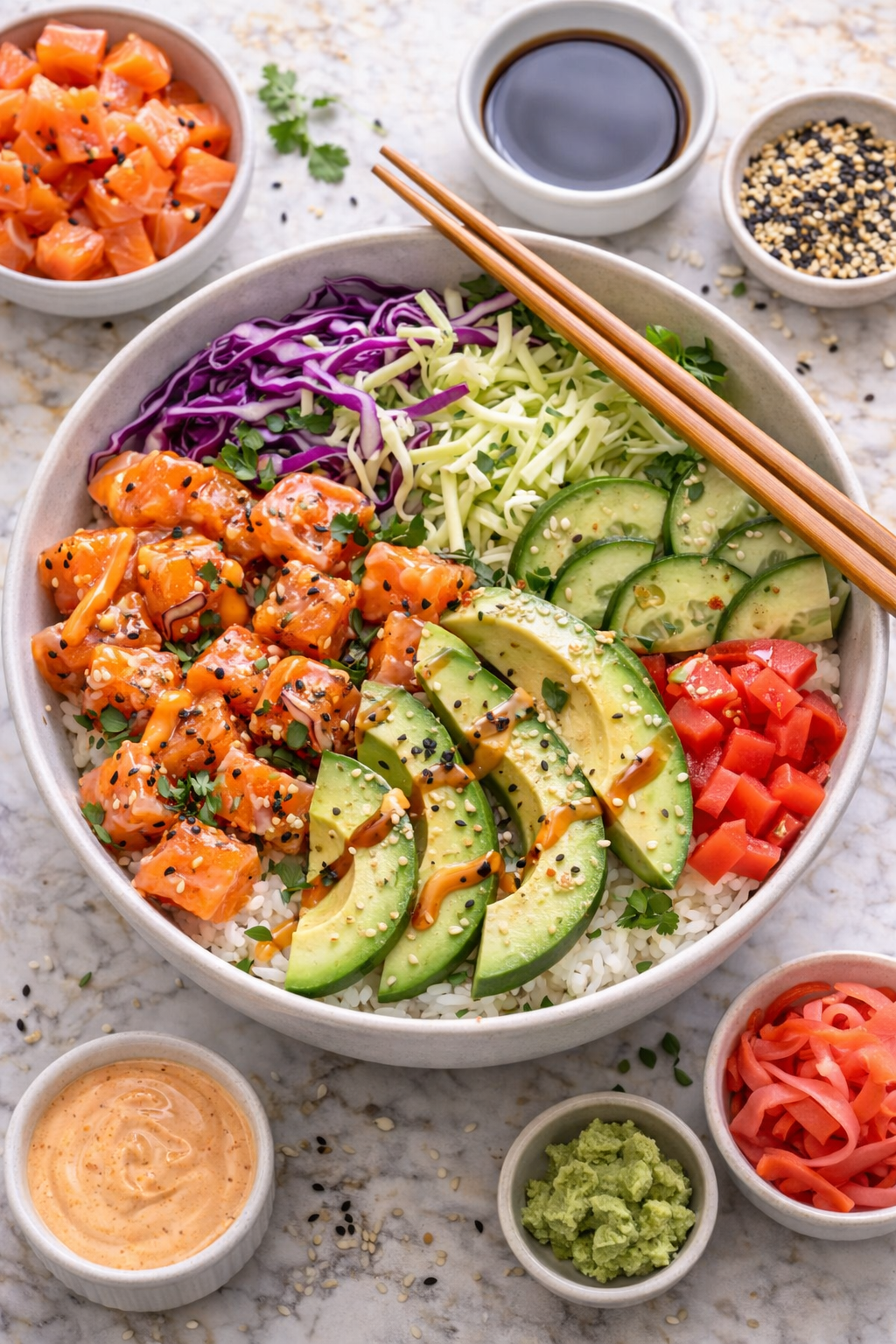
You know that feeling when you’re craving sushi but the idea of rolling 12 pieces while rice sticks to everything you own sounds exhausting?
This sushi bowl is the answer.
Same flavors. Same fresh ingredients. Zero fuss. It comes together in about 20 minutes and honestly, it looks so good in a bowl that you’ll want to photograph it before you even touch it.
Fair warning though: this one gets requested on repeat.
What Makes a Sushi Bowl Different From Regular Sushi?
Traditional sushi is a labor of love. The rolling, the slicing, the precision. It’s genuinely impressive to make.
A sushi bowl skips all of that and puts everything you love straight into a bowl. Seasoned sushi rice at the base, fresh toppings layered on top, and a drizzle of sauce that ties it all together.
The flavor is identical. The effort is not.
It’s also customizable in a way that rolled sushi just isn’t. Have a picky eater? No problem. Swap out one topping and keep the rest. That flexibility is what makes this such a reliable weeknight dinner.
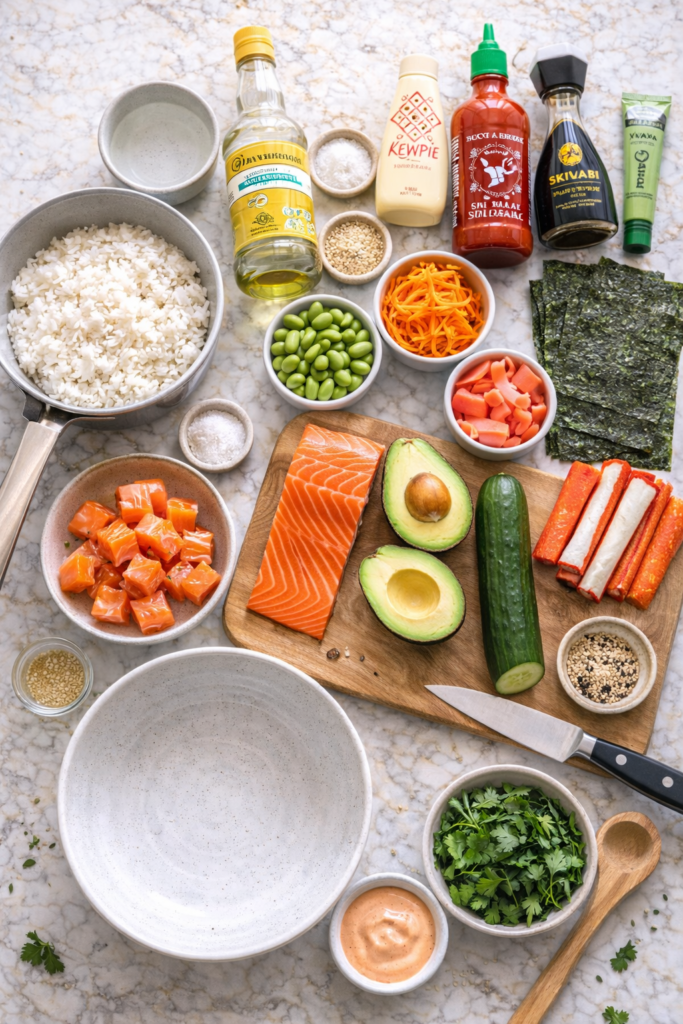
What You’ll Need
For the Sushi Rice
- 2 cups short-grain Japanese white rice
- 2 cups water
- 3 tablespoons rice vinegar
- 1.5 tablespoons white sugar
- 1 teaspoon salt
For the Bowl Toppings
- 200g (7 oz) sushi-grade salmon or tuna, thinly sliced
- 1 ripe avocado, sliced
- 1 small cucumber, thinly sliced or julienned
- 1/2 cup shelled edamame (thawed if frozen)
- 1/4 cup shredded carrots
- 2 tablespoons pickled ginger
- 2 teaspoons black or white sesame seeds
- 2 sheets nori, cut into thin strips or small squares
- 4-5 imitation crab sticks, shredded (optional)
For the Spicy Mayo
- 3 tablespoons Japanese mayonnaise (Kewpie preferred)
- 1.5 tablespoons sriracha
- 1 teaspoon sesame oil
- 1 teaspoon soy sauce
For Garnish & Serving
- Low-sodium soy sauce or tamari
- Wasabi paste (to taste)
- Extra sesame seeds for topping
Tools You’ll Need
- Medium saucepan or rice cooker
- Fine mesh strainer (for washing rice)
- Small mixing bowls (for sauce and seasoning)
- Sharp knife and cutting board
- Wooden or silicone spatula (never metal with rice)
- Serving bowls x2
Pro Tips
1. Don’t skip washing the rice. Rinse it under cold water until the water runs clear. This removes excess starch and gives you that perfectly fluffy, not-gummy sushi rice. It takes 2 extra minutes and it’s worth every second.
2. Season the rice while it’s hot. As soon as the rice comes off the heat, fold in your rice vinegar mixture immediately. Hot rice absorbs the seasoning so much better than cooled rice. Use a folding motion, not stirring, to keep the texture intact.
3. Only buy sushi-grade fish. This is non-negotiable. Sushi-grade fish has been frozen at temperatures that kill parasites, making it safe to eat raw. Ask your fishmonger directly or look for it labeled at Japanese grocery stores or specialty seafood counters.
4. Let your rice cool before building the bowl. Steam-hot rice will make your avocado and fish go warm and sad. Let it sit for 10-15 minutes at room temp before assembling.
5. Make the spicy mayo ahead. Mix it the morning of or even the night before and keep it in a small jar in the fridge. The flavors get even better after sitting together.
Substitutions and Variations
Not a raw fish person? You are not alone. Here are some swaps that work really well:
| Ingredient | Swap Options |
|---|---|
| Raw salmon or tuna | Smoked salmon, cooked shrimp, canned tuna in oil |
| Short-grain white rice | Brown sushi rice, cauliflower rice (for low-carb) |
| Kewpie mayo | Regular mayo + a splash of rice vinegar |
| Edamame | Frozen peas, sliced snap peas |
| Cucumber | Thinly sliced radish, zucchini ribbons |
| Nori strips | Crumbled seaweed snacks |
For a vegan version: Skip the fish entirely and double up on edamame, avocado, roasted sweet potato cubes, and mango slices. Top with the spicy mayo using vegan mayo and it’s absolutely delicious.
Make Ahead Tips
Sushi bowls are actually great for meal prep with one exception: keep the components separate until you’re ready to eat.
- Rice: Cook and season up to 2 days ahead. Store in an airtight container in the fridge. Re-warm gently or serve at room temperature.
- Spicy mayo: Makes ahead perfectly. Stores for up to a week in the fridge.
- Veggies: Slice cucumbers, carrots, and avocado the day of (avocado browns fast, so don’t prep that too far ahead).
- Fish: Always slice fresh on the day you’re eating. Raw fish shouldn’t sit once cut.
Nutritional Breakdown
One serving (approx. 1 bowl with salmon, veggies, and spicy mayo) contains roughly:
| Nutrient | Per Serving |
|---|---|
| Calories | ~520 kcal |
| Protein | ~30g |
| Carbohydrates | ~52g |
| Fat | ~18g |
| Fiber | ~6g |
| Omega-3 Fatty Acids | High (from salmon) |
Salmon is genuinely one of the most nutrient-dense proteins you can eat. It’s loaded with omega-3 fatty acids, B vitamins, and high-quality protein. Combined with the fiber from avocado and edamame, this bowl keeps you full for hours.
Trying to cut carbs? Swap white rice for cauliflower rice and the carb count drops to around 15g.
Meal Pairing Suggestions
This bowl is filling enough on its own, but if you want to round it out:
- Miso soup on the side is the classic pairing and takes 3 minutes to make from a packet
- Japanese-style cucumber salad (sunomono) is light, tangy, and complements the richness of the spicy mayo
- Green tea or sparkling water with a slice of yuzu or lemon
How to Make It
Step 1: Cook and season the rice
Rinse your rice in cold water until the water runs clear, about 2-3 minutes. Add to a saucepan with 2 cups of cold water. Bring to a boil, then immediately reduce to the lowest heat setting, cover, and cook for 15 minutes. Turn off the heat and let it steam, covered, for another 10 minutes.
While the rice rests, whisk together rice vinegar, sugar, and salt in a small bowl until dissolved. Gently fold this into the hot rice with a wooden spatula. Fan it slightly as you fold to help it cool.
Step 2: Make the spicy mayo
Whisk together Kewpie mayo, sriracha, sesame oil, and soy sauce in a small bowl. Taste it. Adjust the sriracha up or down depending on your heat preference. Set aside.
Step 3: Prep your toppings
Slice the salmon or tuna into thin, even pieces against the grain. Slice the avocado, cucumber, and shred the carrots if not pre-shredded. Thaw edamame if using frozen. Cut nori into thin strips using scissors.
Step 4: Assemble the bowls
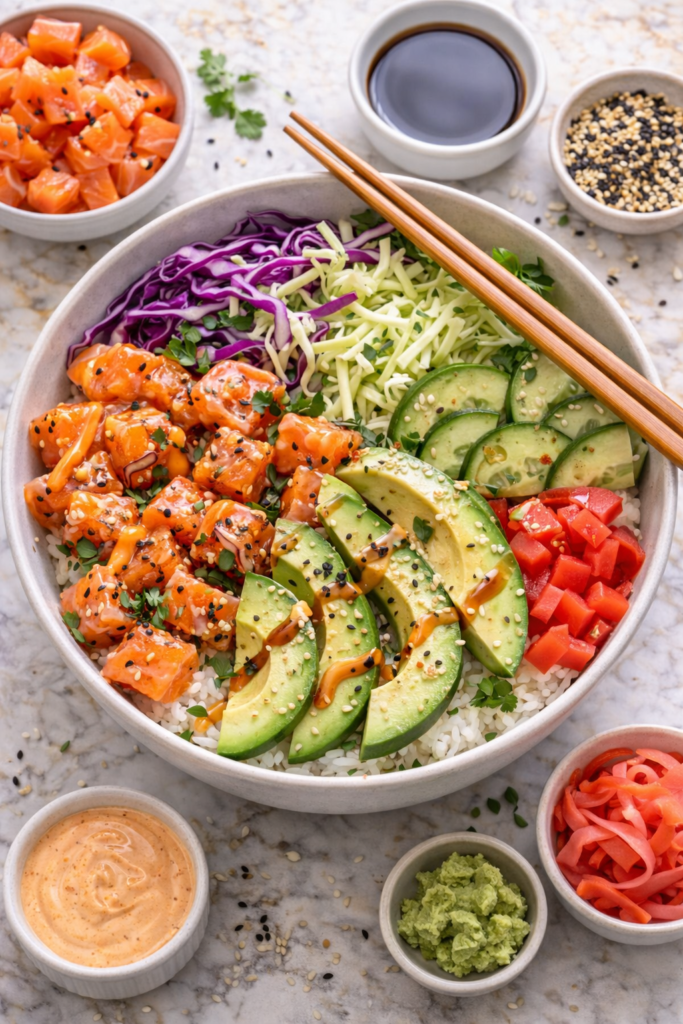
Add a generous scoop of seasoned rice to the base of each bowl. Arrange your toppings in sections around the bowl: fish on one side, avocado next to it, cucumber, edamame, carrots, and pickled ginger. Place nori strips across the top.
Step 5: Finish and serve
Drizzle spicy mayo over everything. Sprinkle sesame seeds on top. Serve with soy sauce and wasabi on the side. Eat immediately.
Leftovers and Storage
Here’s the honest truth about sushi bowls and leftovers: they don’t really do well as a full assembled bowl overnight.
The rice gets dry, the avocado browns, and raw fish should never sit longer than the day it’s prepared.
What you can do:
- Store leftover rice separately in an airtight container for up to 3 days
- Use leftover seasoned rice for fried rice the next morning with an egg
- Keep prepped veggies (except avocado) in airtight containers for up to 2 days
- If you used cooked shrimp or smoked salmon instead of raw fish, those keep fine for 1-2 days
FAQ
Can I use regular grocery store salmon? For raw consumption, no. You need sushi-grade or sashimi-grade fish that has been commercially frozen. Regular supermarket fish is not processed for raw eating. Japanese grocery stores are your best bet, or ask your fishmonger.
My rice turned out sticky/mushy. What happened? Two most likely culprits: you didn’t rinse it, or you used too much water. Short-grain rice is starchier than regular rice, so rinsing is essential. Also, resist the urge to lift the lid while it’s steaming.
Can I make this for kids? Absolutely, just swap the raw fish for cooked shrimp, canned tuna, or imitation crab and skip the wasabi. Kids usually love the customizable nature of a bowl.
Is Kewpie mayo really that different? Yes, genuinely. Kewpie uses only egg yolks (not whole eggs) and has a richer, slightly tangier flavor than American mayo. It’s what makes Japanese-inspired sauces taste like restaurant food at home. Find it at most Asian grocery stores.
What if I can’t find sushi-grade fish anywhere near me? Smoked salmon is the best alternative. It’s widely available, safe to eat without cooking, and has a really nice flavor in this bowl. Cooked garlic shrimp is another great option.
Can I use regular rice instead of sushi rice? You can, but the texture and flavor won’t be the same. Sushi rice (short-grain Japanese rice) is stickier and clings together in a way that regular long-grain rice doesn’t. If short-grain isn’t available, look for medium-grain rice as the closest alternative.
Wrapping Up
This sushi bowl is one of those recipes that immediately earns a permanent spot in the rotation.
It’s fast enough for a Tuesday night, impressive enough for when you have people over, and fresh enough that you feel genuinely good eating it. The spicy mayo alone is worth making just to have on hand.
Make it once and you’ll see exactly why sushi restaurants are never getting your money on a weeknight again.
Drop a comment below and let me know how yours turned out! Did you go classic with salmon, try a vegan version, or go completely off-script with your toppings? Tell me everything. And if you have any questions before you start, I’m happy to help.