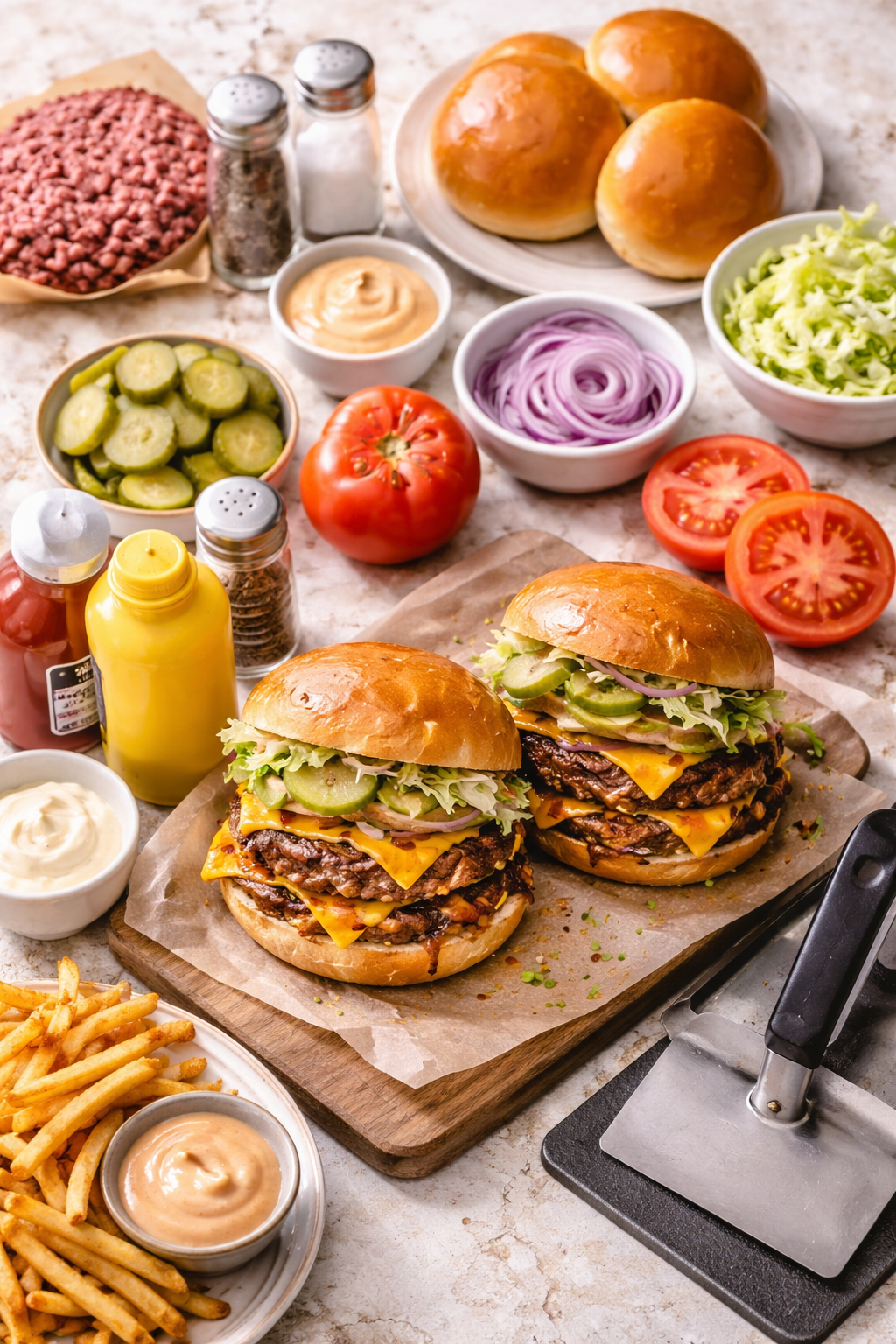
You know that feeling when you bite into something and immediately think, why haven’t I been making this at home this whole time?
That’s smash burgers.
They look simple. They kind of are simple. But the technique behind them produces something that tastes wildly better than a regular patty — and once you know why, you can’t un-know it.
The secret is the crust. When you smash a ball of beef onto a screaming hot surface, you trigger something called the Maillard reaction. It’s the same thing that makes a perfectly seared steak taste like a completely different food than a boiled one. More surface area = more browning = more flavor. That’s it. That’s the whole trick.
And yes, it really does make that much of a difference.
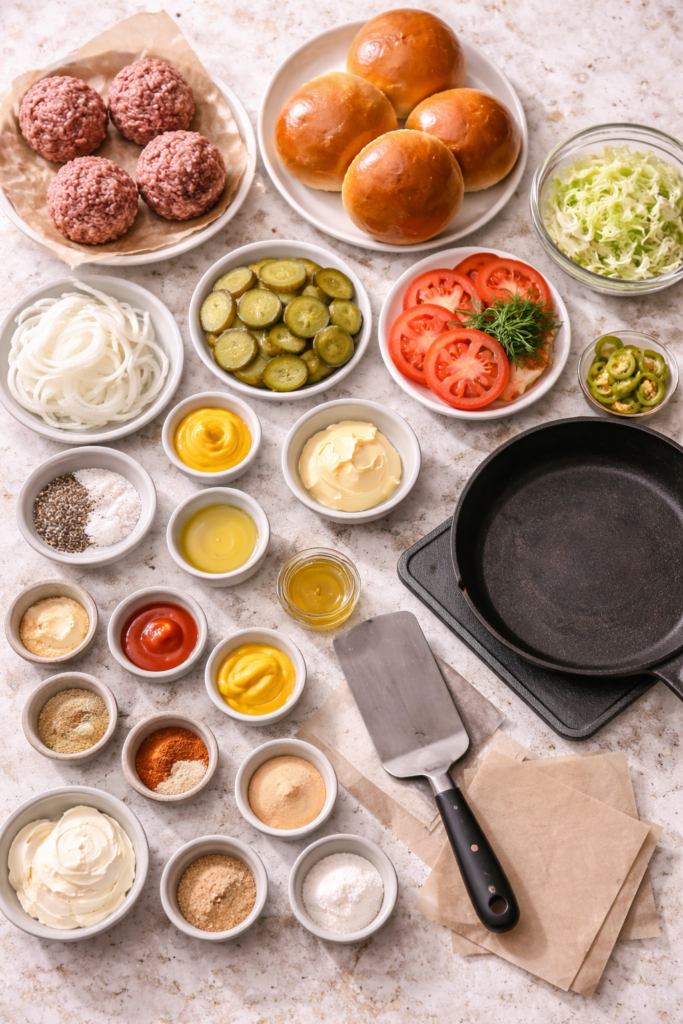
What You’ll Need
For the Burgers
- 1 lb (450g) 80/20 ground beef (this fat ratio is non-negotiable — more on that below)
- 4 burger buns (brioche or potato buns work best)
- 4 slices American cheese (or cheddar if you prefer)
- Salt and black pepper to taste
- 1 tbsp butter (for toasting the buns)
- 1 tsp neutral oil (canola or avocado oil for the cooking surface)
For the Smash Burger Sauce
- 3 tbsp mayonnaise
- 1 tbsp ketchup
- 1 tbsp yellow mustard
- 1 tsp pickle juice
- 1 tsp garlic powder
- ½ tsp onion powder
- ½ tsp smoked paprika
- Pinch of sugar
Toppings (pick your favorites)
- Thinly sliced white onion
- Dill pickle slices
- Shredded iceberg lettuce
- Sliced tomato
- Jalapeños
Tools You’ll Need
- Cast iron skillet or flat-top griddle — this is the most important tool on this list
- Heavy spatula (a burger press or a wide, sturdy metal spatula)
- Parchment paper squares (to place between the spatula and the beef when smashing)
- Mixing bowl (for the sauce)
- Kitchen scale (optional but helpful for portioning)
- Meat thermometer (optional — these cook fast, so it’s more about timing)
A cast iron skillet is genuinely the move here. It holds heat better than anything else and gives you that dark, even crust that’s hard to replicate on a nonstick pan.
Pro Tips
These are the things that actually make a difference — learned from many batches, including a few that were fine but not great.
- Don’t skip the 80/20 beef. Leaner beef means less fat rendering into the patty, which means less flavor and a drier texture. The fat is the point. If you can get freshly ground beef from a butcher, even better.
- Your pan needs to be seriously hot before the beef goes in. Like, heat it on medium-high for at least 2-3 minutes before you start. If the surface isn’t hot enough, you’ll steam the beef instead of searing it — and you’ll end up with a grey, sad patty instead of a crispy-edged one.
- Smash fast, smash hard, and only smash once. You have about 10 seconds from when the beef hits the pan to smash it before it starts to set. Use serious pressure and then leave it alone. Pressing it again later just squeezes out the juices you worked hard to keep in.
- Add the cheese right after you flip. The residual heat melts it perfectly in about 30 seconds. You don’t need a lid, but you can tent foil over it if you want it extra melty.
- Toast the buns. This step gets skipped all the time and it genuinely matters. A warm, buttered, toasted bun holds up to the sauce and juices without turning into a soggy mess halfway through eating.
Substitutions and Variations
Beef alternatives:
- Ground turkey or chicken works, but you won’t get the same crust — the lower fat content makes it trickier
- Plant-based ground beef (like Beyond Meat) can be smashed the same way and actually crisps up pretty well
Cheese swaps:
- American cheese melts the most evenly and has that classic fast-food pull
- Sharp cheddar gives more flavor but doesn’t melt as uniformly
- Pepper jack if you want a little heat built in
Bun options:
- Brioche: slightly sweet, soft, holds its shape well
- Potato bun: a little sturdier, classic diner feel
- Martin’s potato rolls are a cult favorite for a reason
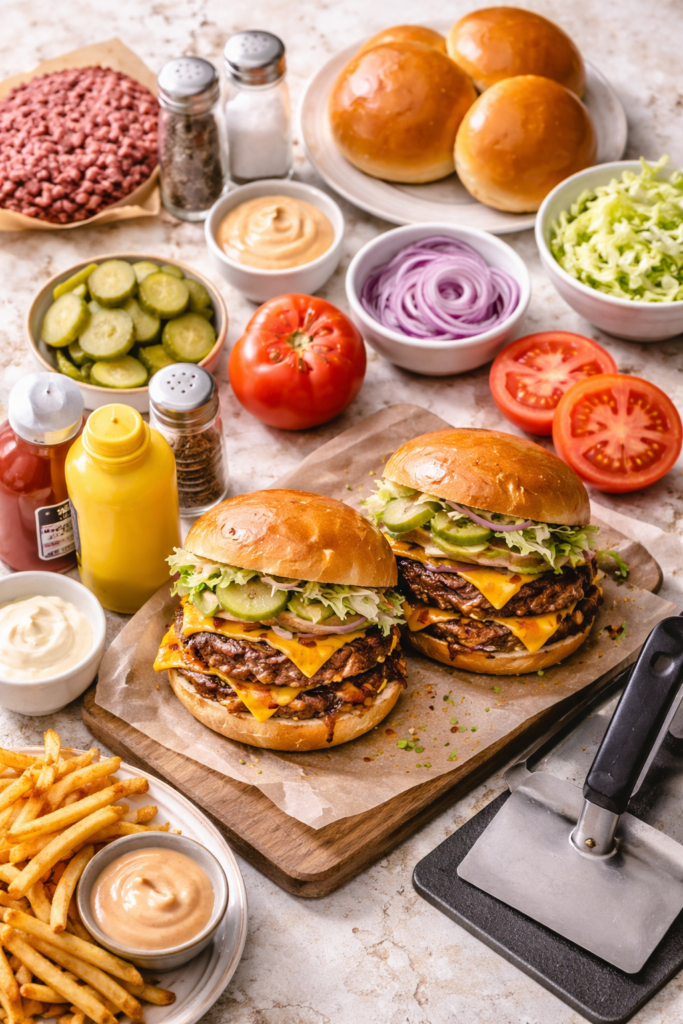
Double smash burger: Use two thinner patties instead of one. Stack them with cheese in between. This is the version that gets everyone in the room excited.
Smash burger bowl: Skip the bun entirely, serve over shredded lettuce with all the toppings and the sauce drizzled over. It’s a solid lower-carb option that still hits.
Make-Ahead Tips
The sauce can be made up to 5 days ahead and stored in a jar in the fridge. It actually gets better after a day or two as the flavors come together.
You can also portion the beef into balls (about 3.5 oz each) and keep them loosely covered in the fridge for up to 24 hours. Don’t press them or pack them tight — you want them loose so they smash evenly.
Don’t pre-smash or pre-form the patties. The whole point is smashing them fresh on a hot surface. Pre-shaped patties just become regular burgers.
Nutritional Info (Per Burger with Sauce, Bun, and Basic Toppings)
| Per Serving | |
|---|---|
| Calories | ~620 kcal |
| Protein | 32g |
| Fat | 38g |
| Carbohydrates | 34g |
| Sodium | ~780mg |
Values are estimates and will vary based on exact ingredients and toppings used.
For a lighter version: Use a low-calorie bun, skip the sauce (or use half), and load up on the veggie toppings.
Meal pairing ideas: Serve with thin, crispy fries or a simple coleslaw. A cold, tangy pickle on the side cuts through the richness really well.
How to Make Smash Burgers
Step 1: Make the sauce.
Mix together the mayonnaise, ketchup, mustard, pickle juice, garlic powder, onion powder, smoked paprika, and sugar in a small bowl. Taste it, adjust if needed, and set it aside. This takes 2 minutes and it’s worth doing first so everything’s ready to go when the beef hits the pan.
Step 2: Prep the beef.
Divide the ground beef into 4 equal portions (about 3.5 oz each). Roll each one loosely into a ball. Don’t compress them — just a loose shape. Season the outside of each ball with salt and pepper.
Step 3: Heat the pan.
Place your cast iron skillet over medium-high heat. Add the neutral oil and let it heat up for at least 2-3 minutes. You want it hot enough that a drop of water flicked into the pan evaporates immediately.
Step 4: Smash.
Place one or two beef balls in the pan (don’t crowd it). Immediately place a small square of parchment paper over the top and use your spatula or burger press to press down hard and fast. Hold it for about 10 seconds. You’re aiming for a patty that’s roughly ¼ inch thick.
Remove the parchment and season the top with a little more salt and pepper.
Step 5: Let it cook.
Don’t touch it. Let it cook for about 2-2.5 minutes until you see the edges get dark and crispy. The top of the patty will start to look mostly cooked — that’s when you know it’s ready to flip.
Step 6: Flip and cheese.
Flip the patty quickly with the spatula, getting underneath that crust cleanly. Place a slice of cheese on top immediately. Let it cook for another 60-90 seconds. The bottom should be browned and the cheese should be melted.
Step 7: Toast the buns.
While the second side cooks, melt a little butter in a separate pan or on the same surface and toast the buns cut-side down until golden. About 1-2 minutes.
Step 8: Build the burger.
Spread the sauce on both halves of the bun. Add the patty, then your toppings in whatever order you like. Pickles and onion on top of the patty, lettuce and tomato closer to the bun is a classic setup that keeps everything from sliding around.
Eat it immediately. Smash burgers are a right-now food — they don’t wait well.
Leftovers and Storage
Smash burgers are genuinely best eaten fresh. The crust softens as it sits and the bun starts to absorb the juices.
That said, if you have leftover patties:
- Store them separately from the buns in an airtight container in the fridge for up to 3 days
- Reheat in a hot cast iron skillet for 1-2 minutes per side (not the microwave — it makes them rubbery)
- Leftover patties crumbled into a breakfast scramble or on top of a salad are genuinely good uses for them
The sauce keeps well in the fridge for up to 5 days in a sealed jar.
FAQ
Can I make these on a regular nonstick pan?
You can, but you won’t get the same crust. Nonstick pans have a lower heat tolerance and the surface doesn’t retain heat as well, so you lose that aggressive sear. A cast iron skillet or stainless steel pan is a much better choice here.
Do I need a special burger press?
No. A wide, sturdy metal spatula with something heavy on top (like another pan) works just as well. The goal is just consistent, even pressure.
Why 80/20 beef specifically?
The 20% fat content renders as the patty cooks, basting the meat from the inside and creating flavor. Leaner beef dries out faster and doesn’t develop the same crust. If anything, some people go 75/25 for even more richness.
Can I cook these outside on a griddle?
Absolutely — a flat-top outdoor griddle is actually ideal for smash burgers. You get more surface area and even heat distribution. Just make sure it’s fully preheated before you start.
How do I keep the patties from falling apart when I smash them?
Don’t overwork the beef. The more you handle it, the more the fat gets worked in and the more it’ll want to break apart. Loose ball, quick smash, minimal touching after that.
Is American cheese really necessary?
It’s not necessary, but it melts better than almost any other cheese and gives you that classic smash burger look and taste. Cheddar is the closest real alternative. Anything too firm or aged won’t melt properly in the short cook time.
Wrapping Up
Smash burgers are one of those recipes that feel like a discovery every time you make them — even if you’ve made them a dozen times.
The fact that such a simple technique produces something that tastes this good is a little bit ridiculous, honestly. Two minutes of prep, five minutes of cooking, and you’ve got something that feels like a treat.
Give this one a go and then come back and tell me how it turned out. Drop a comment below — did you double-stack? Try a different cheese? Use a griddle instead of a skillet? I want to hear all of it. And if you have any questions at all, ask away — I read every single one.